

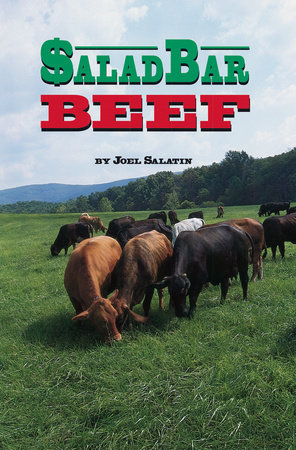
| Pages: | 384 pages |
| Book Art: | Black and white photos |
| Size: | 6 x 9 inch |
| Publisher: | Polyface |
| Pub. Date: | July 9, 1996 |
| ISBN: | 9780963810915 |
Salad Bar Beef
In a day when beef is assailed by many environmental organizations and lauded by fast-food chains, a new paradigm to bring reason to this confusion is in order. With farmers leaving the land in droves and plows poised to “reclaim” set-aside acres, it is time to offer an alternative that is both land and farmer friendly.
Beyond that, the salad bar beef production model offers hope to rural communities, to struggling row-crop farmers, and to frustrated beef eaters who do not want to encourage desertification, air and water pollution, environmental degradation and inhumane animal treatment. Because this is a program weighted toward creativity, management, entrepreneurism and observation, it breathes fresh air into farm economics.

About Joel Salatin
Joel Salatin and his family own and operate Polyface Farm in Virginia’s Shenandoah Valley. The farm produces pastured beef, pork, chicken, eggs, turkeys, rabbits, lamb and ducks, servicing roughly 6,000 families and 50 restaurants in the farm’s bioregion. He has written 14 books to date, is editor of Stockman Grass Farmer Magazine, and lectures around the world on land healing and local food systems. Polyface Farm operates a formal apprenticeship program and conducts many educational workshops and events.
Books by Joel Salatin


You may also like...
-
 $29.95
 -
$35.00
-
$35.00
