
The Whole Broccoli Frittata: A Wild Boost To Your Brunch Menu
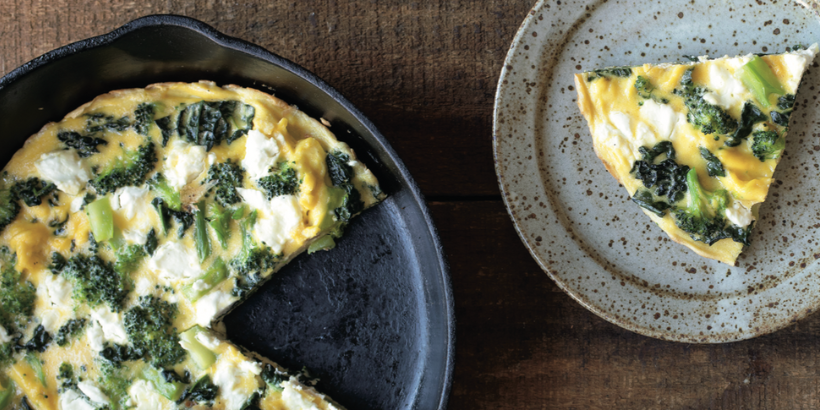
Introducing…your new favorite brunch dish! This whole broccoli frittata is packed with fresh, wildcrafted flavors that are bound to help you start your day off on the right foot.
The following is an excerpt from The Forager Chef’s Book of Flora by Alan Bergo. It has been adapted for the web.
RECIPE: Whole Broccoli Frittata
Serves 4–6 as a light entrée
The first time I walked through a garden growing broccoli, I noticed straightaway the large, collard-like leaves—something you never see in the store. Broccoli is more than just florets. The leaves are one of my favorite fall greens.
Cousins like Italian spigariello or leaf broccoli are grown specifically for their sweet, robust leaves. The leaves are great added to any dish with broccoli, or just cooked by themselves, but enjoying the leaves, stem, and florets in a dish like this simple frittata is a great way to use the whole plant.
Feel free to use other leafy greens, especially nettles, instead of the broccoli. For a smaller version, use 4 eggs, slightly less broccoli and other ingredients, and an 8-inch (20 cm) pan, with slightly less broccoli or greens.
Ingredients
- 1/2 ounce (14 g) attractive broccoli leaf, stem removed (1 large leaf)
- 5 ounces (140 g) broccoli, trimmed into 1-inch (2.5 cm) pieces, stem peeled down to the tender core (1 small head)
- 6 large eggs, at room temperature
- 1/4 cup (60 ml) heavy cream
- 2 tablespoons unsalted butter
- Kosher salt and fresh-ground black pepper
- 2 ounces (55 g) fresh chèvre
Procedure

Next, add the florets and stem and cook for another 30 seconds. Remove the vegetables to cold water to halt the cooking, drain well, dice the broccoli leaf into 1-inch squares, and reserve.
Combine the eggs and cream in a bowl, whisking until mixed. Melt the unsalted butter in a 10-inch (26 cm) cast-iron skillet or other 10-inch non- stick oven-safe pan.
Add the broccoli leaves, florets, and stems. Season to taste with salt and pepper, then add the egg mix, cook for a minute or two, and stir a few times, as if you’re making a folded omelet.
Crumble in the fresh chèvre and stir to incorporate.
Bake for 10 minutes or until the top is just barely set, being careful not to overcook the frittata.
I also like to turn the oven off and allow the frittata to cook very slowly if I’m waiting for other dishes to cook or guests to arrive.
Accompanied by a green salad, this makes a great brunch or lunch dish.
Recommended Reads
Read The Book

The Forager Chef's Book of Flora
Recipes and Techniques for Edible Plants from Garden, Field, and Forest
$34.95
You may like...
-
 $40.00
 -
$40.00
-
$29.95


Recent Articles
Small But Mighty! Crab Apples are easy to find, simple to store, and incredibly flavorful. Keep reading to learn more about the unsung heroes of the apple family.
Read More
Try your hand at preserving veggies by freezing them! Freezing vegetables is a quick, simple way to preserve them for winter meals.
Read More
Add a rich and robust twist to your meals with help from red wine salt! This seasoning is a perfect addition to dishes like short rib, potatoes, and more.
Read More
Raspberries: they’re sweet, flavorful, and extremely versatile. Forage for raspberries yourself and use them to create delicious dishes!
Read More
This summer vegetable tian is the perfect easy side dish. Layers of eggplant, zucchini, tomato, & red onion make this dish healthy, colorful, and delicious!
Read More