

Heart Health: Herbal Formulas and Medicinals
Whether you use them as a precautionary measure or for their restorative properties, there’s no denying the power of herbs when it comes to caring for your heart.
You may already know that garlic reduces arrhythmias but are you aware that black currants can improve lipid ratios? As always, when working with herbal formulas you must first consider the strengths and weaknesses of each element to formulate proper naturopathic remedies.
The following excerpt is from Herbal Formularies for Health Professionals, Volume 2 by Dr. Jill Stansbury. It has been adapted for the web.
Essential fatty acids (EFAs) are “essential” because humans cannot synthesize them in the body and must receive them from outside sources. Fish, nuts, and seeds are the richest sources.
Essential fatty acids are not very stable, so heating and cooking with seed oils destroys the delicate fatty acids, and they are even labile with exposure to light and room temperature storage.
Therefore, storing nuts in the freezer and expensive seed oils in the refrigerator is appropriate. Unlike most animal fats, EFAs have numerous anti-inflammatory benefits for people with diabetes and metabolic syndrome, improving blood lipids and protecting against blood vessel and nerve damage.
Omega-3 polyunsaturated fatty acids include eicosapentaenoic, docosahexaenoic, and alpha-linolenic acids, shown to reduce C-reactive protein levels, an important marker of cardiovascular disease risk.
Borago officinalis. Borage seeds are a rich source of gamma-linolenic acid (GLA).
Hippophae rhamnoides. Sea buckthorn fruits are used to produce an orange-red oil high in vitamins, flavonoids, and important minerals including selenium and zinc, and may act as a natural calcium channel blocker to lower blood pressure.
Linum ussitatissimum. Flaxseed oil contains high values of omega-3 and omega-6 fatty acids and is the richest known source of alpha-linolenic acid. Flaxseed lignans and their metabolites have beneficial hormonal effects.
Flaxseed oil has antioxidant- and cardiovascular-protectant effects and is noted to reduce C-reactive protein levels and reduce cardiovascular inflammation.
Nigella sativa. Black cumin or black seed oil is shown to have hypotensive effects credited to thymoquinone.
Oenothera biennis. The tiny seeds of evening primrose are a source of GLA, available in capsules or bulk oil. GLA may be used in the body to produce the eicosanoid Dihomo-γ-linolenic acid (DGLA), which may have antithrombotic effects.
Olea europaea. Olive oil can be used in cooking and medicinal foods and is shown to reduce atherosclerotic lesions and reduce damage to the tunica intima in animal studies.
Molecular investigations report benefits via effects on vascular adhesion inflammatory mediators. Oleuropein may reduce infarct damage in situations of ischemia, as well as protect against cardiotoxic drugs.
Ribes species. Black currants are especially seen in the marketplace, used for allergy and inflammation and to improve lipid ratios. Black currant (Ribes nigrum) seed can be used to produce an oil high in GLA.
Arrhythmia Herbs
Arrhythmias are best treated with an understanding of the underlying cause. Organic heart pathologies are most often to blame, but dehydration, electrolyte imbalances, and metabolic disorders can also be the cause.
The main electrical conduction electrolytes— magnesium, calcium, and potassium—are appropriate for all cardiac arrhythmias. Magnesium is sometimes given intravenously in a hospital setting for cardiac emergencies, and many people are deficient in this important mineral, contributing to arrhythmias.
Allium sativum. Garlic may protect against ischemia/reperfusion insult and reduce arrhythmias, and allicin has gentle calcium blocking effects.
Crataegus monogyna, C. oxyacantha. Crataegus is reported to improve nutrition to the myocardium and acts as a natural calcium channel blocker. It can inhibit the inward potassium channels and prolong the effective action potential having an antiarrhythmic effect. Crataegus may be used as a supportive herb in any formula for arrhythmia.
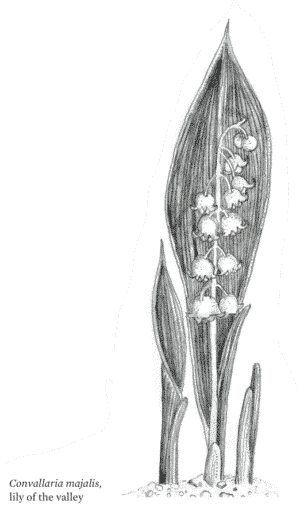
Convallaria majalis. This herb contains the cardiac glycoside convallarin which the Eclectic authors report is superior to Digitalis, less cumulative, and has a wider dosage window.
Cytisus scoparius. This uncommon herb is mentioned in Eclectic herbals for arrhythmias.
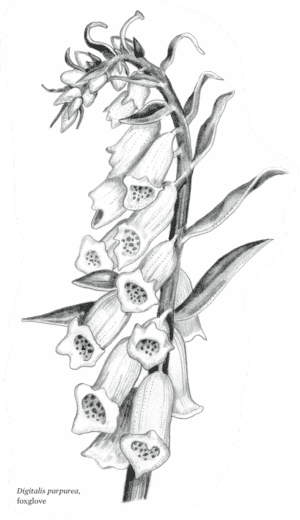
Digitalis purpurea. Digitalis contains steroidal cardiac glycosides that have a positive inotropic effect on the heart and is specific for tachyarrhythmias, slowing and strengthening the heartbeat.
Gelsemium sempervirens. A potentially toxic herb for experienced clinicians only, Gelsimium is a profound nerve sedative. Medical herbalists may use it in minute dosages for its strong nerve suppressive effects.
Ginkgo biloba. Ginkgolide can inhibit excessive Ca2+ current and calm cardiac excitability. Ginkgolide may also prevent ischemia-driven arrhythmias by enhancing coronary artery flow and cardiac perfusion.
Leonurus cardiaca. Leonurus is especially indicated for palpitations and tachyarrhythmias occurring with hormonal disturbances such as menopause and hyperthyroidism. Leonurus improves microcirculation, coronary artery flow,
Recommended Reads
Read The Book

Herbal Formularies for Health Professionals, Volume 2
Circulation and Respiration, including the Cardiovascular, Peripheral Vascular, Pulmonary, and Respiratory Systems
$44.95
You may like...
-
 $24.95
 -
$44.95
-
$59.95


Recent Articles

The gut plays a significant role in overall health. Here’s a juice recipe to help improve, gut health, digestion and boost immunity. Cheers to a healthier you!
Read More
Thyme is easy to grow and harvest in almost any condition. Follow these tips to get started growing, harvesting (and drying) thyme in your home or backyard!
Read More
Whether foraging or gardening, it’s vital to know the proper techniques for harvesting. Read on for how to harvest herbs, roots, flowers, bark, fruit, and more!
Read More
No summer day is complete without ice cream. Try out these dairy-free ice cream recipes to indulge in this frozen treat while still being kind to your gut.
Read More
Mead is one of the oldest fermented beverages and is made by fermenting honey with water, offering countless flavor possibilities. Let’s dive into the world of mead making!
Read More