

Move Over Squirrels, It’s Acorn Harvesting Time!
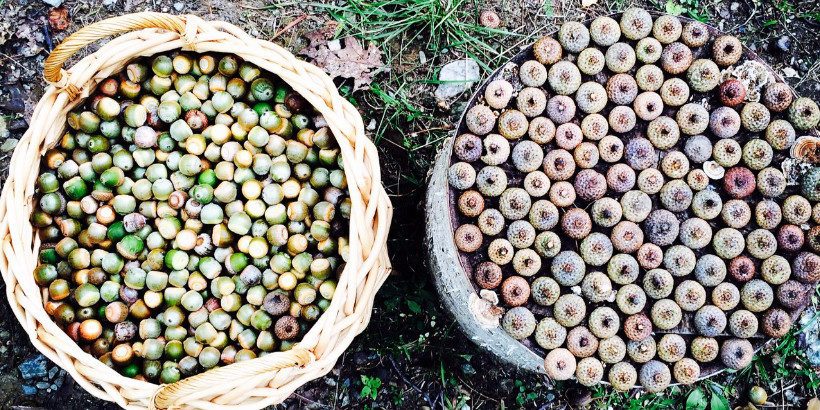
Think neighborhood squirrels are the only ones who can benefit from the abundance of acorns in the fall? Think again. These small fruits, which are completely edible for humans, are a delicious (and seasonal!) source of nutrients that you can find almost anywhere. Get started on acorn harvesting with help from these simple tips!
The following excerpt is from The Art of Fermentation by Sandor Katz. It has been adapted for the web.
Acorn Harvesting Tips
Acorns, the nuts of oak trees, are edible and in fact have been a critical source of nutrients for many native peoples in North America and elsewhere. In mainstream culture, however, acorns are largely ignored as a food for human consumption.
Meanwhile, ironically, the imminent threat of global food shortages is continually being used to justify deforestation and intensifying biotechnology. I’m not saying anyone should subsist on acorns alone, but let’s tap into the abundant food resources we already have rather than acting based upon the myth of overall scarcity.
The When’s & How’s of Acorn Harvesting

It is not a problem if acorns have already begun to sprout. California acorn enthusiast Suellen Ocean writes:
I like to gather sprouted acorns because the sprouting increases the acorn’s nutritional value. It is no longer in a “starch” stage, but has changed to a “sugar” stage. The sprouting also helps split them from the shell. It is beneficial because if it has sprouted, it’s a good acorn, and I haven’t wasted time gathering wormy ones. I’ve found that an acorn with a two-inch-long sprout is fine, as long as the acorn nut meat hasn’t turned green. I break off the sprout and continue.
Shell, Grind, and Soak
It is important to note that the acorns of many oak trees contain high levels of tannins and require leaching prior to consumption.
To do this, remove acorns from their shells, grind, and soak in water. You can grind acorns dry using a mortar and pestle or mill, or mix acorns with water and grind in a blender or food processor. Acorns should be finely ground to expose lots of surface area, enabling the tannins to leach out.
Leaching After Acorn Harvesting
Acorns can be leached in a fine mesh bag in a running stream (this is the fastest method), or in a series of soaks that can last for a few days. As acorn meal soaks, the meal will settle at the bottom of the vessel and the water will darken.
Gently pour off the dark water at least daily and discard. Water will darken less with each soak, as tannin levels decrease. Keep rinsing with fresh water until it no longer darkens. If you wish to ferment acorn meal, leave it to soak a few more days in just a small amount of water after the tannins have been leached.
Acorns can be used to fortify and flavor many different foods.
Once I made acorn gnocchi, which were excellent. Julia F. Parker, of the Miwok/Paiute people in California’s Yosemite Valley, wrote a beautiful book about acorn preparation called It Will Live Forever, in which she describes traditional techniques for making a simple porridge (nuppa) using only leached acorn meal and water, which is delicious!
And on a website devoted to the language of another California tribe, the Cahto, I came across reference to “fermented acorn/acorn cheese” (ch’int’aan-noo’ool’).
I have not found further information on fermented acorn cheese, nor have I experimented, but I include this tidbit in the hope that other acorn-loving fermenters will experiment in this vein.
Recommended Reads
Read The Book

The Art of Fermentation
With Practical Information on Fermenting Vegetables, Fruits, Grains, Milk, Beans, Meats, and More
$39.95
You may like...
-
 $34.95
 -
$34.95
-
$44.95


Recent Articles

Looking to add another recipe to your fermenting repertoire? This recipe for kvass calls for just a few ingredients and only takes a couple days to ferment.
Read More
Having a lack of outdoor greenspace doesn’t mean you can’t enjoy homegrown food. Sprouts are a quick, simple, and healthy way to keep your appetite satisfied.
Read More
Yogurt making is having a moment! Join the fun and create your own natural yogurt at home. Try our simple recipe using kefir as a starter and taste the difference for yourself!
Read More
Vermont’s sweet tradition in a glass! This recipe is inspired by the classic maple taffy-like candy Sugar on Snow. Unlike flavor-neutral simple syrup, maple syrup’s contribution to cocktails isn’t just sweetness but also buttery, nutty & vanilla flavors.
Read More
Unwind with a twist! Ditch the booze and elevate your evenings with this delightful herbal nightcap mocktail syrup. Relax before bed or spice up your tea time!
Read More