

RECIPE: How to Make Three Kinds of Kimchi
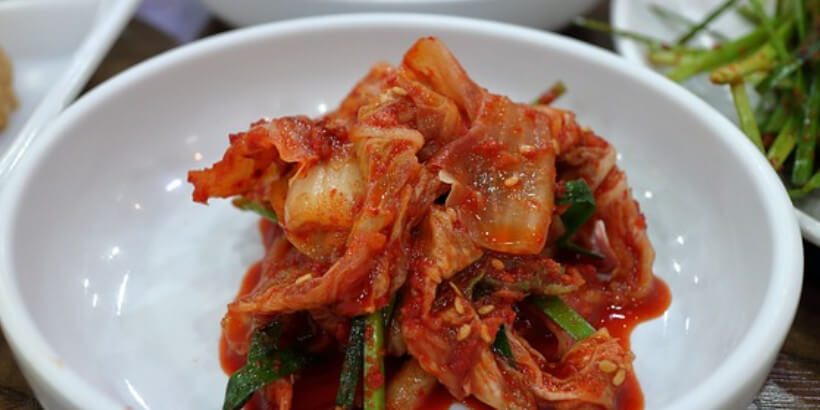
If I may be graphic for a moment—my mouth is watering, literally, as I type this. I have a new food passion, and its name is kimchi. This tangy, spicy side dish can be cooked with pork, in savory pancakes, or as a soup stock. And imagine if you made it with your own fresh, home-grown vegetables! That is a one-way ticket to Delicious City (population: you).
The following is an excerpt from Fresh Food from Small Spaces: The Square-Inch Gardener’s Guide to Year-Round Growing, Fermenting, and Sprouting by R.J. Ruppenthal. It has been adapted for the web.
Kimchi is Korea’s signature side dish, present in at least one form or another at every meal. Chock-full of fresh vegetables, vitamins, good bacteria, and enzymes, it is one of the healthiest things you can put in your body. There are hundreds of different varieties of kimchi, using all manner and combinations of fermented vegetables and other foods, but the most common kimchis are based on napa cabbage, radish, or cucumber, with a pasty sauce of crushed chili pepper, garlic, and salt. Below you’ll find three simple kimchi recipes; feel free to improvise and repeat the basic technique with your favorite vegetables. If the spicy taste of crushed red chili and garlic is too strong for you, feel free to reduce these ingredients to fit your palate. A chili-free version of the following dish is called “white kimchi” and tastes much like sauerkraut. Kimchi is briefly ripened at room temperature and then moved to the refrigerator, but in cool temperatures it could be stored outside.
Napa Cabbage Kimchi
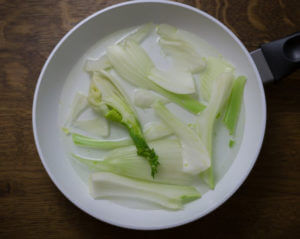
Kimchi, like sauerkraut, is fermented traditionally in large clay pots. You also can use a glass jar or any nonmetallic container, and this recipe also will require two mixing bowls (one large, one small). You will need:
- 1 napa cabbage, preferably organic
- 4 tablespoons sea salt
- 2–3 green onions or scallions
- 1 clove garlic, minced or crushed
- 2⁄3 cup hot red pepper powder
- 1/4 teaspoon ginger, crushed or grated
- 1/2 tablespoon sugar
- Optional: 1 tablespoon of water kefir, fermented shrimp paste, or other source of live culture, which will accelerate the fermentation.
- Wash the napa cabbage well, discarding the outer leaves.
- Chop the leaves. Their size should be similar to chopped lettuce in a typical salad.
- Put the chopped cabbage in the large bowl. Sprinkle in a little sea salt, rub it into the leaves, and mix together.
- In the smaller bowl, mix the crushed garlic, red pepper powder, ginger, sugar, remaining salt, and optional culture. This should form a pasty sauce. Add a spoonful or two of nonchlorinated water if it seems too dry.
- Pour the sauce paste over the chopped cabbage. Add the chopped green onion. Toss gently until it is coated.
- Place the whole mixture in a glass jar or other container. Cover it loosely with the lid or a cloth. Once the kimchi begins to give off a fermenting smell (which could be in a few hours or a day or two, depending on the climate/temperature), fasten the lid tightly and put the jar in the refrigerator to slow down the fermentation. Your kimchi is now ready to eat. It can be stored in the refrigerator for up to several months, but will begin to taste progressively stronger. If you like a fresher taste, eat it quickly. If you do not mind a sour kimchi, then allow it to continue ripening. Ripened kimchi, when chopped, can add incredible flavoring to fried rice, stir-fried noodles, or stew.
Radish Kimchi
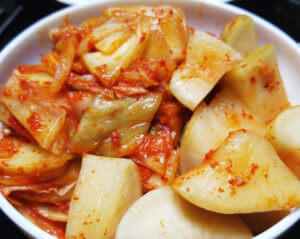
This is made just like the cabbage kimchi above, except with daikon radish cubes as the main ingredient. Use one large daikon radish, which should be thoroughly washed and peeled (an alternate version uses roughly the same quantity of baby daikon radishes, which are fermented whole, roots and greens, without chopping them). You will use the same ingredients as above, plus 1/2 tablespoon of grated fresh ginger (more if you really like ginger). Again, the culture from kefir water or fermented shrimp is optional, but will speed things up.
- Chop the peeled radish into cubes. In a mixing bowl, add some of the salt and begin to rub it in.
- In the smaller bowl, mix together the remainder of the salt plus other sauce ingredients as in the previous recipe.
- Pour sauce mixture over cubed radish, add in chopped green onion, and stir until well coated. Transfer kimchi mixture into a jar or other container, cover loosely, and allow it to ferment as described in the napa kimchi recipe.
- Older radish kimchi, which has a stronger fermented flavor, makes an incredible base for soups and stews.
Water Kimchi
Water kimchi is a soupier version in which both the vegetables and their broth get fermented deliciously. If you like the taste of pickles, this is a good one to try. Start with a few leaves of napa cabbage, washed and chopped like salad lettuce. A small daikon radish, washed and peeled, should be cut lengthwise into quarters and then sliced. Other optional ingredients include sliced pear, apple, or pickling cucumber. For additional twists, you can add sliced jujubes (the shriveled red dates found in Asian markets) or a few sprigs of parsley or watercress.
The remainder of the ingredients and directions are the same as for the recipes above, except that once you mix things together, you will cover the kimchi with nonchlorinated water plus enough extra salt to suit your taste buds. Put this mixture in a loosely covered jar or another container, and allow it to ferment for about 24 hours. At this point, you can store it in the refrigerator and start eating it; water kimchi is served in a small bowl and eaten like a cold soup. Pear and apple slices will ferment more quickly than the veggies, so you can pick these out and eat them sooner, as the fermentation will continue slowly even in the refrigerator. One warning: Water kimchi is very aromatic! In my family, we have a separate small refrigerator for fermented foods, and I am told that in Korea a separate kimchi refrigerator is now a standard home appliance.
Recommended Reads
Read The Book

Fresh Food from Small Spaces
The Square-Inch Gardener's Guide to Year-Round Growing, Fermenting, and Sprouting
$27.95
You may like...
-
$29.95
-
$29.95
-
$25.00


Recent Articles
Looking for something to munch on that’s both tasty and good for you? These ginger carrots are a healthy snack that are easy to make at home! The following excerpt is from The Heal Your Gut Cookbook by Hilary Boynton and Mary G. Brackett. It has been adapted for the web. Ginger Carrots Recipe…
Read More
Do you have an old, worn-out pair of jeans in your dresser? Instead of throwing them out, try to grow mushrooms on them. Follow these guidelines to get started.
Read More
Mead is one of the oldest fermented beverages and is made by fermenting honey with water, offering countless flavor possibilities. Let’s dive into the world of mead making!
Read More
Learn how to make the anti-inflammatory cocktail, Gates of Immortality! This is a vibrant, botanical twist on the classic Whiskey Smash.
Read More
If you’re planning out a forest garden, or are just looking for a plant to use as ground cover, garden strawberries are a great option.
Read More