Like this book? Digg it!

Book Data

ISBN: 9781933392271
Year Added to Catalog: 2006
Book Format: Paperback
Number of Pages: 6 x 9, 391 pages
Book Publisher: Chelsea Green Publishing
Old ISBN: 1933392274
Release Date: September 15, 2006

Also By This Author

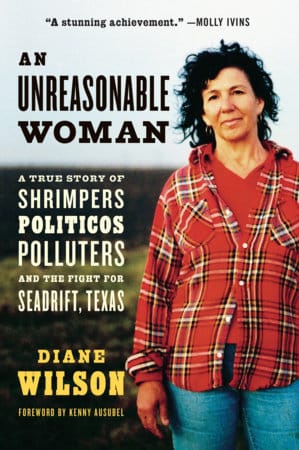
An Unreasonable Woman

A True Story of Shrimpers, Politicos, Polluters, and the Fight for Seadrift, Texas

by Diane Wilson

Foreword by Kenny Ausubel

Articles by this Author

Formosa Plastics: Jewel of the Texas Gulf Coast?

From Gristmill
Written by Diane Wilson
October 12, 2005

For being the self-proclaimed "Jewel of the Texas Gulf Coast," Formosa Plastics isn't doing so hot. Lucky for us, Hurricane Rita, initially packing 185 mph winds and headed straight for Formosa's ill-prepared and sprawling 1,800-acre PVC plant in Point Comfort, Texas, decided to turn north at the last minute. Formosa dodged a bullet.

No bullet-dodging last week: On October 6, at 3:30pm and after 30 minutes of obnoxious chemical fumes that drove Point Comfort citizens into the streets to wonder what ill wind was blowing their way, Formosa Plastics blew, sending a Nagasaki-style mushroom cloud and three, four, and five explosions thundering over the blistering Texas landscape. Formosa Plastics and neighboring Alcoa plant workers ran for their lives, many throwing themselves into nearby Lavaca Bay, host to one of the nation's largest underwater mercury Superfund sites. But for those workers, the mercury was the lesser of two evils. The worst was Formosa's explosion, which sent 11 workers to the hospital, two with serious burns.

Formosa Plastics' self-congratulatory "jewelness" has nothing to do with its hourly plant workers or Calhoun County's commercial and sports fishermen or the once jewel-like bays. That's just Y.C. Wang, aka Chairman Wang, aka El Presidenti, patting Formosa on the back. And he can do that because he owns the company, part of his family dynasty dating back to the late '40s and the good ole Taiwan Kuomintang days.

You gotta know that it's important for Chairman Wang to have one "jewel" of a plant, because his other U.S. plants, in Delaware, Illinois, and Louisiana, have either blown up or had serious environmental problems. (In Delaware, the courts finally served a summons by dropping it into the plant from the governor's helicopter; Formosa wouldn't let them onto the grounds to serve the summons.) So for everybody's peace of mind, and chiefly the chairman's, it's important that the parent company claim that Formosa Plastics Texas is "the Jewel" they built from scratch, 'cause the rest of their U.S. plants -- why, those was just junk plants they bought and made profitable.

But high-sounding labels mean nothing in a county that once ranked No. 1 in the nation for toxic disposal, and where the recent explosion is an increasingly familiar sight. Trophies mean nothing, either. In 1991, a few scant months after receiving the "Safest Plant in Texas" award from the Texas Chemical Council, Union Carbide Seadrift (a few miles southwest of Formosa) blew up, killing one worker and injuring 32 others. Debris as big as automobiles was hurled into the night.

Formosa Plastics Texas, the shiny new chemical plant on the block and the pride of Texas politicians, businessmen, and economic development types, was heralded as the county's savior (never mind the tax abatements) when construction got under way on the mammoth $1.3-billion-plus PVC plant. But by the mid '90s it had already earned the rank of worst among a dozen Texas PVC-related facilities. In 1991, Formosa was fined a record $3.7 million by the EPA for hazardous waste violations related to the discovery of massively contaminated groundwater under the facility. Violations included failures to comply with the most rudimentary hazardous-waste regulation -- storing waste in leaking containers, lack of adequate employee training, and illegal discharges of wastes.

In 1990, the company was fined $244,00 for 54 water-quality violations, then again in 1992, after a ten thousand pound release of hydrochloride gas that sent neighbors and cows bawling into the night, Formosa was fined $330,000 for worker-safety violations. OSHA inspection found that vinyl chloride levels were not monitored, flammable liquids were not handled properly, and general procedure for maintenance and repair were not followed.

In July '97, two workers were found asphyxiated and floating in a barge of EDC (ethylene dichloride) at the Formosa loading docks. In December '98, an explosion containing EDC injured 26 workers, rattled windows 35 miles away, and contaminated a back waterway into the bay with levels up to 400 ppm of EDC. In April 2004, Formosa's plant in Illinois exploded, killing 6 workers and injuring many more.

Vinyl chloride causes liver, stomach, and brain cancer. An abnormally high number of spontaneous abortions have been reported among the spouses of workers exposed to vinyl chloride, and increased rates of birth defects have been reported in areas where vinyl chloride plants are located. In spite of those alarming findings, little is done to protect the health of the people. In the '80s, when Formosa released 140,000 pounds of vinyl chloride in one day across the street from an elementary school, the PVC plant received less than a slap on the wrist, fined far less money than one unit made in a single day.

And regardless of Formosa's assurances of "no toxic emissions" to the surrounding community, it is worth noting that in 2000 the U.S. EPA criminal division and the FBI subpoenaed Formosa's wastewater documents for suspected criminal misconduct of the plant's wastewater reports. But I'll be darned if the investigation wasn't suddenly dropped after a record 8,000 pages, 12 years in the making.

Sometimes our so-called "jewels" need the equivalent of a Texas-luvin' death penalty. Adios, Formosa.


THE ART OF MISBEHAVIN’

DIANE WILSON

This piece by Diane Wilson appears in the CODEPINK book Stop the Next War Now: Effective Responses to Violence and Terrorism.

I went to Iraq with a group of CODEPINK women just before the U.S. invasion in March 2003. Before I left, I had heard a lot about how the Iraqis hated Americans and envied our lifestyle and freedom. With that in mind, I was totally surprised with what I experienced in Baghdad—instead of hatred and suspicion and grudges galore, I met people who were open and curious and generous. When I asked them if they were angry about the Americans on the verge of bombing their country, they all said, “We know it isn’t the American people at fault, but the administration.” Unlike so many people in the United States who think all Arabs are terrorists, Iraqis understood the difference between the American people and U.S. government policies.

Despite their unfailing graciousness, the Iraqis were quite afraid of the U.S. invasion. The waiters in our Baghdad hotel begged us not to leave. The children who met us every morning after our coffee—and who charmed us with their sales of pastries and scarves and shoe shines—hung on to our arms on our last day there and cried tears of desperation. They acted as if somehow, if we remained, the bombs wouldn’t fall.

The Iraqi people had no idea what to do to protect themselves and, in a futile gesture, taped up their windows. It reminded me a lot of what happens in my own hometown when a hurricane threatens the Gulf Coast: it’s almost surreal. A monumental thing is fixing to happen and there’s not much you can do to prepare for it, but you know it’s going to change your life.

Even before I’d arrived in Baghdad, I had been opposed to the war. I was raised in a small coastal fishing town in a state where concealed handguns are legal and hunting is equated with ritual. But I had developed a total aversion to killing. During my time as an army medic in the Vietnam War, I saw firsthand (in a boot camp in Georgia and in a medical ward in Fort Sam Houston) what happens to eighteen-year-old boys conscripted into wartime service: their descent from innocent enthusiasm into a hell of drugs and violence and numbing withdrawal. In the wards where I worked, patients constantly swiped needles to shoot up. A pot haze hung in the air like smoke from a lingering fire. This was a lost generation of boys.

This wasn’t something I wanted to see again. So before the war began, I went with Medea Benjamin to Washington, D.C., and we disrupted a House Armed Services Committee hearing where Donald Rumsfeld, the secretary of defense, was stating his case for war with Iraq. It was a spontaneous moment spurred by our wish to do something to stop the war, and it made national news because we did it while the TV cameras in the room were rolling.

One month later, a group of women from across the nation staged a hunger strike and vigil at Lafayette Park in front of the White House. We remained in the park, in the dead of winter, protesting the war and promoting peace for several months. During one protest, I scaled the fence in front of the White House with an antiwar banner and stayed up there for about five minutes until I was shoved to the ground by the Secret Service. For that action, I was arrested, jailed, and banned from Washington for an entire year. The Secret Service felt so threatened by our nonviolent antiwar protests that they even followed me to my hometown in Seadrift!

Still, I felt compelled to do more than just sit in Seadrift and grieve. So on the day before half a million Americans took to the streets of New York and people around the globe protested the invasion, a delegation of CODEPINK women assembled before the UN gate to protest. I climbed the fence and chained myself to it. I was then arrested and sent to trial. Later, back in Texas, two other protesters and I stood in the state capitol and shouted down a resolution supporting the war. For that I got four days in a women’s correctional facility outside Austin.

But still, I didn’t do enough. I don’t think I’ve ever regretted any failure as much. A war rages, children die, families are blown apart—and we are all too well behaved. I’m a fourth-generation commercial fisherwoman, born and raised in Texas and baptized in a river by a Pentecostal preacher. I’ve also been an environmental activist fighting the destruction on the Texas bays for years. My environmental activism flowed into the peace movement, and that flowed into CODEPINK. Just like the ecosystem where I shrimp, it’s all connected. The corporations like Formosa and Dupont and Dow are destroying the Texas bays and killing small communities like my town, and the federal government is bombing a whole country to control its oil. It’s the same destructive mentality at work.

When we say we don’t want war, those can’t just be words. Stopping a war takes a real commitment, and that means putting ourselves at risk. We have to pursue peace as aggressively as others want to make war. In our own American history, people have laid their lives on the line for their beliefs. To paraphrase one of them, Dr. Martin Luther King Jr.: If you don’t have something in your life that you’d die for, then you don’t have much to live for.

So we need to be bold and imaginative and brave. We’ve got to be heroes.

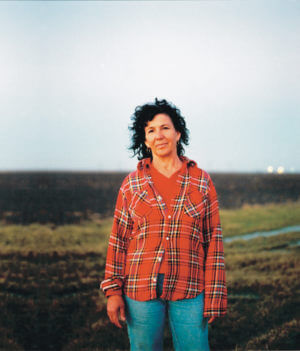
Diane Wilson is a mother of five and a fourth-generation shrimper from the Texas Gulf Coast. Through hunger strikes and other direct action, she has been putting pressure on chemical companies to stop poisoning the bay. A longtime environmentalist and peace activist, Wilson is one of the founding members of CODEPINK.


$18.00
On Sale: $14.40!
Format: Paperback
Status: Available to Ship
Ships: Next day

Also available in: Hardcover

On ChelseaGreenTV


Watch the larger version on ChelseaGreenTV >>

Related News

Diane Wilson's Upcoming Events