

Crunchy Candied Tree Leaves: A Natural Fall Dessert Topper
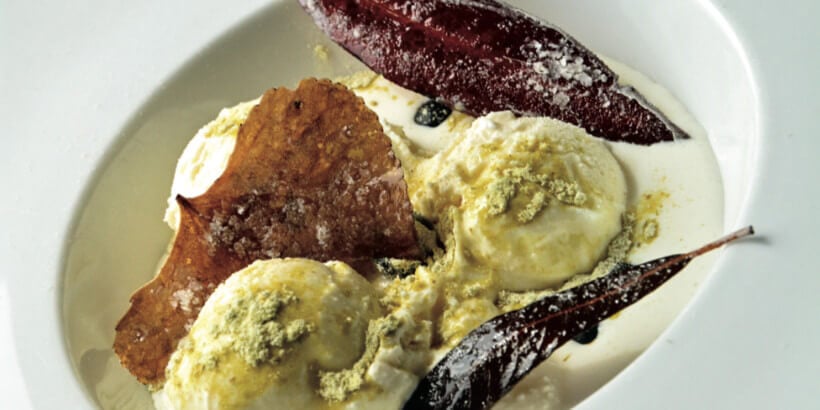
Instead of raking and throwing away fallen leaves this autumn, what if we repurposed them and turned them into something beautiful & delicious? Embrace the natural flavors of fall with this recipe for candied tree leaves.
The following recipe is from The New Wildcrafted Cuisine by Pascal Baudar. It has been adapted for the web.
RECIPE: Crunchy Candied Tree Leaves
I always wanted to do something with tree leaves, but very often they’re not palatable—they’re either too bitter or too tough to eat. With this method you can turn many types of non-poisonous tree leaves into crunchy, sugary, and tasty dessert decorations.
You must think ahead, though: This procedure takes 5 days from start to finish.
Ingredients
- A few non-toxic tree leaves (willow, cottonwood, and others)
- Water
- 1⁄2 teaspoon (3 g) salt
- 1 and 3⁄4 cups (350 g) sugar
- Flavoring ingredients: lemon slices, a couple of fresh ginger chunks, wild aromatic herbs
 Procedure
 Procedure
- Wash the leaves and place them in a pot with the water. Add the salt and bring to a boil. Reduce the heat and simmer the leaves for 15 minutes. Change the water and repeat the procedure for another 15 minutes. This will remove most of the bitter taste in the leaves.
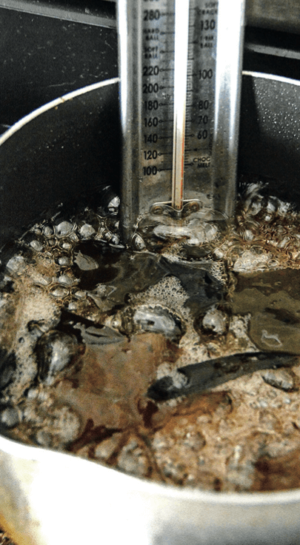
- Drain the leaves. Add 3 cups (750 ml) water and the sugar to the pot. Heat the syrup solution to a boil, add the leaves, and bring to a light simmer. Cook for 20 minutes. Remove from the heat and let stand overnight.
- Day 2: Bring the leaves and syrup to a boil. Turn the heat down and simmer lightly for 20 minutes. Remove from the heat and let stand overnight.
- Day 3: Bring the leaves and syrup to a boil again. Turn the heat down and simmer lightly for 20 minutes. Remove from the heat and let stand overnight.
- Day 4: This is the time to add ingredients such as lemon slices, ginger, and wild aromatic herbs to flavor the leaves. I usually add 3 to 4 lemon slices, a couple of ginger chunks, and a couple of white sage leaves to the syrup and then repeat the previous instructions: Bring the concoction to a boil, then simmer lightly for 20 minutes. Remove from the heat and let stand overnight.
- Day5: Preheat the oven to 340°F (171°C). Bring the leaves and syrup to a simmer and cook until the temperature reads 240°F (115°C).
- Using a fork or spoon, carefully remove the leaves from the syrup, placing the leaves on a plate. Using a rubber spatula, remove excess syrup from the leaves and lay them carefully on a piece of parchment paper or a silicone baking pad.
- Bake the leaves for 2 to 3 minutes, then remove them from the oven and place them on a fresh sheet of parchment paper. Let dry for 30 minutes. I usually use them the same day, but they should keep for days in dry conditions. Humidity will make them softer (not a good thing).
Recommended Reads
Seasonal Desserts: Apple Spice Bundt Cake & Pumpkin Pie with Hazelnut Crust
Read The Book

The New Wildcrafted Cuisine
Exploring the Exotic Gastronomy of Local Terroir
$40
You may like...
-
$29.95
-
$39.95
-
$40.00


Recent Articles

Looking to add another recipe to your fermenting repertoire? This recipe for kvass calls for just a few ingredients and only takes a couple days to ferment.
Read More
Having a lack of outdoor greenspace doesn’t mean you can’t enjoy homegrown food. Sprouts are a quick, simple, and healthy way to keep your appetite satisfied.
Read More
Yogurt making is having a moment! Join the fun and create your own natural yogurt at home. Try our simple recipe using kefir as a starter and taste the difference for yourself!
Read More
Vermont’s sweet tradition in a glass! This recipe is inspired by the classic maple taffy-like candy Sugar on Snow. Unlike flavor-neutral simple syrup, maple syrup’s contribution to cocktails isn’t just sweetness but also buttery, nutty & vanilla flavors.
Read More
Unwind with a twist! Ditch the booze and elevate your evenings with this delightful herbal nightcap mocktail syrup. Relax before bed or spice up your tea time!
Read More