Put your cooking and foraging skills to the test with this seasonal, delicious garlic mustard pesto recipe.
As spring arrives, nature offers a bounty of wild greens that can enhance your health and flavor in the kitchen. Foraged ingredients not only elevate your meals but also provide a boost to your immune system. Create a vibrant, nutrient-packed pesto that harnesses the power of springtime foraging.
(Heading photo credit: Phil Moore. All other photos courtesy of Sarah Bir unless otherwise noted.)
Foraging for Garlic Mustard
Foraging is about what’s abundant right now. Where I am (and very likely you are), right now is spring, and that thing is garlic mustard. I’ve been relying on this wily weed to jazz up soups, scrambled eggs, and pastas. Think of it as a cross between a cooking green and an herb.
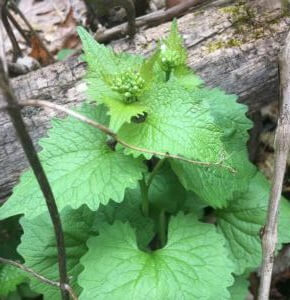
Garlic mustard (Alliaria petiolate) is invasive in North America, where it thrives in temperate woodlands and meadows.
Its tenacity is such that it sends out toxins to make nearby soil inhospitable to native plants.
Harvesting With Aplomb
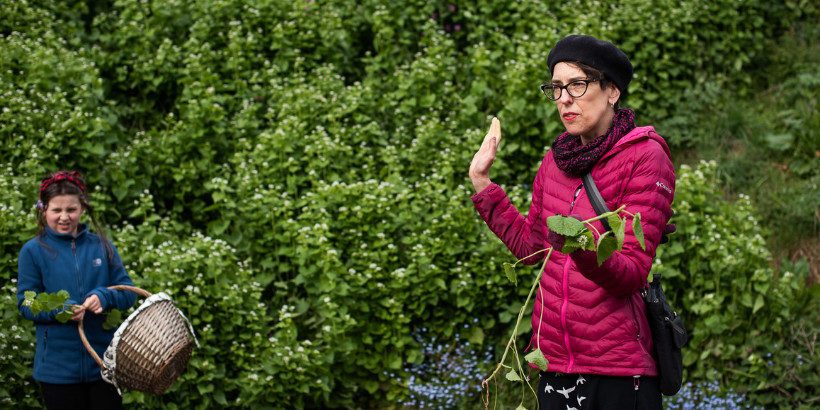
So you can, and should, harvest it with aplomb. Grab right down at its base and yank it up by the root.
A member of the mustard family, it resembles mustard greens in flavor, but with—yes—a wisp of garlic in there, and a large dose of bitterness.
I like the still-closed flower buds, which resemble broccoli rabe in appearance and taste. I’ve been relying on this wily weed to jazz up soups, scrambled eggs, and pastas.
Think of it as a cross between a cooking green and an herb.
That bitterness indicates a dynamite nutritional profile, but it can overwhelm. I like to taste the leaves raw before I harvest. Cooking seems to increase, not decrease, that bitterness, so I add leaves and buds at the finish of cooking.
The stems I don’t bother with. Any part of this pant you’re not cooking should go in the garbage, and not the compost. You don’t want to aid in spreading it.
My favorite use for gobs and gobs of garlic mustard is this pesto.
Garlic Mustard Pesto
Makes about 1 cup
Garlic mustard is grassy and feral, but that’s what makes it interesting. It will remind you of the woods where you found it.
This pesto has a forceful flavor, and is best paired with likewise robustly flavored foods. Try it on pasta with a strong parmesan and some capers that have been quickly fried in olive oil. Float a big dab on minestrone. Smear it on meats after grilling or roasting them. It’s also nice on oily fish like trout or salmon.
Put the greens, garlic, nuts or hemp seeds, salt, and lemon juice in the bowl of a food processor fitted with a steel blade.
Pulse a few times to break up the greens and decrease the volume. Then, with the machine running, add the olive oil in a thin stream and process until a smooth paste forms.
Taste and adjust seasoning as you wish. You want it to be highly seasoned.
If not using all the pesto immediately, transfer to a covered container and refrigerate for up to two weeks. You may also freeze the pesto for up to a year.
This bright, yet delicate flavor profile is both sweet and sour – a unique taste that you’ll keep coming back to. This recipe is intended for long, slow fermentation starting at persimmon harvest time in the autumn and continuing into winter.
This triple apple snack cake uses applesauce, cider, and apples for a one-two-three apple punch. Don’t take our word for it though, give it a go yourself!
These small fruits are a delicious source of nutrients that you can find almost anywhere. Get started on acorn harvesting with help from these simple tips!
Want an on-the-go snack without having to go to the grocery store? Whip up this homemade applesauce for a fresh fall snack whenever you get the craving!
The possibilities are pretty much endless with wild ingredients — use almost any fresh fruit or juice and a sweetener to create your own custom jam or syrup!