

Wild Spicy Forest Paste
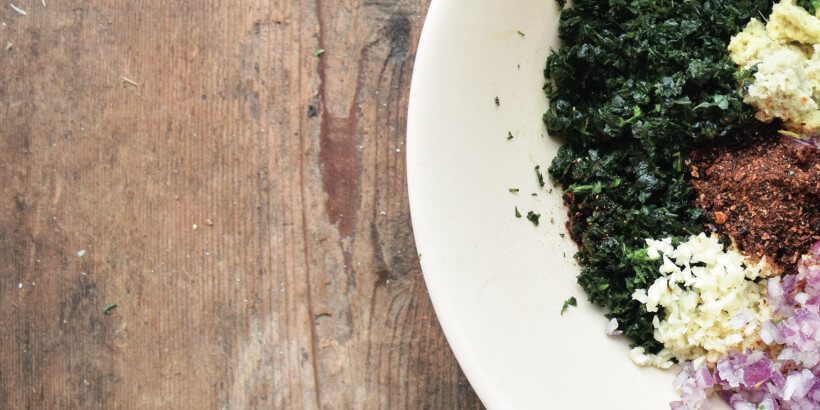
In his new book Wildcrafted Fermentation, professional forager Pascal Baudar combines his curiosity, research, and in-depth understanding of terroir to explore new and surprising uses for wild ingredients through fermentation.
The following is an excerpt from the Chelsea Green Spring 2020 Seasonal Journal. It has been adapted for the web
Springtime offers an abundance of delicious and tender wild greens such as chickweed, miner’s lettuce, wild chervil, tender young grass (foxtail), watercress, bitter cress, and countless others. Eating a freshly foraged salad is truly an epiphany of green flavors in your mouth: earthy, a punch of chlorophyll, grassy, the perfect balance of sweet and bitter. You cannot even approach those flavors with ingredients purchased at the store. And they can be preserved for use year-round in the form of pastes.
Spicy Forest Paste
I usually serve this paste on top of my acorn and wild seeds crackers, but it will work nicely on eggs, grilled steaks, and even fish. If your diet is plant-based, I would spread the paste on vegan pizza or simply use it as a savory side condiment.
Ingredients
Makes a ½-pint jar (236 ml)
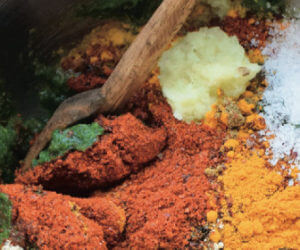
Image from Wildcrafted Fermentation
- 2 large jalapeño peppers, seeds removed, cut into large pieces
- 2 ½ cups (75 g) minced forest herbs (I use 60 percent chickweed, 20 percent chervil, 10 percent miner’s lettuce,10 percent others)
- 1 cup (30 g) lemon basil
- 1 cup (30 g) cilantro
- 7 garlic cloves, peeled
- 2 tablespoons (30 ml) Culture Starter
- 4½ tablespoons (27 g) paprika
- 2 tablespoons (15 g) Korean chili flakes
- ¾ teaspoon (2 g) ground coriander
- 1 teaspoon (2.5 g) chile morita or spicy chili flakes
- ¾ teaspoon (1 g) ground cumin
- 2 teaspoons (4 g) ginger powder or 1 tablespoon (5 g) grated fresh ginger root
- 1 teaspoon (3 g) garlic powder
- ½ teaspoon (1.5 g) ground black peppercorns
- 1 teaspoon (2 g) turmeric
- Salt
Procedure
- Process the jalapeños, forest herbs, lemon basil, cilantro, garlic, and starter in a blender until you get a smooth paste.
- Place this in a bowl, and add the spices, stirring to combine.
- Mix the salt with the paste and transfer to a jar.
- Close the lid and stir the ferment a couple of times daily until the fermentation gases subside, usually 7 to 10 days. You’ll need to burp as necessary.
Recommended Reads
Read The Book

Wildcrafted Fermentation
Exploring, Transforming, and Preserving the Wild Flavors of Your Local Terroir
$29.95
You may like...
-
 $29.95
 -
$29.95
-
$34.95


Recent Articles
Small But Mighty! Crab Apples are easy to find, simple to store, and incredibly flavorful. Keep reading to learn more about the unsung heroes of the apple family.
Read More
Try your hand at preserving veggies by freezing them! Freezing vegetables is a quick, simple way to preserve them for winter meals.
Read More
Add a rich and robust twist to your meals with help from red wine salt! This seasoning is a perfect addition to dishes like short rib, potatoes, and more.
Read More
Raspberries: they’re sweet, flavorful, and extremely versatile. Forage for raspberries yourself and use them to create delicious dishes!
Read More
This summer vegetable tian is the perfect easy side dish. Layers of eggplant, zucchini, tomato, & red onion make this dish healthy, colorful, and delicious!
Read More