

Umami Bomb: Caramelized Miso Cheese
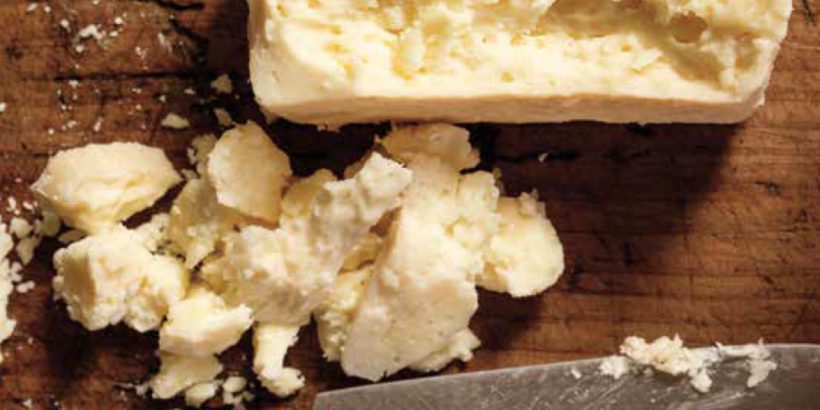
If you read our post about growing koji in your kitchen, you’re probably itching to try out those new koji skills! This miso cheese recipe is an excellent next stop on your koji-kitchen journey. Miso cheese is sure to add a twist to any cheese lover’s plate, plus it’s easy to make at home!
The following is an excerpt from Koji Alchemy by Rich Shih and Jeremy Umansky It has been adapted for the web.
Photo Credit: Peter Larson
Our good friend James Wayman, chef of the Oyster Club in Mystic, Connecticut, is making a huge impact on the southern New England food scene. He was inspired by our Miso Cheese and decided to make his own. As a result, he came up with a variation that we had to share.
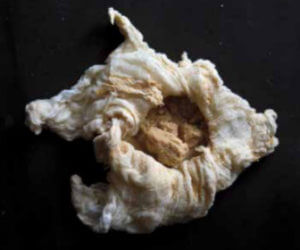
Dried ricotta miso cheese. Photo by Claudia Mak.
Ingredients
- 453 g goat cheese
- 226 g jasmine rice koji
- 33 g sea salt
Procedure
As you may have noticed, this recipe calls for a 2:1 ratio of protein base to koji. This ultimately increases the protein-to-starch ratio, which leans toward more umami (with less sugar for sweetness) as well as ultimate acidity in the fermentation, and follows along the lines of a traditional long-term miso that’s focused on protein conversion for umami over feeding microbes.
Follow the mixing and containment instructions in the recipe for Miso Cheese. Let the cheese do its thing at ambient temperatures for a month. (You’ll have to keep your eye out for the possibility of rancidity, of course. However, in all of our years of making Miso Cheese at ambient temperatures, we’ve never had an issue with it tasting bad.)
After the set duration, form a ball with the miso and hang it in cheesecloth for another week at ambient temperatures. Due to the ball shape, a touch of alcohol will build up inside. Break up the ball in a medium-sized bowl so the largest pieces are no bigger than 0.5 inch (1.2 cm). Spread it evenly on trays in a dehydrator set for 140°F (60°C) and run it for 8 hours. You’ll end up with an amazing caramelized crumble that has crazy umami to top whatever you’d normally grate a sharp cheese or Parmesan over.
As an extension of this technique, you may be thinking that smoked cheese as a base for making an amino paste would be a good way to go. Well, we’ve found that there are times when it doesn’t work out well. Smoking generates creosote, which is deposited on the food. It’s acrid, bitter, and binds well to fats. We’ve found that when you use smoked cheese as a base for a miso, the undesirable flavor overpowers. This is especially true when you dehydrate it. So if you would like to make a smoked version, we recommend doing a cold smoke after all is said and done.
Recommended Reads
Read The Book

Koji Alchemy
Rediscovering the Magic of Mold-Based Fermentation (Soy Sauce, Miso, Sake, Mirin, Amazake, Charcuterie)
$34.95
You may like...
-
 $75.00
 -
$40.00


Recent Articles

Small But Mighty! Crab Apples are easy to find, simple to store, and incredibly flavorful. Keep reading to learn more about the unsung heroes of the apple family.
Read More
Try your hand at preserving veggies by freezing them! Freezing vegetables is a quick, simple way to preserve them for winter meals.
Read More
Add a rich and robust twist to your meals with help from red wine salt! This seasoning is a perfect addition to dishes like short rib, potatoes, and more.
Read More
Raspberries: they’re sweet, flavorful, and extremely versatile. Forage for raspberries yourself and use them to create delicious dishes!
Read More
This summer vegetable tian is the perfect easy side dish. Layers of eggplant, zucchini, tomato, & red onion make this dish healthy, colorful, and delicious!
Read More