

Bokashi Bins: Easy and Affordable Kitchen Composting
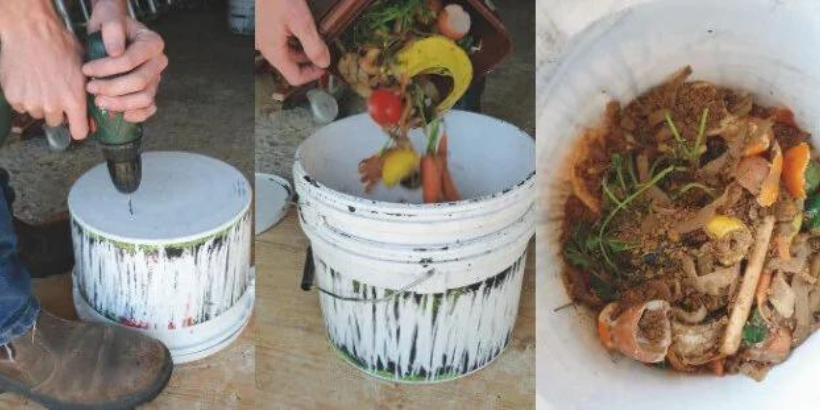
Looking for a new way to compost? With Bokashi bins, the organic matter from your compost is broken down and turned into a preserved or pickled substance. Plus, the whole design is affordable and easy to build & use!
The following is an excerpt from The Ecological Gardener by Matt Rees-Warren. It has been adapted for the web.
Making and Using Bokashi Bins
This simple and effective system uses affordable and recycled materials. Upscale to larger buckets, dependent on the amount of waste you produce.
- Source two used 15–20l plastic buckets with sealable lids. You can find them through farm, food or building trades.
- Using a 6–8mm drill bit, drill approximately 15–20 holes in the bottom of one of the buckets. Be careful not to crack the bottom by drilling the holes too closely together (figure 1).
- Place the bucket with the holes inside the bucket without, and begin filling with food waste. Add the organic waste in batches, rather than singular items, in order to create layers (figure 2).
- Then place a layer of inoculated bran over the top and seal the lid shut until you have more waste to add (figure 3). Inoculated bran refers to flaky organic materials – typically wheat bran – mixed with what are known as Effective Microorganisms (EM-1) and some sort of fuel for these microbes, such as molasses. You can make your own inoculated bran by raising your own EM-1 culture, or buy a branded bokashi mixture that already contains it. The former takes time to produce while the latter costs money – the eternal conundrum.
- Once the bucket reaches a quarter full, take the top bucket out and collect the liquid or ‘tea’ from the bottom bucket. A tap can be affixed to the bottom to make this easier (figure 4).
- Once the top bucket is full, set aside for two to three weeks, draining the liquid regularly to allow the waste to ferment. Then take the waste and add to an existing compost pile. The liquid is an extremely potent, but acidic, inoculated natural fertiliser that can be diluted to a ratio of 50:1 (water:concentrate) and applied directly to the plants or soil.
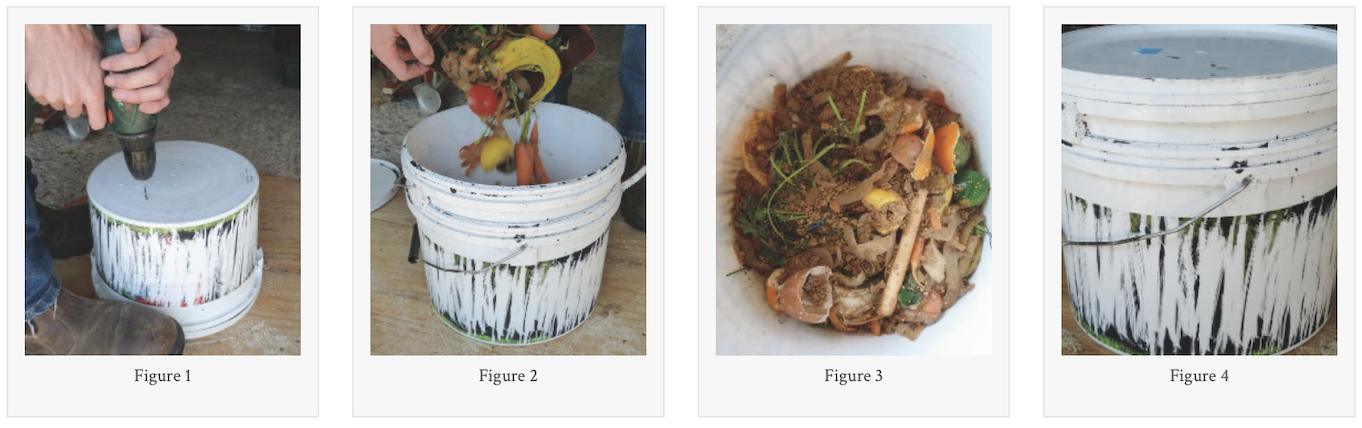

Bokashi Bins: What Is Bokashi?
Bokashi is a type of dry anaerobic fermentation that includes among its ingredients the added input of specifically selected microorganisms, which convert the organic matter into a preserved or pickled substance.
This process neutralises the organic matter and, in a way, pre-digests the food, making it ready for the standard aerobic compost method to take over. It couldn’t be simpler to do, and the first step is to make the container that the food waste will be stored in.
Trench Composting
Trench composting is an another more simplistic technique of ‘dry’ anaerobic composting that involves digging a pit or trench to fill with organic, uncomposted matter, which then rots beneath the soil. This technique results in the majority of nutrients being localised within the trench and therefore plants – traditionally crops like runner beans – must be sown and grown on top of the trench.
There is nothing especially wrong with this method; it just has some rather obvious flaws. Firstly, you can’t use any of the waste, like meat and dairy, as with bokashi, since it will attract rodents and won’t break down quickly enough.
Secondly, trench composting is only useful for growing plants on top of the trenches, which generally works with veg gardens and nowhere else, although it’s perfectly feasible to bury waste and then plant a tree or shrub on top. In the end, it’s far easier to add this waste to the compost pile, so you can use the matured compost wherever and whenever you need it.
Recommended Reads
Food for Your Garden: Starting a Traditional Compost Pile in Your Yard
You may like...
-
 $34.95
 -
$44.95
-
$29.95


Recent Articles
Small But Mighty! Crab Apples are easy to find, simple to store, and incredibly flavorful. Keep reading to learn more about the unsung heroes of the apple family.
Read More
All hail the mighty garlic clove! Become a master at garlic growing with these simple tips for growing no-till garlic from seed to harvest.
Read More
Try your hand at preserving veggies by freezing them! Freezing vegetables is a quick, simple way to preserve them for winter meals.
Read More
As your favorite variety of home grown tomatoes start ripening on the vine this summer, be sure to save those seeds for next year’s planting.
Read More
Add a rich and robust twist to your meals with help from red wine salt! This seasoning is a perfect addition to dishes like short rib, potatoes, and more.
Read More