
Recipe: Summer Herb Flower Vinegar
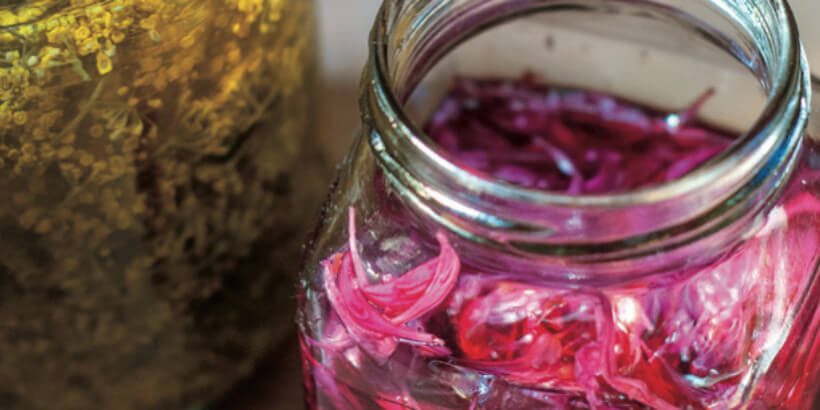
Olivia’s mom, Lola, is famous for her potato salad that seems so simple, but has a certain je ne sais quoi—the secret ingredient: chive-flower-infused vinegar. She recalls, “As a child I was enchanted by the apothecary bottles lined up on our kitchen shelves, stuffed with purple pompoms—I just knew there was magic happening inside.” By following this simple recipe, you too can create magic!
This excerpt is from The Occidental Arts and Ecology Center Cookbook by The Occidental Arts and Ecology Center with Olivia Rathbone. It has been adapted for the web.
Instructions
Pack the herb flowers into the bottom of a clean, small-mouthed pint (or quart) -sized Mason jar or other glass container. Pour in the vinegar to cover by an inch. Vinegar will corrode metal, so use a plastic lid—if you don’t have one, create a barrier by putting a piece of plastic wrap or waxed paper over the mouth and screw on the metal lid over it. Keep in a cool dark place for 3 weeks. Strain the infused vinegar, compost the spent flowers, and funnel the vinegar back into the original bottle or another decorative glass vessel. Makes a great gift.
Serves 4–6
Makes about 1½ cups
- 1½ cups packed chive flowers, society garlic flowers, sage flowers, rosemary flowers, basil flowers, monarda (bee balm) blossoms, dill flowers, or fennel flowers
- Good-quality white wine or champagne vinegar to cover, about 1½ cups
Serves 30–40
Makes about 3 cups
- 3 cups packed chive flowers, society garlic flowers, sage flowers, rosemary flowers, basil flowers, monarda (bee balm) blossoms, dill flowers, or fennel flowers
- Good-quality white wine or champagne vinegar to cover, about 3 cups
You may like...
-
 $35.00
-
$44.95
-
$45.00


Recent Articles

With this raw fermentation recipe you’ll have everything you need to make apple vinegar that’s the perfect addition to almost any condiment or dish.
Read More
Having an indoor sprout garden is easier than you might think and yields a bountiful harvest. Here’s how to get started — right from your windowsill!
Read More
This bright, yet delicate flavor profile is both sweet and sour – a unique taste that you’ll keep coming back to. This recipe is intended for long, slow fermentation starting at persimmon harvest time in the autumn and continuing into winter.
Read More
This triple apple snack cake uses applesauce, cider, and apples for a one-two-three apple punch. Don’t take our word for it though, give it a go yourself!
Read More
These small fruits are a delicious source of nutrients that you can find almost anywhere. Get started on acorn harvesting with help from these simple tips!
Read More