

Simple, Greek-Style Yogurt
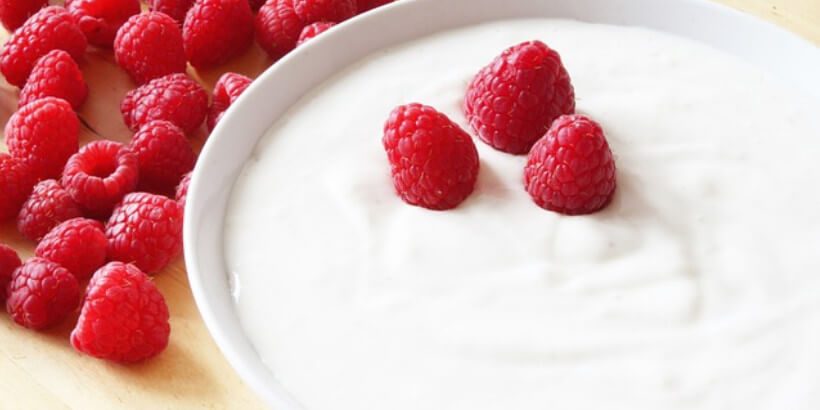
Looking for a simply & healthy snack to make this spring? These tips will help you whip up a delicious Greek-style yogurt with ease.
The following excerpt is from Keeping a Family Cow by Joann S. Grohman. It has been adapted for the web.
Making Yogurt
Milk from a high-milk-solids breed such as the Jersey makes the best yogurt. Use whole milk and you’ll get a little “frosting” of yogurty cream on top. I often make mine in eight-ounce ceramic pots, glass jelly jars, or coffee mugs. Sometimes I just fill a large pan with milk.
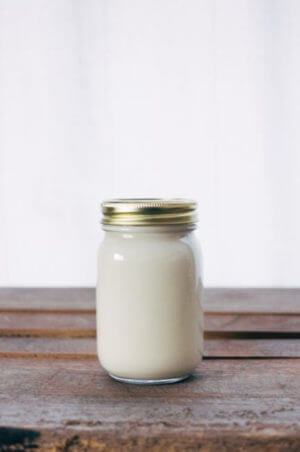 I have uneven success with yogurt unless I first scald the milk to destroy the competing bacteria, but this does forfeit some of the essential value of raw milk.
The important point is that the milk must be between 90°F and 115°F to make yogurt.
So you can scald your milk, then let it cool to this temperature, or if you don’t want to destroy the probiotics in raw milk, you can simply warm your milk to this temperature.
Yogurt Starter
For yogurt starter, for every two quarts of milk, use about one-quarter cup (no more; the organisms don’t like to be crowded) of your last batch of yogurt or of a first-class brand of fresh plain yogurt, or use a commercial starter and follow the packet directions.
When your milk is warm, add the starter, and stir it in gently but thoroughly with a very clean spoon. Pre-warm the vessels in which you plan to set your yogurt, then pour or ladle it in and cover them.
Find a spot in your home that will keep the yogurt cozy, without allowing it to fall below 90 ̊F or heat it above 115°F. It is worth a bit of trouble to find the ideal spot for incubating your yogurt.
Once you hit on the successful combination of container and heat source, you can make yogurt quickly and easily, without having to give it much thought.
The incubation should take about four hours. Try not to jiggle the yogurt while it is setting or it will be runny.
If your yogurt is not as thick as you would like, there are several things you can do about it.
To begin, note that raw milk yogurt tends to be less firm. To firm it up a bit, you can let it sit longer, or you can obtain fresh starter. Using a larger amount of starter is unlikely to be helpful. The yogurt organisms prefer not to be crowded. Do be sure to mix thoroughly.
I usually make yogurt in one big pot and ladle out the whey as it accumulates. This has the effect of thickening the yogurt. You can make Greek-style yogurt by draining the whole batch of yogurt through a wet linen tea towel to remove some of the whey.
Recommended Reads
Read The Book

Keeping a Family Cow
The Complete Guide for Home-Scale, Holistic Dairy Producers, 3rd Edition
$24.95
You may like...
-
 $40.00
 -
$34.95
-
$21.95


Recent Articles

The possibilities are pretty much endless with wild ingredients — use almost any fresh fruit or juice and a sweetener to create your own custom jam or syrup!
Read More
Fermenting mead is an ancient practice. With step-by-step instructions, learn how to brew fruit-based and flower meads, from foraging to fermenting.
Read More
Small But Mighty! Crab Apples are easy to find, simple to store, and incredibly flavorful. Keep reading to learn more about the unsung heroes of the apple family.
Read More
Try your hand at preserving veggies by freezing them! Freezing vegetables is a quick, simple way to preserve them for winter meals.
Read More
Add a rich and robust twist to your meals with help from red wine salt! This seasoning is a perfect addition to dishes like short rib, potatoes, and more.
Read More