

Eating Well Made Easy: Practicing Stress-Free Eating
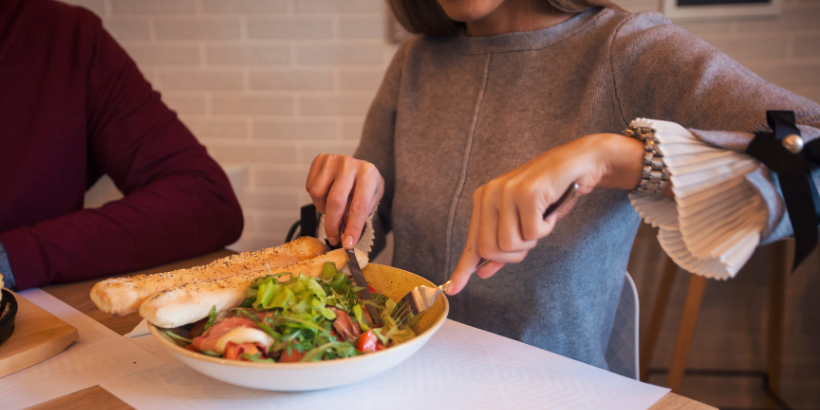
Eating well doesn’t have to be stressful or complicated. We don’t need to go on the latest fad diet, count every single calorie, or exercise for an hour each day to reach optimal health; all we need to do is remain mindful of what we’re putting into our bodies and how we’re consuming these foods. To truly practice and stick with good eating habits, we should start by paying attention to our daily routine and making small alterations where necessary. Below are some quick and easy ways to practice stress-free eating in our daily lives.
The following is an excerpt from Holistic Cancer Medicine by Henning Saupe MD. It has been adapted for the web.
Good eating habits are not only part of our intestinal health, but also the basis of the health of our entire organism.
Time
Meals should not be eaten in between doing other things and while standing or walking, but should be given the time they deserve. Rushing and stress when eating can, in the truest sense of the word, upset the stomach: A calm atmosphere, so that our senses can concentrate on the food, and enough time are important prerequisites so that we can eat our food without stress and then digest it well. Rushed gobbling down, eating food that is too hot, or perpetually eating a cold snack because you have to get going again in a hurry all put unnecessary strain on the stomach and intestines and lead to digestive problems such as abdominal pain, constipation, and flatulence.

People who often eat quickly until they “can’t manage any more” also put a strain on their whole organism. The regular excess thus often translates to gained weight. For this reason, in Japan there is said to be a behavior of always finishing a meal before feeling full, which is estimated to correspond to only 70 percent of a meal. Since the stomach lags behind a little with its reporting, as just mentioned, this method can be used to determine after a while that 70 percent is enough to feel sufficiently full.
Disruptive Factors
In our busy and multimedia (Western) world, we are now subject to constant noise, ringing, and chatter, and there are more and more moving images (with sound) on flatscreens, even in restaurants, bars, and cafes.Above all, we should have a break from the phone, computer, and television, but also the radio, a book, or a newspaper when we’re eating, so that we can concentrate fully on the food. Our senses are otherwise occupied with absorbing and processing the information and not with absorbing and processing the food.
Appreciation and Regularity

Rest Breaks
On the other hand, in the case of a lack of energy, it may also be appropriate to help the organism regain energy not by eating but, for example, by getting enough sleep and taking regular breaks for sleep and rest. The body can also signal a desire for food when the underlying need is actually relaxation or sleep, or when we should be attending to our body (and mind) in other ways.
The Exception Proves the Rule
Since we all deal differently with rules and their deployment and adherence, stress-free eating or stress-free eating habits ultimately include the exception: Unless we are supposed to stick to a strict diet plan for a certain period of time for medical reasons, a glass of wine, dark chocolate, or similar treats should not lead to a bad conscience or unnecessary stress. If you want to eat a vegetarian or vegan diet for ethical reasons, you should pay close atten-tion to plant-based fats and oils, proteins, and minerals. Otherwise, eating good-quality meat or fish raised with species-appropriate husbandry presents a healthy exception to the vegetarian diverse and f resh diet.If we generally eat a varied, diverse, and f resh diet, it is not a problem if one (unhealthy) exception proves the rule.
Recommended Reads
Read The Book

Holistic Cancer Medicine
Integrative Strategies for a New Approach to Health and Healing
$26.95
You may like...
-
 $24.95
 -
$29.95
-
$19.95


Recent Articles

Looking to add another recipe to your fermenting repertoire? This recipe for kvass calls for just a few ingredients and only takes a couple days to ferment.
Read More
Having a lack of outdoor greenspace doesn’t mean you can’t enjoy homegrown food. Sprouts are a quick, simple, and healthy way to keep your appetite satisfied.
Read More
Yogurt making is having a moment! Join the fun and create your own natural yogurt at home. Try our simple recipe using kefir as a starter and taste the difference for yourself!
Read More
Vermont’s sweet tradition in a glass! This recipe is inspired by the classic maple taffy-like candy Sugar on Snow. Unlike flavor-neutral simple syrup, maple syrup’s contribution to cocktails isn’t just sweetness but also buttery, nutty & vanilla flavors.
Read More
Unwind with a twist! Ditch the booze and elevate your evenings with this delightful herbal nightcap mocktail syrup. Relax before bed or spice up your tea time!
Read More