

Take a Tea Break to De-Stress This Winter!
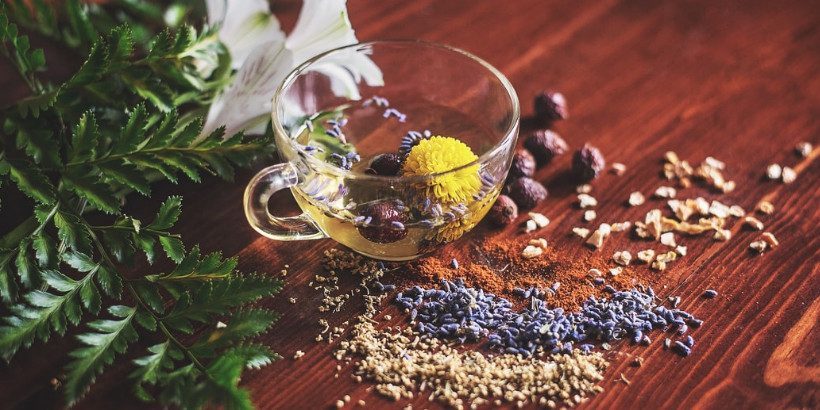
Life can be stressful! Sometimes there’s just no avoiding it. Luckily, taking a moment to brew and enjoy a cup of tea can actually help quite a bit– especially if you’re brewing a cup of Jill Stansbury’s Tea for Stress-Related Muscle Tension.
Next time you’re feeling stressed, take a break and brew some tea. Better yet, brew this tea before you’re stressed out as a preventative measure.
The following is an excerpt from Herbal Formularies for Health for Health Professionals, Volume 5 by Jill Stansbury. It has been adapted for the web.
Tea for Stress-Related Muscle Tension
Simply stopping to brew and drink a tea benefits nervous tension. I often prescribe teas for any medical complaint with stress as an underlying cause, for the self-care moment the ritual can offer. Passiflora and Scutellaria are general nervines, while Avena is a nourishing mineral tonic with trophorestorative effects on the nervous system. Glycyrrhiza supports the adrenal glands and their involvement in stress responses, plus it sweetens up the tea.
Ingredients
- Glycyrrhiza glabra 2 ounces (60 g)
- Avena sativa 2 ounces (60 g)
- Passiflora incarnata 1 ounce (30 g)
- Scutellaria laterifl ora 1 ounce (30 g)
- Equisetum arvense 1 ounce (30 g)
Procedure
- Steep 1 tablespoon of the combined herbs per 1 cup (240 ml) hot water for 10 minutes.
- Strain and drink 3 or more cups a day for 5 to 10 days, reducing as symptoms improve.
The Ingredients: A Closer Look
Glycyrrhiza glabra • Licorice
The sweet-tasting roots of Glycyrrhiza are used as a systemic all-purpose anti-inflammatory and antiallergy agent, with particular affinity for mucous membrane inflammation and ulceration. The oral lesions of lichen planus, lupus, and erythema multiforme, as well as aphthous ulcers and canker sores may respond to licorice teas and solid extracts. Glycyrrhiza is also indicated in formulas to help wean patients whose eczema, asthma, and other allergic phenomena have been managed with steroids, to upregulate and normalize adrenal function or cortisol regulation. Glycyrrhizin is a steroidal saponin present in licorice root and contributes to its sweet flavor and has been shown to boost the effects of cortisone in RA patients when used in tandem. Glycyrrhizin is metabolized into glycyrrhetinic acid in the gut, and both compounds are credited with antiallergenic and anti-inflammatory activity.
Avena sativa • Oats
Avena is most used for allergic conditions as an herbal bath, plaster, or poultice to allay itching. Avena baths and poultices are indicated for all sorts of itching, including dermatitis, chicken pox, mosquito bites, pityriasis, and other pruritic skin conditions. Oatmeal baths have moisturizing, cleansing, antioxidative, and anti-inflammatory properties, and clinical research has shown that Avena has a very low allergenic potential, making it safe for atopic individuals, even in the midst of an acute episode of allergic dermatitis.Use as a full-strength bath for dermatitis, itchy dry skin, and nervous skin complaints.
Scutellaria baicalensis • Scute
Mature roots of Scutellaria baicalensis are used medicinallyas a broad-acting anti-inflammatory agent. S. baicalensis inhibits the release of histamine from basophils and mast cells and is appropriate as a lead herb internally to reduce allergic response and atopic skin conditions. Flavonoids in the roots modulate prostaglandin via cyclooxygenase inhibition, explaining traditional use in treating asthma, allergy, and dermatitis. Baicalein is one such flavonoid with numerous anti-inflammatory and antiallergic activities, reducing mast cell degranulation and inhibiting the release of eotaxin from fibroblasts. Wogonin is another Scutellaria flavonoid shown to reduce mite-induced inflammatory cytokine release and contributing to the antiallergy effects of the herb. S. baicalensis has been extensively used in TCM for thousands of years, with the common name of huang qin, where it contributes cooling and drying anti-inflammatory effects to formulas.

Drawing on her decades of clinical experience and her extensive research, Dr. Jill Stansbury offers an unparalleled range of herbal formulas in Herbal Formularies for Health Professionals.
This set is organized by body system, and each volume includes hundreds of formulas to treat common health conditions, as well as formulas that address specific energetic or symptomatic presentations. Dr. Stansbury also offers her own formulas, formulas from herbal folklore, and formulas from Traditional Chinese Medicine. For each formula, she offers a brief explanation of how the selected herbs address the specific condition using sidebars and user-friendly lists—helping readers quickly choose which herbs are best for specific presentations.
Browse all five volumes of Herbal Formularies for Health Professionals
Recommended Reads
Read The Book

Herbal Formularies for Health Professionals, Volume 5
Immunology, Orthopedics, and Otolaryngology, including Allergies, the Immune System, the Musculoskeletal System, and the Eyes, Ears, Nose, Mouth, and Throat
$49.95
You may like...
-
 $44.95
 -
$24.95
-
$34.95


Recent Articles

Eating wild food is a radical act! Look no further than the ultimate comfort dinner recipe: Juniper & Elderberry Braised Short Ribs — served up alongside tips on how to forage juniper berries.
Read More
Before yanking out the next patch of lambsquarter you find in your yard or garden, consider trying one of the many edible and medicinal uses of this “super weed.”
Read More
Looking to add another recipe to your fermenting repertoire? This recipe for kvass calls for just a few ingredients and only takes a couple days to ferment.
Read More
Having a lack of outdoor greenspace doesn’t mean you can’t enjoy homegrown food. Sprouts are a quick, simple, and healthy way to keep your appetite satisfied.
Read More
Yogurt making is having a moment! Join the fun and create your own natural yogurt at home. Try our simple recipe using kefir as a starter and taste the difference for yourself!
Read More