(Unless otherwise noted, all photography curtesy of Pascal Baudar.)
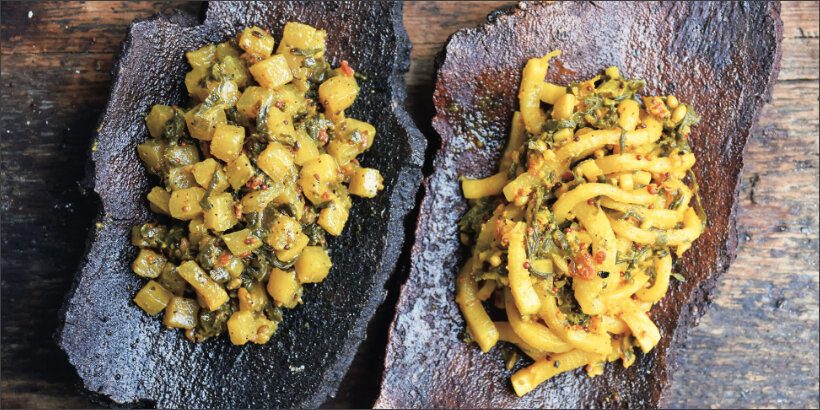
RECIPE: Fermented Mixed Wild Greens and Daikon Achar
This ferment is one of my favorites and will work well with many store-bought or wild greens such as watercress, lamb’s-quarter, dandelion, chickweed, miner’s lettuce, various mustard leaves, wild radish leaves, and countless others.
You can replace daikon with other large radishes (Korean radish, cherry radish, et cetera) or experiment with beets, turnips, and similar root vegetables. Carrots would probably work well, too. In early spring I incorporate tender wild turnip roots.
During the winter I may add a bit of herb powder—mallow, nettles, chickweed, and so on. So really take a look at this recipe as a base to create from.
Warning! The following recipe will make you cry—probably in an awesome way, with tears of joy.
But seriously, it’s quite spicy; it’s meant to be used sparingly to boost flavors.
My main use is in salads; I mix in some achar with my greens to add some zing. But it’s quite good as a side condiment or topping for fish and meat, too.
Ingredients for a 1-pint jar (475 ml) (around 70 percent full)
8 ounces (226 g) daikon (you can also use any other large radish roots)
1 ounce (28 g) dandelion (green leaves) or other wild greens, chiffonade cut
1 teaspoon (2 g) turmeric powder
1⁄2 teaspoon (1 g) curry powder or Curry Blend
1–2 tablespoons (7.5–15 g) chile morita or other chili flakes, mild or not
1⁄2–1 teaspoon (1–2 g) ground peppercorns
1⁄2 teaspoon (1 g) ginger powder
1 teaspoon (3 g) coriander seeds
1⁄2 teaspoon (2 g) fenugreek seeds
1 teaspoon (4 g) black mustard seeds
1⁄2 teaspoon (2 g) fennel seeds
11⁄2 teaspoons (8 g) salt
2 tablespoons (30 ml) Culture Starter (this may not be necessary, but I use it anyway)
Procedure
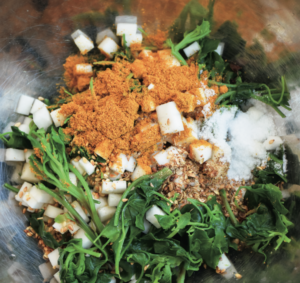
Trim one side of your daikon (or other radish) root and turn it to lie flat. Take your time and cut the root lengthwise into 1⁄4-inch (0.6 cm) slices, then carefully slice again into large matchsticks. Think small French fries. Cut the dandelion and place everything into a bowl.
Mince the garlic gloves and add them to the bowl with the turmeric, curry, chili flakes, peppercorns, and ginger.
Roasting the seeds takes a couple of minutes. I warm a cast-iron pan on high heat and place the bigger seeds in first (coriander and fenugreek). After a minute, I add the smaller seeds (mustard and fennel). Keep the seeds moving using a wooden spatula (or regular spoon). Judge doneness by smell: With high heat it should not take more than a couple of minutes. Watch out for the mustard seeds, which have a tendency to pop a bit.
When your seeds are roasted, add them to the bowl as well. Add the salt and, using gloves, massage everything for a couple of minutes. Let it rest for 5 minutes, then massage again for another couple of minutes. You want the contents to be quite juicy. Repeat if necessary. Next, add the culture starter (active sauerkraut juice), then pack everything into a pint jar. I use the stir or shake method (fermentation method 3, page 28).
Place the lid on top and close it, but not so tight that fermentation gases can’t escape. At least twice a day, open the jar and stir the contents with a clean spoon or fork. Most of the time I actually leave the lid closed tight to monitor the fermentation; I will burp as necessary while stirring or shaking only once a day. Both methods work well. Ferment for 7 to 10 days, and when the initial fermentation is complete (no more gases), place in the fridge. Enjoy whenever you want; the stuff will last for months. The ferment should end up quite salty on purpose.
This bright, yet delicate flavor profile is both sweet and sour – a unique taste that you’ll keep coming back to. This recipe is intended for long, slow fermentation starting at persimmon harvest time in the autumn and continuing into winter.
This triple apple snack cake uses applesauce, cider, and apples for a one-two-three apple punch. Don’t take our word for it though, give it a go yourself!
These small fruits are a delicious source of nutrients that you can find almost anywhere. Get started on acorn harvesting with help from these simple tips!
Want an on-the-go snack without having to go to the grocery store? Whip up this homemade applesauce for a fresh fall snack whenever you get the craving!
The possibilities are pretty much endless with wild ingredients — use almost any fresh fruit or juice and a sweetener to create your own custom jam or syrup!