

Ginger and Pineapple Anti-Inflammatory Smoothie: The Best Medicine You’ve Ever Tasted
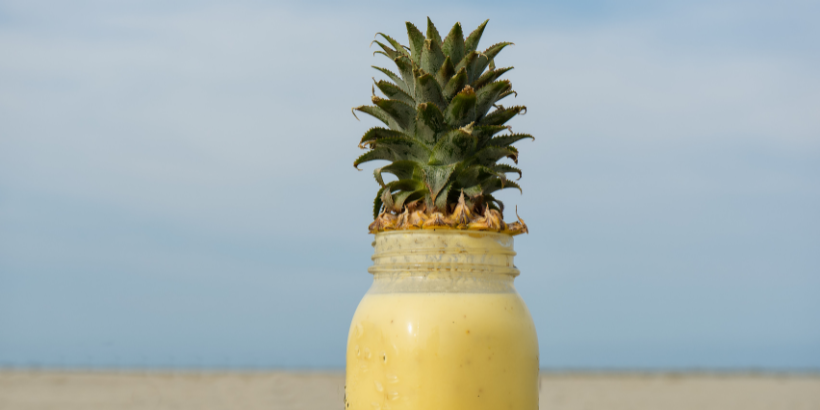
Surprisingly, medicine can actually be delicious. This anti-inflammatory smoothie uses natural (and tasty!) ingredients to help reduce inflammation caused by any number of circumstances.
The following is an excerpt from Herbal Formularies for Health Professionals, Volume 4 by Jill Stansbury. It has been adapted for the web.
RECIPE: Ginger and Pineapple Anti-Inflammatory Smoothie
This is an all-purpose anti-inflammatory beverage—a tasty food that is also good medicine.
It can be used after trauma, to help recover from surgery, or to accompany a tea or tincture to best treat inflammatory pain in a multipart protocol. Pineapple is the source of bromelain, an anti-inflammatory proteolytic enzyme.
Ginger (Zingiber officinale) is a natural cyclooxygenase inhibitor, and it has numerous other anti-inflammatory mechanisms.

Including medicinal foods in pain protocols helps to reduce reliance on numerous pills and helps inspire beneficial diet changes.
Ingredients
- 2 cups (200 g) fresh pineapple
- 1 cup (250 ml) coconut water
- 1 tablespoon ginger root
- 1⁄2 teaspoon turmeric powder
Procedure
- Combine all the ingredients in a blender and puree.
- Transfer the blend to a large glass and drink.
Prepare 1 or 2 such beverages per day and continue for a week or more post-surgically or in other situations where anti-inflammatory support is needed.
The Ingredients: A Closer Look
Ananas comosus • Pineapple
A mixture of sulfur-containing proteolytic enzymes known as bromelain are a component of pineapple fruit.
Bromelain and the consumption of whole pineapple has an anti-inflammatory effect and may speed recovery following traumatic injuries.
Consider bromelain as a complementary nutraceutical to treat neuralgia or to help speed healing following carpal tunnel surgery in cases of Bell’s palsy.
Bromelain attenuates inflammation due to aberrant production of prostaglandins and has fibrinolytic effects, so may also be appropriate to prevent reflex sympathetic dystrophy following hand or foot trauma or to help speed recovery following head trauma.
Bromelain has been found to prevent the breakdown of curcumin, and the duo of bromelain and turmeric have been commonly used for pain and musculoskeletal inflammation in Ayurvedic medicine.
Whole pineapple is not commonly used as an herbal medicine in tincture or dry form, but isolated bromelain is listed in this chapter as a complementary encapsulation to many teas and tinctures.
Zingiber officinale • Ginger
Zingiber may improve neuralgic pain and inhibit inflammatory enzyme systems. Poultices of fresh ginger roots have traditionally been used topically over painful joints or acute neuralgia.
Large and frequent doses appear the most effective. Ginger is also settling to the stomach, relieving gas and having an antispasmodic and warming effect.
Zingiber is high in volatile oils including cineole, citral, borneol, and the antiseptic phenolic gingerol. Ginger is expectorating, diaphoretic, and a circulatory stimulant.
Curcuma longa • Turmeric
Turmeric contains the yellow-pigmented anti-inflammatory known as curcumin.
Curcuma extracts are useful for inflammatory conditions including arthritis, trauma, and inflammation that is secondary to infection.
Curcumin has been well studied and has been shown to encourage the breakdown of fibrin, inhibit platelet aggregation, and halt inflammatory processes by inhibiting leukotriene formation.
Curcuma is an all-purpose anti-inflammatory and neuroprotective agent that can be included in formulas for neuralgia and neurodegeneration.
Recommended Reads
Read The Book

Herbal Formularies for Health Professionals, Volume 4
Neurology, Psychiatry, and Pain Management, including Cognitive and Neurologic Conditions and Emotional Conditions
$49.95
You may like...
-
 $24.95
 -
$49.95
-
$34.95


Recent Articles

Wild seeds and grains are not only nutritious and versatile but also perfect for adding variety to off-grid or wildcrafted meals.
Read More
Ancient mushroom medicine for modern times! Mushrooms help us understand medicine is not only through chemical compounds. Get your daily dose of health with recipes for:
– Medicinal Mushroom Crackers
– Medicinal Mushroom and Vegetable Broth
– Chaga-Reishi Chai

There are reasons that miso paste has become popular around the world: it’s versatile, relatively inexpensive, and can be made in a range of flavors you’d be hard-pressed to find anywhere else. And better yet, you can even make miso at home!
Read More
Wondering where to forage for greens this spring? Look no further than hedges, which serve as natural havens for wild greens and herbs!
Read More
Homemade cheese doesn’t have to be complicated, all you really need is a handful of ingredients, time and a love of cheese.
Read More