

Make Your Own Kombucha: The Tea Beast Lives
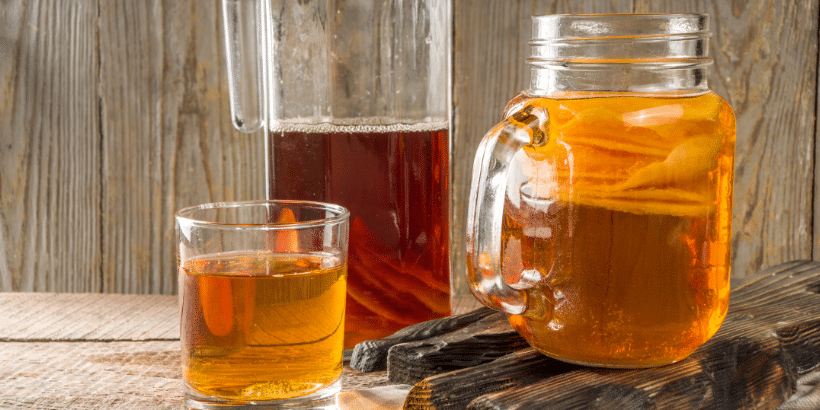
Kombucha. The tea beast. The new and trendy health drink.
The combination black tea and bacteria ball that is known to cure ailments, heal emotional wounds, and impress houseguests who happen upon it by accident when looking for the dog treats. What’s better than drinking this wonderful tea? Making your own.
The following is an excerpt from Wild Fermentation by Sandor Katz. It has been adapted for the web.

Kombucha is thought to have originated in China, and has been popular at different times in many different lands. It is beneficial to health, like other live fermented foods, and for a few years in the mid-1990s it was a big American health fad. Any potential cure is appealing to people living with chronic disease.
My friend and fellow AIDS survivor Spree got caught up in the kombucha craze. Soon he had more “mother” than he knew what to do with, and started getting everyone to try it. Almost everyone enjoyed the sweet-sour flavor of kombucha. People got really creative with alternative sweet substances for the mother to ferment. I remember our friend Brett Love made kombucha from his favorite soft drink, Mountain Dew. Fermentation processes are very versatile.
The trickiest part of making kombucha is finding a mother.
Ask at local health food stores. On the Web, kombucha enthusiasts maintain a Worldwide Kombucha Exchange at www.kombu.de, where mothers are widely available for just shipping costs. Kombucha mothers are also available from G.E.M. Cultures. And other online resellers, just be sure to buy a live culture shipped in liquid rather than a dehydrated one.)
 Timeframe
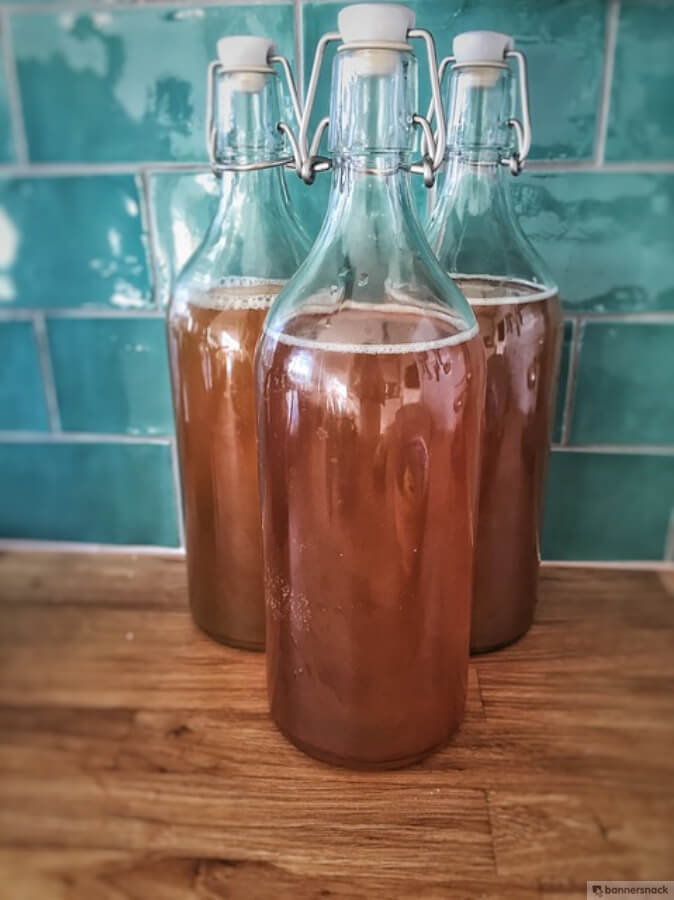
About 7 to 10 days
Ingredients
For 1 quart/1 liter
1 quart/1 liter water
1⁄4 cup/60 milliliters sugar
1 tablespoon/15 milliliters loose black tea or
2 teabags
1⁄2 cup/125 milliliters mature acidic kombucha
Kombucha mother
Process
- Mix water and sugar and bring to a boil in a small cooking pot.
- Turn off the heat; add tea, cover, and steep about 15 minutes.
- Strain the tea into a glass container. It’s best to use something wide; kombucha needs adequate surface area and works best if the diameter of the container is greater than the depth of the liquid.
- Allow the tea to cool to body temperature.
- Add the mature acidic kombucha. When you obtain a culture, it will be stored in this liquid. Save a portion of subsequent batches for this purpose.
- Place the kombucha mother in the liquid, with the firm, opaque side up.
- Cover with a cloth and store in a warm spot, ideally 70° to 85°F (21° to 29°C).
- After a few days to 1 week, depending on temperature, you will notice a skin forming on the surface of the kombucha. Taste the liquid. It will probably still be sweet. The longer it sits, the more acidic it will become.
- Once it reaches the acidity you like, start a new batch and store your mature kombucha in the refrigerator. You now have two mothers, the original one you started with, and a new one, the skin that formed on your first batch. Use either the new or the old mother in your new batch, and pass the other one on to a friend (or the compost). Each generation will give birth to a new mother, and the old mother will thicken.
Recommended Reads
Read The Book

Wild Fermentation
The Flavor, Nutrition, and Craft of Live-Culture Foods, 2nd Edition
$29.95
You may like...
-
$24.95
-
$34.95
-
$34.95


Recent Articles

This bright, yet delicate flavor profile is both sweet and sour – a unique taste that you’ll keep coming back to. This recipe is intended for long, slow fermentation starting at persimmon harvest time in the autumn and continuing into winter.
Read More
This triple apple snack cake uses applesauce, cider, and apples for a one-two-three apple punch. Don’t take our word for it though, give it a go yourself!
Read More
These small fruits are a delicious source of nutrients that you can find almost anywhere. Get started on acorn harvesting with help from these simple tips!
Read More
Want an on-the-go snack without having to go to the grocery store? Whip up this homemade applesauce for a fresh fall snack whenever you get the craving!
Read More
The possibilities are pretty much endless with wild ingredients — use almost any fresh fruit or juice and a sweetener to create your own custom jam or syrup!
Read More