

Seeds of Hope: Striving For A Sustainable Future
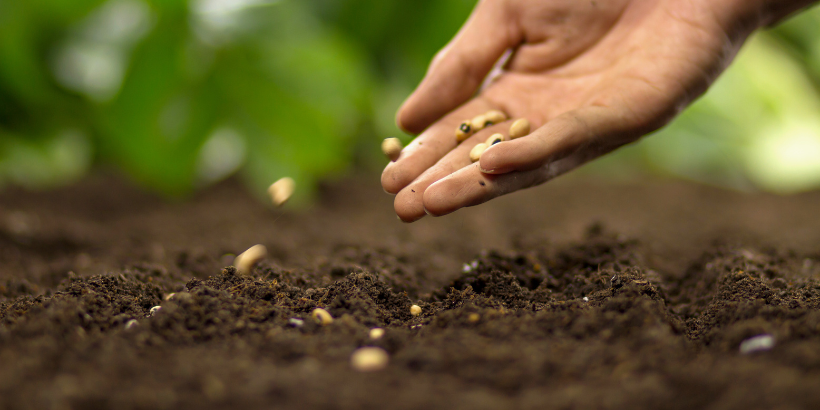
Over the years, many of our world’s most flavorful vegetables have become extinct for a variety of reasons; however, these lost crops and their seeds may be the secret to gaining global food security and achieving a higher level of overall wellness.
So how can we get them back? What can we do to ensure a sustainable future with healthy food? It all starts with the actions and practices of food producers, farmers, and even amateur gardeners.
The following is an excerpt from The Seed Detective by Adam Alexander. It has been adapted for the web.
“Make hunger thy sauce, as a medicine for health.” – Thomas Tusser (1524–1580), Five Hundred Points of Good Husbandry (1573)
When I started to grow vegetables on a few acres of the family farm in Devon in the late 1970s, no one was interested in buying red Brussels sprouts or yellow courgettes. The fact that they were ‘organic’ was met with some suspicion. After a couple of hard winters, the pleasure of picking sprouts late into a freezing evening to flog them next day in the local market for a pound or two wore off. Better to grow for love than for a living.
I saw myself then as part of a hippy revolution to turn the world green; I was one of a tiny minority of growers. In those days, people who were attempting to grow food in a sustainable way were generally ignored; the public appeared completely uninterested. It was to take another couple of decades for attitudes to really start to change.
Rolling Back the Years
Vegetables have been lost or become extinct for a variety of reasons, as we have seen. And it is not just due to a loss of habitat: in many instances they have simply fallen out of culinary favour or been the victims of commercial abandonment. We are today paying the price for a binary approach to feeding ourselves: increase yield at all costs and as cheaply as possible without any regard for the environment.
The triumph of quantity over quality has resulted in us eating food of poorer nutritional value than that enjoyed by our parents and grandparents. Despite many modern cultivars of popular vegetables being more vigorous, having heavier yields and greater disease resistance, my taste buds tell me they usually have less flavour. We have become used to buying and eating food that is unripe and tasteless, despite what marketeers might say to the contrary.

Ignored and denigrated in the last century, a sustainable, holistic and inclusive model for growing our food is no longer a choice; it is a necessity. For the first time that I can remember, traditional varieties are gaining in popularity. Consumers are experiencing the taste of sustainably grown food and demanding more.
There is compelling evidence that the world values its food culture and seeks to revive and support it – a prime example being India, where I have witnessed the knowledge and traditions of peasant farmers at the forefront of this change.
A quarter of a century ago, research and development on how to feed the planet with a burgeoning population in the face of climatic challenges was focused on technological solutions.
Now, an ever-growing number of us are recognising and respecting the real value of biodiversity and sustainable and traditional forms of agriculture.
This recognition applies equally to the unmatched knowledge of peasant farmers and the rights they should be entitled to in respect of their crops. The expertise of peasant farming is becoming ever more respected, and I sit at the feet of these people who are passing on millennia of understand- ing and practice. They are a fundamental part of the solution to feeding the world.
A Sustainable and Affordable Future
The real danger I see today is an increasing divergence between those who can afford to eat organic and sustainably produced healthy food and those who can only afford the very cheapest and poorest quality, mostly processed, unhealthy food.
One of the main challenges facing society is to ensure that everyone, regardless of their income, has access to affordable and nutritious food. A new generation of very determined growers has embraced regenerative horticulture and taken on the task of addressing this challenge.
They give me hope because growing fruits and vegetables organically requires fewer inputs and therefore lower overheads. Not only that, but market gardens and small-scale horticulture enterprises growing a diversity of crops can generate a net income of £20,000 (approx. $26,000) an acre – ten times as much as large-scale intensive horticulture.
Veg-box schemes where local consumers receive a weekly supply of what the grower has harvested, farmers markets and farm-gate sales, where people engage with farmers and understand their work, transform public perception and are invariably better value than supermarket offerings. With scale and shorter supply chains will come further savings. The hegemony of the supermarket is being challenged and every day more people are finding locally grown food affordable.

We may well face an existential threat to our food supply due to the iniquities of modern food production, but the solutions to this crisis are in our hands, and in writing this book I hope to have shared my excitement for re-establishing and strengthening our lost relationship with what we grow.
By taking a holistic approach to resolving these challenges and exploiting the best that scientific research, human ingenuity and a sensitivity to the living world has to offer, we really can provide our species with the diverse, healthy and sustainable diet that it needs.
The tide is turning against a policy of monoculture. Exciting research now shows that nations which grow a greater diversity of crops are able to mitigate against many of the effects of global warming. The greater the diversity, the greater the stability of harvests in the face of weather extremes, be it drought or flood.1
The ‘ground up’ revolution in sustain-able agriculture across the world is gaining more and more traction. The present unsustainable and inequitable models of producing food, where farmers receive the least reward for their labours, and most of the profits are in the hands of distributors and retailers, are also being challenged.
Farmers are collaborating more effectively to take back control of the means of production, distribution and sale, so they can be partners in building sustainable and profitable businesses, growing the food that keeps us healthy.
Today, this planet is more than capable of feeding itself. The discredited paradigm that has underpinned the approach to food production we have seen since World War II must continue to be strictly regulated, challenged and reformed.
And let’s not forget amateur gardeners, whether they are harvesting herbs from a pot on the windowsill or eating produce from their gardens and allotments, who are also part of the solution. There are more than a million acres of gardens in the U.K., which represents 8 per cent of all land used for growing crops: about the same percentage as land under commercial organic cultivation.
These can be the most biodiverse spaces for plants, wildlife and food production, growing and saving seeds of local and culturally important crops.
The Heroes of Forthcoming Food Supply
The history of plant breeding is littered with stories of the abuse and exploitation of the genetic resources of indigenous peoples. There is no more invidious example of this than the appropriation of unique Folk Varieties that have formed the basis for the breeding of modern cultivars which have then been claimed as the intellectual property of the seed producer.
The farmers who have grown the parent for generations receive no acknowledgement or financial reward. Often these modern cultivars, many genetically modified, are sold back to the native farmer at great cost and with no possibility for them to save the seed, as this would be a breach of the seed producer’s intellectual property rights. This perverse situation is at last being challenged.
Seed banks, institutions that maintain collections of edible crop species which can be returned to growers to bulk up in the event of total loss; libraries that maintain living collections of heritage and heirloom varieties, which are shared or loaned to growers to maintain them; and plant breeders developing new cultivars have signed up to a number of protocols with organisations, including the UN and the International Seed Federation, to respect the creation and conservation of genetic material for the benefit of all.
Now, at last, the importance of conserving and strengthening the genetic diversity of crops is recognised as being crucial to combating climate change and feeding the world. Traditional varieties are becoming more highly valued because they are a critical part of the solution to food security as well as being a valuable genetic resource for plant breeders.

This is also the case globally. Businesses can no longer collect native varieties of heirlooms and indigenous varieties and bring them home to grow for commercial exploitation.
Although vegetable seeds are not likely carriers of pathogens and bugs that can devastate native species, I am very careful about what I bring home. Certified commercial vegetable seed needs to be cleared through customs but is not subject to the protocols around FV.*
Bringing seeds across borders, although highly regulated, is not always policed and I would be lying if I said that this has not sometimes been to my benefit. I follow my own strict protocol regarding heritage and heirloom seeds.
I always return seeds whenever possible to the person who gave them to me. I always seek the permission of the person who gave me the seeds before sharing them with others. This is an important demonstration of the circularity of our food. I never share seeds that could be commercially exploited because those seeds are only ever loaned to me. I don’t own them.
My next seed-hunting trips will focus on encouraging growers to maintain local varieties and learning from the new generation of plant breeders who are finding ways to ensure the survival of rare and endangered varieties in their country of origin.
Of course, if I come across highly endangered varieties or am offered seed of some wonderful and delicious local vegetable to try, I’ll probably find a corner of my suitcase to fit in a few, but whether that would be something I declared on arrival back in the U.K. I could not possibly comment upon.
We may have lost some 90 per cent of all varieties of fruit and vegetables in the last century but plant breeders continue to develop hundreds of new cultivars of pretty much every type of crop, many of which can help global food security. But, for me, the real heroes of our future food supply are the growers, farmers and seed libraries who are recovering, restoring and championing local varieties around the world.
Despite the catastrophic loss of genetic diversity, advances in plant genetics and a focus on working with the wild relatives of edible plants to create new cultivars is very exciting. The wonders I grow in my garden and delight in eating are only with me because of a long string of actions taken by growers, breeders and communities to conserve the food that is at the core of their sense of self. We are now, I hope, on a journey back to a more meaningful relationship with our soil, our seeds and our produce. Long may it continue.
Notes
1. Delphine Renard and David Tilman, ‘National Food Production Stabilized by Crop Diversity’, Nature 571 (2019): 257–60, https://doi.org/10.1038 /s41586-019-1316-y.
Recommended Reads
History of The Seed Sovereignty Movement: Reclaiming the Seed
Read The Book

The Seed Detective
Uncovering the Secret Histories of Remarkable Vegetables
$22
You may like...
-
 $22.95
 -
$24.95
-
$49.95


Recent Articles

Testing soil in your garden is the first step to a more bountiful harvest. Simply take a small sample, get it examined, & you’ll be on your way to healthy soil.
Read More
The true pure seed is a myth. There are best practices that any seed grower should keep in mind; but once you understand seed integrity, the real fun begins.
Read More
Before yanking out the next patch of lambsquarter you find in your yard or garden, consider trying one of the many edible and medicinal uses of this “super weed.”
Read More
What’s a cheaper, easier, and surprisingly more efficient way to start your seedlings? Soil blocks! Find out how soil blocks work, how you make them, and what advantages they offer over traditional pots and trays.
Read More
Looking to add another recipe to your fermenting repertoire? This recipe for kvass calls for just a few ingredients and only takes a couple days to ferment.
Read More