

Maize vs. Graze: Is Corn Dangerous For Cattle?
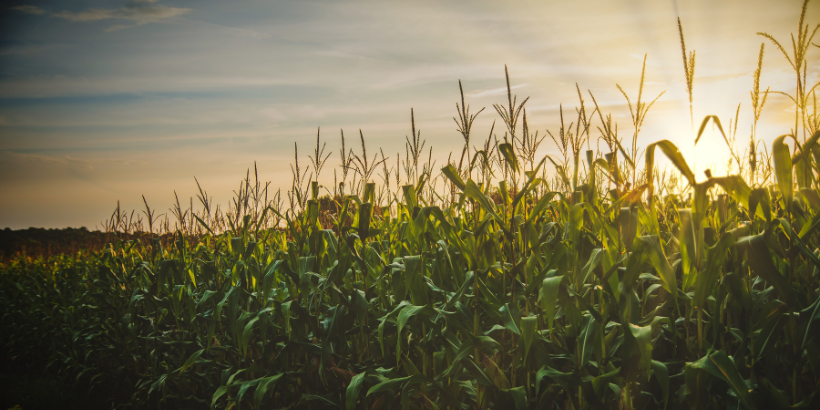
One of the biggest misconceptions floating around is that vegetable production is a more environmentally friendly alternative to meat production. However, studies show that the practices used in conventional vegetable farming may be more destructive than those used to produce meat.
Growing corn, specifically, can lead to many destructive outcomes; however, a large majority of our nation’s cattle consume corn on a daily basis. Not only does this practice impact the livestock, but it could negatively affect our health and the well-being of our planet as a whole.
The following is an excerpt from Grass-Fed Beef for a Post-Pandemic World by Lynne Pledger and Ridge Shinn. It has been adapted for the web.
Is Plant-Based Better?

Although people choose a vegetarian or vegan diet for many reasons, in terms of the environmental impact of food production, industrial vegetable production is not a viable alternative to industrial meat production. The popular misconception that plant-based products are always better for the environment than animal products has been disproven by peer-reviewed studies, both those measuring the harm caused by conventional crop farming, and those measuring the benefits of regenerative grazing to address that harm.20 An abundance of evidence links conventional vegetable farming to the destruction of beneficial microbes, a decline in nutrient cycling, the loss of soil carbon, flooding, erosion, pollution of waterways, the death of wild- life, and high greenhouse gas emissions.21
Fortunately, there are proven, alternative ways to produce beef that work with beneficial systems in the natural world. We will describe these practices in the next chapter, but first let’s be specific about which agricultural practices work against nature’s systems and therefore should be replaced.
Rites of Destruction
The following list describes destructive practices and outcomes that occur every spring in every region of the United States where corn or other annual crops are grown:
- Crops are planted in vast monocultures. In nature, one species never dominates to the total exclusion of others. Single-species planting creates the buildup of pests and diseases.
- When fields are plowed and planted, the soil is bare. You seldom see bare soil in nature because photosynthesis cannot take place in bare soils. We need as many energy-capturing, carbon-pumping plants as possible.
- Leaving soil bare also causes erosion by exposing the surface to wind, rain, and flooding. The average rate of soil loss in farmland is 5.8 tons per acre per year.22
- Plowing increases the volume of carbon that is oxidized and therefore lost to our soils and released to the atmosphere. Soil carbon becomes carbon dioxide and contributes to climate change.
- Plowing, or similar soil disturbance, also upends soil structure, compacts the soil, and compromises microbes that are needed for healthy soil function.
- Application of herbicides and pesticides compromises or destroys soil microbes, thereby inhibiting beneficial biological activity in the soil.
- Chemical fertilizers—nitrogen or water-soluble phosphorus—on farm fields interfere with the natural process whereby plants give microbes carbon in “exchange” for nutrients, a critical process that we describe in the next chapter.
- In waterlogged soil, nitrogen fertilizer produces nitrous oxide, an extremely potent greenhouse gas, which rises into the atmosphere. Nitrous oxide is approximately three hundred times more heat-trapping than carbon dioxide.23
- Also, excess fertilizer runs off fields causing pollution of ground- water and waterways.

By continuing to use destructive methods for growing corn and other annual crops, farmers work against natural processes that have evolved over millions of years. This erosion of soil systems has dire implications for all of us. A 2021 project from the University of Massachusetts used updated technology to estimate that the most fertile topsoil is gone from a third of all the land devoted to growing crops across the Upper Midwest.30
Currently, forage, grasslands, and grazing lands constitute more than two-thirds of all agricultural land in the United States.31 Avoiding conversion of this land to plowed cropland could help prevent increases in greenhouse gas emissions and other harmful impacts to the local and global environment.32
The Fourth Global Crisis
If you were asked to name our most critical global crisis, the first would likely be climate change, followed by deforestation or loss of biodiversity. But there is fourth global crisis. We have exceeded a fourth planetary “boundary” that hasn’t received as much attention: nitrogen pollution.26
We all know about the dead zone in the Gulf of Mexico, where excess nitrogen stimulates so much aquatic plant growth that the resulting rotting mass suffocates other marine life. This excess nitrogen, pouring down the Mississippi River from Midwestern farm fields, is part of the grim saga of corn production. That this dead zone at its largest has extended for 8,800 square miles is bad enough, but the really scary news is that there are more than four hundred dead zones in the world’s oceans.27
And nitrogen pollution is not limited to oceans; it also affects bodies of fresh water, including drinking water supplies. Whereas in the past phosphorous fertilizer was the targeted polluter, now cleanup crews routinely face toxic blue-green algae fueled by nitrogen pollution.

Some scientists say that if we don’t halve the amount of nitrogen that we dump into the environment by midcentury, we will face epidemics of toxic tides, lifeless rivers, and dead oceans.
But the microbes fostered by regenerative grazing (as we will explain in chapter 3) offer at least a partial solution to this dire situation: They transform organic nitrogen in the soil (not usable by plants) into the mineral nitrogen that plants do need.
This capacity for soil microbes to supply mineral nitrogen to plants is hardly a secret, but nevertheless, given the amount of nitrogen fertilizer used on corn for livestock, researchers from the University of Victoria have offered this mind-boggling solu- tion: laboratory cultured meat.29 Their reasoning is that much less fertilizer would be needed for corn production if we reduced the global herd of cattle from 1.5 billion to the 30,000 cattle that would be used as the stem-cell donors needed to create artificial meat. (For more on the lab meat movement, see chapter 9.)
Fortunately, there is a simpler way to reduce nitrogen fertilizer use for corn crops that can solve many other problems at the same time: stop feeding corn to cattle and raise them entirely on pasture instead.
Notes
19. Chris Gill, “Desert Grasslands Restoration: Manejo Holistico in Chihuahua– Las Damas Ranch,” Pitchstone Waters, June 15, 2015, https://pitchstonewaters .com/manejo-holistico-in-chihuahua-las-damas-ranch/.
20. “Las Damas Ranch Case Study,” Understanding AG, https://understandingag .com/case_studies/las-damas-ranch-case-study/.
21. Judith D. Schwartz, “Hope for a Thirsty World,” Water in Plain Sight (White River Junction, VT: Chelsea Green Publishing, 2019), adapted for the web at https://www.chelseagreen.com/product/water-in-plain-sight/.
22. Schwartz, “Hope for a Thirsty World.”
23. Gabe Brown, “Dirt to Soil: Excerpt,” Resilience.org, November 6, 2020, https://www.resilience.org/stories/2020-11-06/dirt-to-soil-excerpt/.
24. W. R. Teague et al., “The Role of Ruminants,” Journal of Soil and Water Conservation 71, no. 2 (2016): 156–64, https://www.jswconline.org/content/71/2/156.
25. Ferris Jabr, “The Earth Is Just as Alive as You Are,” New York Times, April 20, 2019, https://www.nytimes.com/2019/04/20/opinion/sunday/amazon-earth-rain-forest-environment.html.
26. Cheryl Anderson, “Rotational Grazing Is Green,” Progressive Farmer, April 2016, https://static1.squarespace.com/static/58b5e62629687fdc87a1ad5b/t/59160a16893fc0e34e149bde/1494616604828/Progressive+Farmer+%E2%80%93+April+2016+-+Rotational+Grazing+Is+Green1.pdf.
27. Ronald S. Oremland and Charles W. Culbertson, “Importance of Methane-Oxidizing Bacteria in the Methane Budget as Revealed by the Use of a Specific Inhibitor,” Nature 356, no. 6368 (1992): 421–23, https://doi.org /10.1038/356421a0.
28. S. Tiwari et al., “Methanotrophs and CH4 Sink: Effect of Human Activity and Ecological Perturbations,” Climate Change and Environmental Sustainabil- ity 3, no. 1 (2015): 35–50.
29. Peter Bruce-Iri, “Methane Sources, Sinks, and Uncertainties,” October 2021, https://doi.org/10.13140/RG.2.2.28627.71201.
30. Paige Stanley et al., “Impacts of Soil Carbon Sequestration on Life Cycle Greenhouse Gas Emissions in Midwestern USA Beef Finishing Systems,” Agricultural Systems 162 (May 2018): 250, https://doi.org/10.1016/j.agsy .2018.02.003.
31. “Climate Change: Seven Technology Solutions That Could Help Solve Crisis,” Sky News, October 12, 2021, https://news.sky.com/story/climate -change-seven-technology-solutions-that-could-help-solve-crisis-12056397.
32. Stanley at al., “Impacts of Sequestration on Life Cycle Emissions.”
Recommended Reads
Read The Book

Grass-Fed Beef for a Post-Pandemic World
How Regenerative Grazing Can Restore Soils and Stabilize the Climate
$24.95
You may like...
-
 $17.95
 -
$19.95
-
$39.95


Recent Articles

Do you have an old, worn-out pair of jeans in your dresser? Instead of throwing them out, try to grow mushrooms on them. Follow these guidelines to get started.
Read More
If you’re planning out a forest garden, or are just looking for a plant to use as ground cover, garden strawberries are a great option.
Read More
Discover the magic of oyster mushrooms! They can grow almost anywhere. Straw is a surprisingly simple way to cultivate the ever-popular oyster mushrooms.
Read More
Known for their tall stature and distinctive flower heads, cattails thrive near lakes and marshes. From edible shoots and nutrient-rich roots to pollen used in baking, cattails offer a wealth of uses.
Read More
Wondering how to get your goats to stay in one place? The secret is all in choosing the right fences and gates to keep them safe, happy, and healthy.
Read More