

The Mystery Behind Meat Labels: Got “American” Beef?
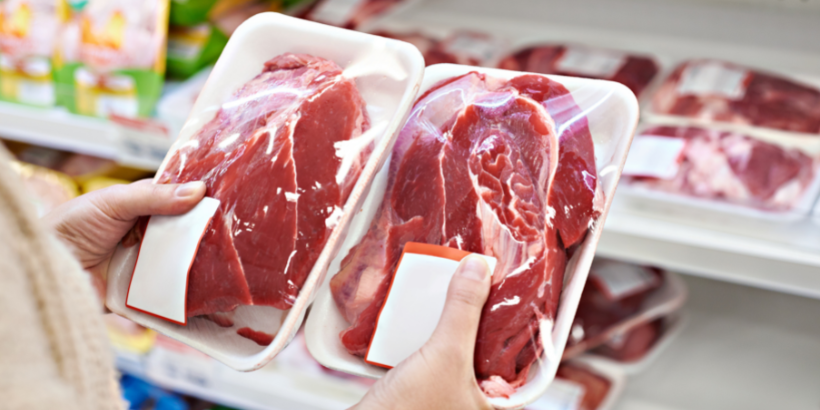
Where does the beef we consume actually come from? And why does it matter?
When we purchase beef, we may not consider everything that took place before the package hit the grocery store shelf. However, where and how cattle are raised can have a big impact on the quality of meat and the overall well-being of our planet.
The following is an excerpt from Grass-Fed Beef for a Post-Pandemic World by Lynne Pledger and Ridge Shinn. It has been adapted for the web.
Restoring a Country-of-Origin Labeling Requirement

Currently, the labels on packages of grass-fed beef that say “Product of the USA” do not mean that the animal was born, raised, or slaughtered in the United States. This labeling only means that the beef was handled here, that it was cut into smaller pieces or ground into hamburger or otherwise minimally processed and packaged here. In fact, “Product of the USA” on a package almost certainly means that the grass-fed beef therein did not come from the United States, even if the package is adorned with American flags. Most likely the meat was imported from Australia, Uruguay, or New Zealand.
Because deceptive labeling on packages of imported grass-fed beef leads shoppers to believe that they are buying American beef, it allows companies exporting meat from overseas to cash in on the desires of many Americans to support US companies. Currently this marketing strategy is perfectly legal, but that was not always the case. The short-lived Country of Origin Labeling requirement (COOL), which required retailers to notify customers where beef came from, went into effect in 2009 but was repealed in 2016.10
Why Does It Matter?
What difference does it make where grass-fed beef cattle were raised? Customers want to know the country of origin for at least two reasons:
- Many want their food dollars to support the grass-fed beef movement in the United States. Ideally, they would like to buy grass-fed beef in the region where they live, so that the money spent will benefit the local or regional rural economy, and support the farmland and farm families close to home.
- Increasingly, people are associating 100% grass-fed beef with methods that are good for the environment and combat climate change by storing carbon in the ground.
Some people might think, “I want grass-fed beef produced with environmentally friendly methods, regardless of where on the planet these practices are happening.” Unfortunately, imported grass-fed beef is generally not produced by regenerative grazing; therefore, buying it will not support the environmental benefits that are associated with grass-fed beef. Even if the grass-fed animals overseas are not fed grain, the conventional grazing method used (which we have described as continuous grazing) will not build topsoil, store carbon, or protect against droughts and floods.
Meanwhile, it is surprisingly inexpensive to ship beef across oceans, and therefore US grass-fed beef producers are being undercut by foreign competitors. While US grass-fed is only a small part of the grass-fed market, if the Country of Origin Labeling requirement were reenacted and customers knew where their beef was coming from, we could expect a resurgence in the domestic grass-fed beef market.
So, what is the remedy for this situation? Action at the federal level. On January 3, 2022, the Biden administration issued a release pledging to “issue new ‘Product of USA’ labeling rules so that consumers can better understand where their meat comes from.”11
We’ll see.
Notes
10. Agricultural Marketing Service, “Country of Origin Labeling (COOL),” US Department of Agriculture, https://www.ams.usda.gov/rules-regulations/cool.
11. The White House Briefing Room, “Fact Sheet: The Biden-Harris Action Plan for a Fairer, More Competitive, and More Resilient Meat and Poultry Supply Chain,” January 3, 2022, https://www.whitehouse.gov/briefing-room /statements-releases/2022/01/03/fact-sheet-the-biden-harris-action-plan-for -a-fairer-more-competitive-and-more-resilient-meat-and-poultry-supply-chain/.
Recommended Reads
Read The Book

Grass-Fed Beef for a Post-Pandemic World
How Regenerative Grazing Can Restore Soils and Stabilize the Climate
$24.95
You may like...
-
 $19.95
 -
$39.95
-
$17.95


Recent Articles

These small fruits are a delicious source of nutrients that you can find almost anywhere. Get started on acorn harvesting with help from these simple tips!
Read More
Enjoy fresh produce all year long by growing your own food! Achieving a twelve-month growing season is as simple as using the right crop protection structure.
Read More
Want an on-the-go snack without having to go to the grocery store? Whip up this homemade applesauce for a fresh fall snack whenever you get the craving!
Read More
Beets can be grown year-round and are a perfect, flavorful addition to meals. Get started on growing your own no-till beets with help from these tips!
Read More
The possibilities are pretty much endless with wild ingredients — use almost any fresh fruit or juice and a sweetener to create your own custom jam or syrup!
Read More