

Step-by-Step Guide: How to Grow Oyster Mushrooms on Straw
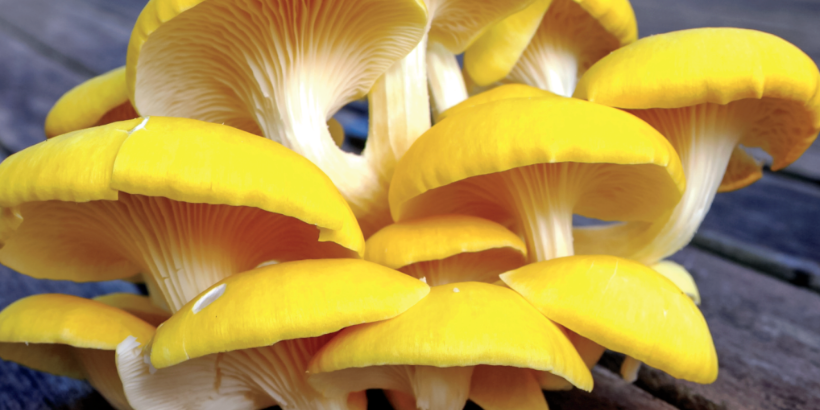
Oyster mushrooms are the second most widely cultivated and popular edible mushrooms in the world. Growing oyster mushrooms on straw is a surprisingly simple method for cultivating these popular fungi. Read on to learn how to grow your own oyster mushrooms!
The following excerpt is from The Mycelial Healer by Christopher and Katherine Parker. It has been adapted for the web.
Growing Oyster Mushrooms on Straw
Oyster mushrooms are the second-most widely cultivated, wild-harvested, and popular edible mushrooms worldwide. Agaricus bisporus, the White Button mushroom, is the first. We would like to see this preference flip, because Oysters have the potential to be grown in a variety of environments and provide many more medicinal benefits.

Oysters are one of the easiest mushrooms to grow, and most people have access to materials that will serve as substrate.
In our region straw is easily accessible. It is an agricultural waste product. Straw cultivation involves heating straw in hot water to pasteurize it and neutralize potentially competing fungi. Spawn is mixed with the pasteurized straw and put into bags or buckets. In a few weeks’ time, mycelium colonizes the straw, and then moisture is added to stimulate fruiting.
Don’t worry about whether or not the straw was produced organically. Oyster mushrooms will break down any pesticide remnants into useable carbon and hydrogen. The mushrooms will be safe to eat, and the spent straw will be great mulch for an organic garden.
Although it’s okay to use straw with pesticide residues on it, make sure that the pot or barrel you use for cooking the straw was not previously used to store any toxic material.
Equipment Needed
- Large metal pot or barrel
- Water Propane burner or concrete blocks
- Propane fuel or firewood
- Meat thermometer with extended range probe
- Straw or dried, high-cellulose grasses (such as Miscanthus or pampas grass)
- Cement blocks or other heavy weights
- Pitchfork
- Clean table or tarp
- Spawn of the appropriate species of mushroom
- Poly tubing bags or clean food-grade buckets with lids
- Zip ties (if using bags)
- Straight pins (if using bags)
- Fiberfill (if using buckets)
Instructions
- If you plan to use buckets for growing, prepare them by using a drill to make holes in the bucket sides.
- Fill the pot or barrel with water to about two-thirds full.
- Set up the propane heater. Or, to use wood heat, position the concrete blocks as a base for the pot or barrel and build a wood fire in the area between the blocks. Set the barrel or pot on the concrete blocks.
- Using the thermometer to check the temperature, heat the water to 170°F (77°C), which is pasteurization temperature.
- Sink the straw into the heated water, being careful not to add so much that the water overflows from the container.
- Cut off the heat source and place the cement blocks or other heavy weight on top of the straw to keep it submerged.

- When the ninety minutes is up, remove the weights and then use the pitchfork to remove the straw from the water and place it on a clean table or tarp to drain and cool. When pasteurizing a small quantity, you can pour off the water through a strainer instead.
- Once the straw is cool to the touch, it is time to inoculate it with sawdust spawn. Clean your hands, and then sprinkle spawn evenly across the cooled straw. We find that a 6-pound bag of sawdust substrate will inoculate one full bale of straw weighing 40 to 60 pounds (18 to 27 kg).
- Gather the inoculated straw and stuff it into poly tubing bags or the prepared food-grade buckets. Seal the bags with zip ties after packing or place the lids on the buckets.
- Use pins to poke pinholes into the bags to allow for fresh air exchange. We poke two lines of holes on opposite sides of the bag. If using buckets, cover the holes with micropore tape or stuff the holes with fiberfill to keep out insects and allow for fresh air exchange.

Let the bags or buckets sit in a spot where temperature will not drop below freezing.
The cooler the temperature, the longer it will take the straw to be colonized. When the straw is fully colonized, which will take about twenty days, cut bigger holes into the bags or remove the fiberfill or tape from the bucket holes. Add moisture to encourage fruiting.

Recommended Reads
Mushrooms as Food & Medicine: Ancient Medicine for Modern Times
Read The Book
The Mycelial Healer
A Comprehensive Guide to the Cultivation and Traditional Uses of Medicinal Mushrooms
$34.95
You may like...
-
$39.95
-
$44.95
-
$40.00


Recent Articles

Growing no-till arugula is a simple way to grow your own food. These greens can be used on pizzas, salads, and as a garnish on almost any dish.
Read More
The leaves are falling, which means it’s time start figuring out what to do with them. This year, try turning your fallen leaves into mulch for your garden!
Read More
Enjoy fresh produce all year long by growing your own food! Achieving a twelve-month growing season is as simple as using the right crop protection structure.
Read More
Beets can be grown year-round and are a perfect, flavorful addition to meals. Get started on growing your own no-till beets with help from these tips!
Read More
Fermenting mead is an ancient practice. With step-by-step instructions, learn how to brew fruit-based and flower meads, from foraging to fermenting.
Read More