

Why Raw Milk Cheese is Not Raw
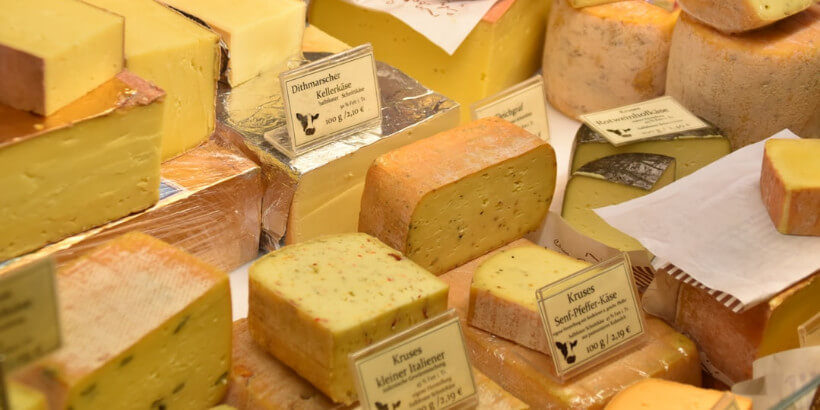
Have you ever wanted to try out exotic and rare types of cheeses, made non-traditionally? Well you might not be able to if the FDA has anything to say about it! Non-traditional cheesemaking using raw milk is under attack for all the wrong reasons, and it has sparked a revolution of cheese-lovers to stand up and do something about it.
The following is an excerpt from Ending the War on Artisan Cheese by Catherine Donnelly. It has been adapted for the Web.
The term raw milk cheese is really a misnomer for many cheese varieties. The numerous steps in cheesemaking transform a raw material—milk—and process it for safety through the “hurdle concept” whereby factors such as competition with starter cultures and other bacteria present in raw milk, acidity development, moisture loss, and use of salt all interact to create an environment that is hostile to pathogens. During the process of cheesemaking, the protein in milk, casein, is coagulated to form curds that, in many cheese varieties, receive heat exposure.
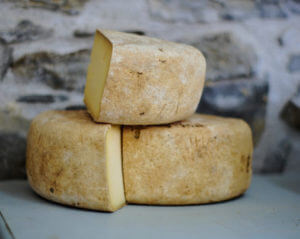
For some cheeses, even though cheesemaking begins with the use of raw milk, these are cooked- curd cheeses that are anything but raw. Cheeses made from milk subjected to a sub-pasteurization heat treatment (thermization) are legally classified as raw milk cheeses. Thermization is useful for milk that has been transported and stored under refrigeration, or when there will be a delay in the use of milk before cheesemaking. The use of thermization helps to reduce the growth of psychrotrophic bacteria (those that can grow at refrigeration temperatures) that cause quality defects in cheese. Much of the milk used in the United States for raw milk Cheddar cheesemaking is subjected to some form of heat treatment, generally thermization. As a rule, this treatment consists of heating milk at 131°F/55°C for a period ranging from 2 to 16 seconds.
The term raw milk cheese also fails to reflect the high curd-cooking temperatures used in the manufacture of aged Swiss and Italian hard cheese varieties. In fact, many countries refer to these cheeses as cooked-curd cheeses. A 1995 study conducted in Switzerland examined the safety of Swiss hard and semi-hard cheeses. The authors noted that approximately 80 percent of cheeses made in Switzerland are manufactured from raw milk without prior heat treatment. These authors inoculated eight pathogens including Salmonella, Listeria, and E. coli to raw milk at high levels (10,000–1,000,000 cfu/ml). The authors could not detect any pathogens beyond 1 day of manufacture. The microbiological hurdles noted by the authors that contribute to the safety of Swiss hard cheeses include the use of high curd-cooking temperatures (126° to 130°F / 52° to 54°C for 45 minutes); high pressing temperatures (122°F/50°C); low moisture (35 percent); use of high ripening temperatures (50° to 68°F / 10° to 20°C); and use of long ripening times (over 120 days).
Similar hurdles occur during the manufacture of Italian Grana cheeses. A study published in 2001 examined the safety of Italian Grana (Grana Padano and Parmigiano Reggiano) cheeses. The authors noted several parameters that contribute to microbial safety, including cooking and molding of cheese cured at high temperatures (127° to 133°F / 53° to 56°C); brine salting of cheese, which lowers the moisture and water activity of the cheese; and extended ripening of cheese for 9 to 12 months. A rapid decline of pathogens initially added to milk at high levels (100,000 cfu/ml) was observed during manufacture of Parmigiano Reggiano cheese.
In June 1998, Switzerland reported to the World Trade Organization (WTO) that New Zealand and Australiahad stopped importing Swiss hard cheeses made from unpasteurized milk because they did not meet established sanitary requirements, which required inactivation of bacterial pathogens. These standards had been established by New Zealand and Australia in January 1995, and compliance with these standards was now being enforced.
The WTO reported that Food Standards Australia New Zealand (FSANZ) was evaluating the applications received fromSwitzerland and the European Communities (EC). In contrast to the FDA’s approach to the raw milk cheese issue (that to date continues to be based on limited scientific studies), the Australian and New Zealand governments undertook a series of comprehensive risk assessments to gauge the microbiological safety of hard Swiss cheese varieties (Emmental, Gruyère, Sbrinz) and extra-hard Italian grating cheeses (Parmigiano Reggiano, Grana Padano, Romano, Asiago, Montasio). The resultsof these risk assessments were published in 2002 and 2003 and established the principle of equivalence.
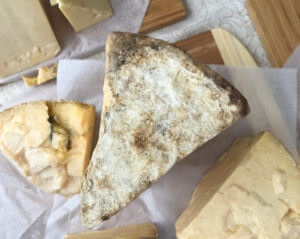
As stated by FSANZ:
“The principle of equivalence in food safety is based on the recognition that the same level of food safety can be achieved by applying alternative hazard control measures. The objective is to determine if these measures, when applied to a food, achieve the same level of food safety as that achieved by applying specified measures.”
FSANZ concluded that very hard cheese manufacturing processes can achieve a 5-log reduction of pathogens of concern when using raw milk, given good hygienic and manufacturing practices. Use of a 5-log pathogen reduction process, which is a 100,000-fold reduction in the numbers of the pathogen that is most likely to pose a food safety problem, is a widely used food safety standard. Therefore, the Australian government exempted very hard cheeses of milk pasteurization requirements provided they have a curd heat treatment of at least 118°F (48°C). The concept of equivalence states that these cheeses have an equivalent level of safety to cheeses made from pasteurized milk.
Again, in November 1998, the EC requested through the WTO that Australia identify the international standard on which its import ban on Roquefort cheese was based, or, alternatively, provide scientific justification and a risk assessment. As in its previous response to the WTO, Australia indicated that its food standards required all cheese to be made from pasteurized milk, or milk that had undergone an equivalent process. Australia’s preliminary assessment on Roquefort cheese had identified potential problems with pathogenic microorganisms, particularly enterohemorrhagic E. coli. Further, data from the Roquefort manufacturers had been received by FSANZ and were being evaluated. In addition to food safety assessments, Roquefort cheese was being evaluated for risks to animal health. The WTO was told that a final decision was likely in the first quarter of 1999 on both food safety and animal health aspects.
FSANZ’s scientific evaluation of the safety of Roquefort cheese examined three primary areas: the effect of the cheese manufacturing processes on target microbial pathogens, a review of the regulatory environment and safety control measures under which sheep milk is produced and Roquefort cheese manufactured, and verification of the implementation of control measures. The draft assessment report was ultimately published on March 23, 2005. FSANZ found that all hazards that were considered potentially significant in Roquefort cheese were well managed through on-farm systems. Further, Roquefort was manufactured using application of Hazard Analysis and Critical Control Points (HACCP)–based controls during processing.
 These procedures, when applied in combination with standard operating procedures (SOPs) and good manufacturing practice (GMP) as determined and controlled by the Confederation of Roquefort Producers, allow the production of a microbiologically safe product. FSANZ acknowledged in the assessment that while normal food manufacture premise conditions are not applied, the controls and checks used during Roquefort manufacture are adequate to ensure product safety. The risk assessment notes that the cheesemaking is “performed in technologically advanced premises staffed by suitably qualified and experienced people working to legislated and other commercial requirements.” All plants have HACCP plans that are regularly updated. “Government monitoring by the Departmental Veterinary Services Directorates (DDSV) was found to be well implemented particularly in relation to animal health testing and records and the auditing of manufacturers.”
In other words, the French system for regulation of raw milk safety and the subsequent manufacture of Roquefort cheese was deemed to be comprehensive and adequate. FSANZ noted the severity of sanctions against producers and manufacturers who fail to adhere to the requirements of the Ministerial Orders and the requirements of the Confederation of Roquefort Producers. Further, the regulatory system was determined to operate in a manner consistent with the Codex Code of Hygienic Practice for Milk and Milk Products. An on-site audit conducted by FSANZ verified the enforcement by the French government of control measures implemented by the Confederation of Roquefort Producers. The scientific evaluation of the safety of Roquefort cheese draft assessment report concluded that if Roquefort cheese is manufactured according to the submitted regulatory and industry processes, its consumption poses a low risk to public health and safety.
Based upon the results of the assessment, this traditional, blue-veined raw milk cheese is allowed to be imported into Australia. Parameters noted to contribute to Roquefort safety include a target acidity schedule and rapid acidification (to pH 4.8) of curd, a salt content of 3 percent, and 90 days of aging that promotes curd desiccation and moisture loss, leading to a final water activity of 0.92, where, combined with the other parameters, pathogens are unlikely to persist.
In conclusion, rigorous scientific studies and comprehensive risk assessments conducted in Italy, Switzerland, Canada, Australia, and elsewhere confirm the safety of cheeses made from raw milk. Why, then, does the FDA continue its quest to mandate pasteurization of all milk used for cheesemaking?
Recommended Reads
Tracing the History of Cheddar with Cheesemonger Gordon Edgar
Read The Book

Ending the War on Artisan Cheese
The Inside Story of Government Overreach and the Struggle to Save Traditional Raw Milk Cheesemakers
$24.95
You may like...
-
 $24.95
 -
$29.95
-
$34.95


Recent Articles
Looking for something to munch on that’s both tasty and good for you? These ginger carrots are a healthy snack that are easy to make at home! The following excerpt is from The Heal Your Gut Cookbook by Hilary Boynton and Mary G. Brackett. It has been adapted for the web. Ginger Carrots Recipe…
Read More
Mead is one of the oldest fermented beverages and is made by fermenting honey with water, offering countless flavor possibilities. Let’s dive into the world of mead making!
Read More
Learn how to make the anti-inflammatory cocktail, Gates of Immortality! This is a vibrant, botanical twist on the classic Whiskey Smash.
Read More
Hot sauce fans, this one’s for you! This easy recipe for fermented hot sauce with wild greens is sure to add an extra punch of flavor to your favorite meal.
Read More
Known for their tall stature and distinctive flower heads, cattails thrive near lakes and marshes. From edible shoots and nutrient-rich roots to pollen used in baking, cattails offer a wealth of uses.
Read More