

A Man, a Mission, and a Grumpy Beaver
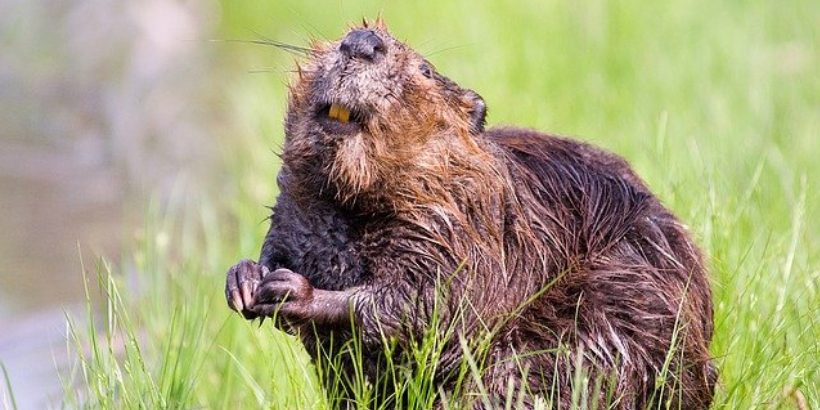
Derek Gow knows a thing or two about beavers; as a farmer-turned-ecologist, he has spent close to 20 years reintroducing beavers to the wilds of Britain. Rewilding is no easy task, a large part of the process includes importing, quarantining, and assisting in the beavers’ reestablishment. And after so many years, Gow has met quite a few beavers. Some more memorable than others. In particular, the first beavers he imported made a lasting impression for more than one reason. Below, he recounts his experience with a particularly grumpy beaver.
The following excerpt is from Bringing Back the Beaver by Derek Gow. It has been adapted for the web.
They were the first beavers I had ever imported and I was worried.
Although everything that could have been done was done – including the construction of large, solid, tin-lined crates to meet the strict legislation required for international air animal transports – moving wild animals is never a straightforward prospect, and when things go wrong, they tend to do so fast. The very last thing I wanted to do was to open a crate full of dead beavers.
Britain is unusual in that importing beavers requires a period in which they are quarantined for rabies. This means that they cannot simply be collected from a location in Europe, brought to Britain and then released. Quarantines are not the norm in continental Europe, where most reintroductions do not involve lengthy delays between the beavers being captured and their release elsewhere with perfunctory veterinary checks.
There are only two methods of getting beavers to Britain. The first is fast, simple and expensive, and involves flying them from their country of origin to Heathrow, where there is an international animal quarantine centre capable of caring for all manner of animal life from guppies to gorillas. The second involves driving to Europe to collect them. In recent years most of the imported beavers have come from a man named Gerhard Schwab in Bavaria (more on him later) who has many surplus each year as a result of his organised management system that removes them from locations where their activities are intolerable. Experience gained over years has taught us that although it may seem heartless not to bring in old, injured or orphaned individuals there is simply no point. We want beavers that can survive quarantine and go on to live long and productive lives in Britain. The entire process is expensive and transporting poor individuals is a waste of resource. Stated simply – when selecting beavers, it’s the fat and shiny ones that we take while the others are culled.

Once we got lost in the red-light district of Düsseldorf where, despite a broad range of ‘fruity’ options available to visiting humans, we could find no source of sweet apples for our beavers.
On occasion, even though you have all the correct paperwork, the port authorities can produce surprises of their own. Sometimes they just want to show a beaver to their mates and then with airy French elegance simply wave you through without further ado. At other occasions they will glumly peruse the paperwork you have given them and insist that no boarding is possible unless you can confirm the validity of your details at 2.37 a.m. on a Sun-day morning with the necessary officials in Britain. This, in case you are wondering, is a simply impossible request.
The Popielno beavers were flying in. The Poles had agreed to provide two breeding pairs of adults and their three kits. I went to meet them on their arrival at Heathrow. I arrived early and waited in trepidation for the plane to land. While the experienced staff of the quarantine facility were utterly relaxed, I was desperate to check that the beavers were okay and to reassure their former owners that they were safe. Eventually a radio call informed us that the forklift carrying their crates was outside. A huge steel electric shutter was raised and the vehicle drove in. The crates were unloaded onto trolleys and, as the centre occasionally dealt with seals, transferred to two secure, tilled enclosures with pools in the main building.
Once they were unloaded with a pair in each room, I cautiously raised the slide on the first and bent forward to peer inside. Nothing was visible other than a large pile of straw, which I stepped forward to part with care. Underneath, curled tightly into balls, were two adult beavers. Their eyes were shut and it was difficult to determine whether they were breathing or not. I touched and stroked the nearest, whose silver aluminum ear tag informed was a female.
Convinced that they were dead, I crawled in further on my knees to get a better look while the quarantine staff peered cautiously from outside. As I reached out again to touch her, she let out a low hissing growl and, turning with incredible speed, jumped towards me with her teeth exposed. I leapt backwards and in doing so banged my head hard on the crate roof before falling out onto the tiled floor beyond.
The quarantine staff stampeded in a herd for the exit door, which they slammed promptly in their wake. They peered with pickled onion faces pressed tight to the door’s misty glass plates as the beaver bounced towards me on the floor, hissing. As I scrabbled backwards on my bottom, I grabbed an abandoned yard brush, and as she grabbed my left boot and readied to bite, I stuffed the bristled head straight into her face. Like lightning she grasped it, leant over the bristles and with a single bite severed its head from the shaft. As I skittered further back trying to gain my feet, she pursued me vigorously, reducing the length of the remaining pole with a series of savage, lunging bites. I reached the wall, stood up and realised I was bleeding quite profusely from a cut on the top of my head that was making sight difficult and, just as the beaver launched another bounding, biting barrage, fell sideways into the seal pool.
I have no real memory from this point onwards of exactly what happened next. The beaver jumped into the water beside me and then, when the advantage was completely hers, decided that a relaxing bath was really much more appealing.
Slipping, sliding and blood-stained, I lurched towards the door wailing and fell through face forwards onto the warm wet tiles of the floor.
Although caring, the staff failed emphatically in their efforts not to laugh.
I did not find it funny.
I called her ‘Grumpy’ beaver. She was never amicable. Years later when she died and was post-mortemed, we realised that she had a grumbling set of stomach ulcers that went someway at least to explaining her general disaffection.
Read The Book

Bringing Back the Beaver
The Story of One Mans Quest to Rewild Britains Waterways
$17.95
You may like...
-
 $17.95
 -
$25.00
-
$19.95


Recent Articles

Do you have an old, worn-out pair of jeans in your dresser? Instead of throwing them out, try to grow mushrooms on them. Follow these guidelines to get started.
Read More
Discover the magic of oyster mushrooms! They can grow almost anywhere. Straw is a surprisingly simple way to cultivate the ever-popular oyster mushrooms.
Read More
Known for their tall stature and distinctive flower heads, cattails thrive near lakes and marshes. From edible shoots and nutrient-rich roots to pollen used in baking, cattails offer a wealth of uses.
Read More
There are several ways to embrace nature – no matter the size of your garden. It’s time to rebug & rewild our gardens, lawns, and parks!
Read More
These much-loved titles are the perfect books for Mother’s Day! Gardening books, cookbooks, memoirs and more — there’s a book for every mom on this list.
Read More