

A Guide to Making Jams and Syrups With Wild Ingredients
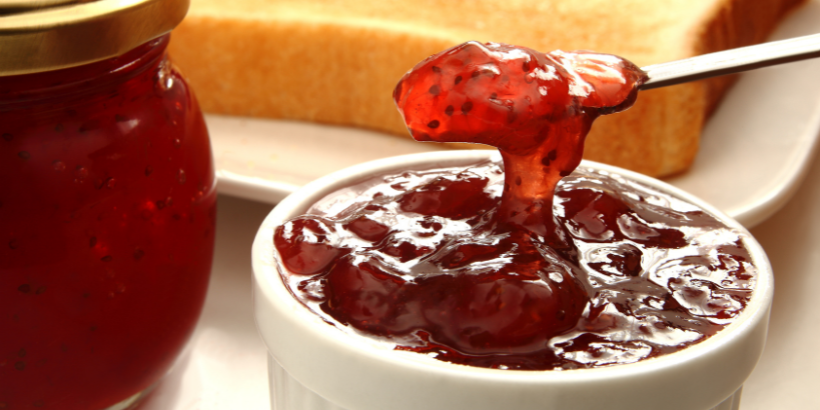
One of the best parts of cooking with ingredients you forage for yourself is discovering how they work on their own to deliver delicious flavors. This is especially true when it comes to making jams and syrups with wild ingredients.
The possibilities are pretty much endless with wild ingredients — use almost any fresh fruit or juice and a sweetener to create your own custom jam or syrup!
The following is an excerpt from The New Wildcrafted Cuisine by Pascal Baudar. It has been adapted for the web.
Making Jams and Syrups With Wild Ingredients
I’m a bit peculiar with regard to jams. I had never heard of using pectin to gel them until I came to the United States. As I was growing up in Belgium, my mom made a lot of strawberry and rhubarb jams with the bounty of our garden, and the usual method was to cook the sugar and fruits over the boiling point, until the mixture reached the “set point” at 220°F (104°C).
Over the years, I’ve made a lot of jams using both methods (adding pectin or high temperature), but the more I started using wild ingredients, the less I was interested in either of these methods. I think boiling up to 220°F is excessive and not optimal for flavors.
Using Wild Ingredients: Let the Plants Talk to You
I have a different philosophy, and I always tell this to my students: Let the plants talk to you. If you want to create a true original and native cuisine, your cooking ideas and recipes should come from the ingredients themselves and their environment.
Presently I use the same philosophy with my “jams”; they’re often more like syrups, and I like to let the ingredients do their own thing.
Making Jams and Syrups: Pascal Baudar’s Method

I don’t overcook the syrup—I simply bring it to a temperature of 200°F (93°C) for 12 minutes, then place the contents in half-pint (250 ml) jars and process them for 15 minutes in a boiling-water bath. For pint (500 ml) jars I process for 20 minutes.
Ingredients for Making Jams and Syrups
My elderberry jam never sets properly; it’s a thick syrup with lots of berries, and that’s completely fine with me. It’s delicious with game birds such as quail or pigeon. Other ingredients, such as our local passion fruit, will set properly like a regular thick jam if I use the whole fruit, including the skin.
I also like to add interesting wild aromatics to some of the jams or syrups I make. Very often they come from the same location. A leaf of mugwort or black sage in elderberry syrup adds a lot of subtle flavor. The same is true with a tad of white fir needles when making a manzanita berries syrup.
Native Chia Seeds Jam
You can make a solid jam without overcooking or adding pectin by using chia seeds and (probably) plantain seeds—although I’ve not tried the latter yet. Both seeds have gelatinous properties.
The technique is simple. Heat berries and sugar in a saucepan as explained above. If necessary, depending on the berries you have locally and use, you may need to lightly crush the berries with a fork.
Add the chia seeds (foraged or purchased) into the hot syrup at the end of the cooking. Start with 2 tablespoons (20 g) per cup (236 ml) of liquid; cook for another couple of minutes while stirring the seeds. Remove from the heat and let the jam sit for 5 minutes, then check the consistency. If necessary, add more chia seeds, but usually 2 tablespoons (20 g) is enough. Place in a jar and close the lid. This jam should keep in the refrigerator for up to 2 weeks.
There are many recipes available online for this type of jam, some using fresh fruits or juice and honey instead of sugar.
Recommended Reads
Read The Book

The New Wildcrafted Cuisine
Exploring the Exotic Gastronomy of Local Terroir
$40
You may like...
-
 $29.95
 -
$25.00
-
$40.00


Recent Articles

Try your hand at preserving veggies by freezing them! Freezing vegetables is a quick, simple way to preserve them for winter meals.
Read More
Add a rich and robust twist to your meals with help from red wine salt! This seasoning is a perfect addition to dishes like short rib, potatoes, and more.
Read More
Raspberries: they’re sweet, flavorful, and extremely versatile. Forage for raspberries yourself and use them to create delicious dishes!
Read More
This summer vegetable tian is the perfect easy side dish. Layers of eggplant, zucchini, tomato, & red onion make this dish healthy, colorful, and delicious!
Read More
Squash newbies, this one’s for you! Learn how to harvest, cure, and store squash with these tried-and-true techniques from gardening expert Carol Deppe.
Read More