

Love Bugs: Why We Need to Love Insects
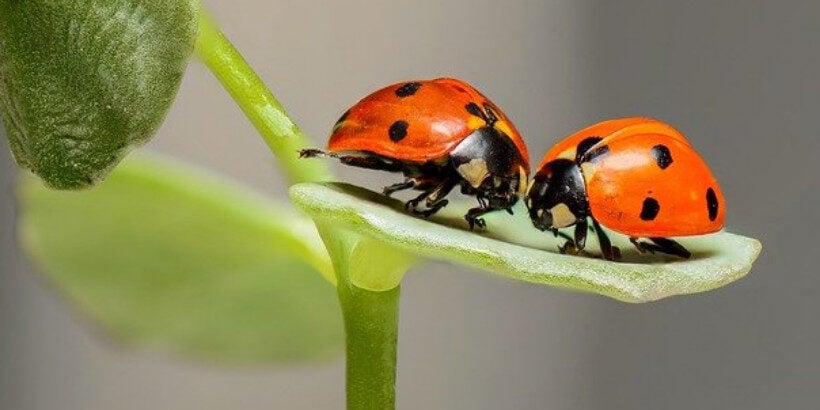
Remember when bugs used to be all the rage? This fascination is something that we need to re-gain as a society and instill in the next generation. Instead of shying away from these controversial creatures, it’s time to teach kids (and ourselves) how amazing insects really are!
The following is an excerpt from Rebugging the Planet by Vicki Hird. It has been adapted for the web.
Love In the Early Years
One of my best memories of my youngest child as a toddler is his proud, excited face when he opened his pudgy little hand and showed me the soil-encrusted worm inside. He had just dug it up in the garden – he thought these wriggling wonders were amazing.
He has retained a love of bugs throughout his life: filling his palms with crickets as we climbed mountains in Switzerland and, even as a jaded teen, I found him opening the back door with his elbow, hands cradling a spider that he had rescued from the bath. He is rebugging on a small scale.
Why do children love bugs? Do they recognise the huge value insects have for us as fellow dwellers on this small planet? Unlikely.
Why Children Like Bugs & Insects
I suspect it stems from pure curiosity in their small size and totally different appearance, combined with a lack of fear – valuable traits sadly lost to many of us as we mature.
My reaction to my son’s discovery of dirt-covered worms was also important. We can instill love and fascination, or fear and disgust, pretty fast in impressionable young minds. I was thrilled and excited too. But then I am a bug obsessive.
I hope, though, that I did not bore my son too much about the role of worms.
I could have risked spoiling the pure, curious interest and fascination of a child in a tiny creature by lecturing him on the important tasks that bugs perform. Or be a doom-monger by lamenting about how they are threatened and how badly we have treated them.
For young children, discovery, play and experience are enough. We must give them plenty of chances to be outside in nature and to experience bugs in their lives as much as possible.
From Fascination to Fear: A Fading Love Of Insects
Yet, as children get older, all too often that early curiosity is turned to fear for all the wrong reasons. Prevailing ‘grown-up’ attitudes start to dominate how children think of bugs, usually with negative associations, such as:

- bees sting more
- spiders bite
- flies spread diseases
- slugs eat the flowers
- ants bite
- locusts destroy crops
- earwigs will climb into your ear

And so on. This conditioning may start quite early and eventually many children begin to get ‘the fear’. They start to dislike bugs, assuming the bugs will hurt them or carry deadly diseases.
They can become indifferent to what fascinated them. And there are also fewer bugs to see these days. A sad state, but reversible.
Scientists have recognised the need for public appreciation of bugs as fundamental in driving societal changes and policy shifts.
Shifting the Perspective on Insects
What if adults, carers, everyone, understood the importance of bugs and, even if they did not find them fascinating, they understood their value? What if we all managed to put a different, positive message across? All the time.
If everyone cannot love bugs for their beauty and extraordinary lives, perhaps they can appreciate the incredible gifts they provide us with, for example:
- wasps control pests and pollinate plants
- bees pollinate crops and make honey
- spiders catch flies
- flies clear waste and pollinate food plants
- slugs make soil
- ants aerate soil and clear away debris
- locusts are vital sources of protein and insects are eaten by two billion people globally
- earwigs pollinate fruit
And so on. Rebugging activities – like creating pollinator friendly window boxes or putting on local bug treasure hunts – could help in this learning process, as well as provide greater interactions with nature and the joy that it can bring.
It is also easier to observe these mini beasts in real life than the big beasts only seen at a zoo or on TV – bugs can be found all around us and creep into our everyday lives in other ways.
Recommended Reads
Read The Book

Rebugging the Planet
The Remarkable Things that Insects (and Other Invertebrates) Do And Why We Need to Love Them More
$22.95
You may like...
-
$28.00
-
$17.95
-
$39.95


Recent Articles

What is the condition of wondering? For as long as humans have been alive, we have been asking questions. It is a part of us. It is what makes us unquestionably human.
Read More
Wild seeds & grains are packed with nutrients and versatility. Perfect for off-grid or wildcrafted cooking! New to foraging? Keep reading to get started!
Read More
Get your daily dose of health! Ancient mushroom medicine for modern times. Mushrooms help us understand medicine is more than just chemicals!
Discover nature’s medicine cabinet with the power of mushrooms!
– Medicinal Mushroom Crackers
– Medicinal Mushroom and Vegetable Broth
– Chaga-Reishi Chai

Wondering where to forage for fresh wild greens? Think beyond your garden… Look no further than hedges. Hedges are secret havens for delicious herbs & wild greens. Get ready to start foraging. Hedges are a hidden treasure trove of natural goodness!
Read More
Ready to supercharge your garden’s biodiversity? Rewilding is a game-changer for farms and gardens! Let nature thrive and boost biodiversity on your farm or garden with rewilding!
Read More