

The Condition of Wondering
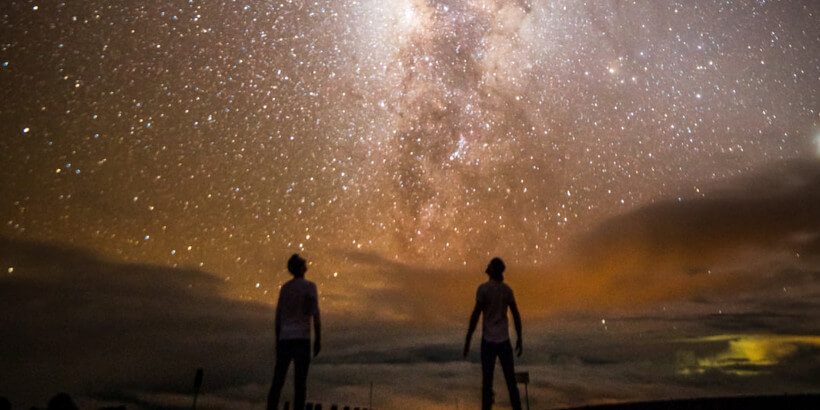
What is the condition of wondering? For as long as humans have been alive, we have been asking questions. It is a part of us. It is what makes us unquestionably human.
The following is an excerpt from Courting the Wild Twin by Martin Shaw. It has been adapted for the web.
Prefer Audio?
Listen to the following excerpt from the audiobook of Courting the Wild Twin. It has been adapted for the web.
The business of stories is not enchantment.
The business of stories is not escape.
The business of stories is waking up.
Imagine, if you will, looking up into the dark and naming a star. You could be crouching in the moonlight outside a Dordogne cave, or peering up from a balcony in west London in the middle of a party as the music pumps, pumps, pumps. But for some reason we commit to gazing. And something happens when we, maybe rashly, give ourselves utterly to the turbulent luminosity of the universe. We start to gabble in love speech.
So there you are, looking at the star.
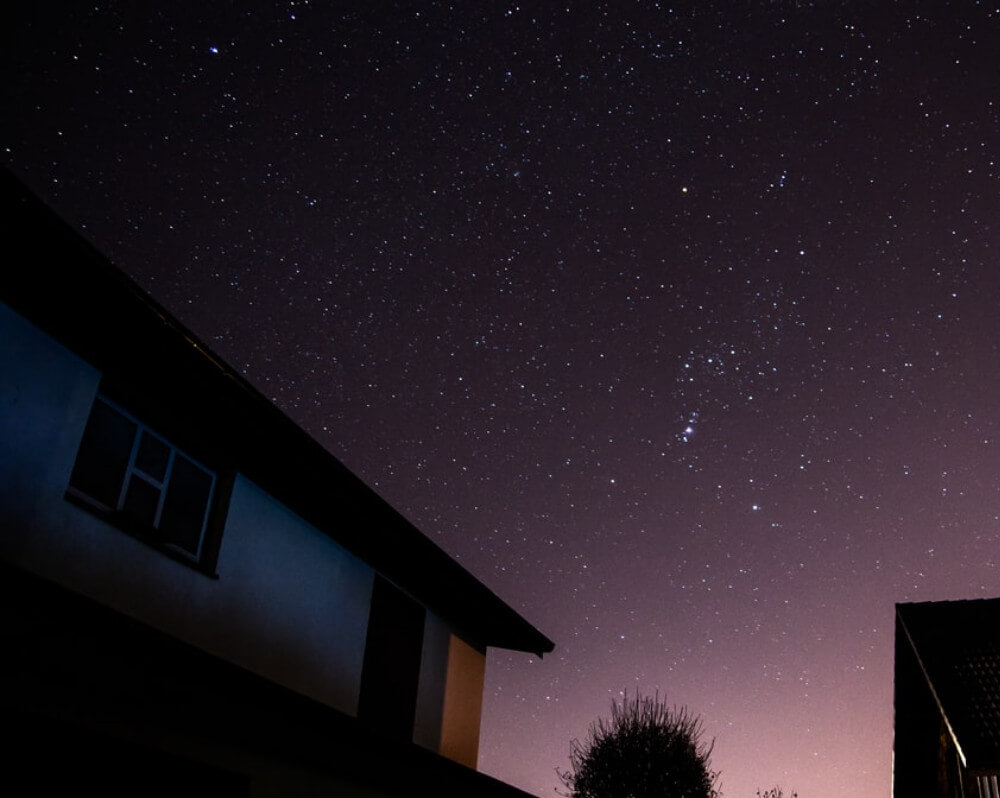
You could call it something like:
Flint of Whale Bone
Dream Coin of the Moon
Pale Rivet of the Sun’s Own Spear
White Bridle of the Black Riders
This condition of wondering is still absolutely intact in us.
It is. Amongst the loaded shopping trolleys of Walmart and Tesco, the fluorescent tech hubs, flicker-screens and finger-beckoning apps, it’s still there. This raw, imaginative, holy thing.
There’s an audacity to it, but it’s what we’ve always done. We did it on the plains of South Dakota, we did it in the muddied byres of Shropshire, we did it on the vampiric tips of snowy Carpathian Mountains. And here’s the thing: we did it to claim not ownership but connection. There’s a swoon in this, a bearing witness, a startled affection growing to an awe. There is no flag planting, no home improvement planned, just giddy, magical naming. And maybe the star just named itself and used us to do it. Maybe it spoke through us for a moment. There’s a health to this.
Much has been written about the human impulse to daub its spray on every living thing, to bellow the decree of its franchise, but what happens when the earth itself gives a little pushback? When it’s not us lacing a brocade of dominion-speak into a voidal dark, but that actually the words themselves may be the return journey of longing from the thing itself. That there’s a scrummage of inspiration that is not only human. This is a reality that has been articulated from Amazonia to Renaissance Italy, from the Yakut to the Aborigine. That words can have fur and light in them. Words can constrict, words can liberate.
Bad storytellers make spells.
Great storytellers break them.
This, now, is mostly an era of spell-making. Of tacit enchantment, of stultified imaginations and loins inflamed by so much factory-fodder lust, our relationships malfunction in their millions. We are on the island of the Lotus Eaters, curled up in the warm sleepy breeze of a Russian fairy tale as the robber steals away the Firebird. How do we wake up?
I will give you a little plot-spoiler right here. Sounds so very deceptively simple. The secret is relatedness.
Relatedness. Relatedness breeds love, and love can excavate conscience. Conscience changes the way we behave. Relatedness is how we wake up. But I am going to take a long and sometimes diffuse route to say it in the fashion that such a notion deserves. As I will repeat before the end of this book, be sceptical of the quick route. It’s truly what’s got us into a thousand unruly messes. And not the kind the poets praise.
There are stories about living without relatedness. They don’t tend to end well. Without relatedness we dwell in a place the Inuit call the Moon Palace. The Moon Palace is a place that appears perfectly safe: we have a great view of the earth and its goings-on, but we touch nothing. We can spend years and years up there. Heartbreak will get us there.
The cool of the Moon Palace is a very dangerous place to be. Likely there comes a point where you want to come back down. The old ones say the earth is only three steps down from the Moon Palace, but we have to keep our eyes open as we descend. If we are unconscious we become spiders that cause webs to trap everyone around us. In other words, we cast spells.
Recommended Reads
All In the Question: What If We Started Asking Better Questions?
Read The Book

Courting the Wild Twin
$24.95
You may like...
-
 $35.00
 -
$24.95
-
$28.00


Recent Articles

Whether foraging or gardening, it’s vital to know the proper techniques for harvesting. Read on for how to harvest herbs, roots, flowers, bark, fruit, and more!
Read More
How and why can some plants live to such a great age? Delve into the lifespan of plants and discover the incredible longevity and resilience of these remarkable living beings.
Read More
We’ve been told to kill a lanternfly because they’re “invasive.” In reality, they are living like any other insect would. So why are they under attack?
Read More
Dig into the many varieties of grass seeds, learn about toxicity, and review a list of edible grass seeds. Happy foraging!
Read More
A forest garden provides a beautiful, bountiful edible landscape at any scale—whether there’s only a few dozen square feet or you have over an acre to spare.
Read More