

Malt Your Own Grain at Home: Brewing from Scratch
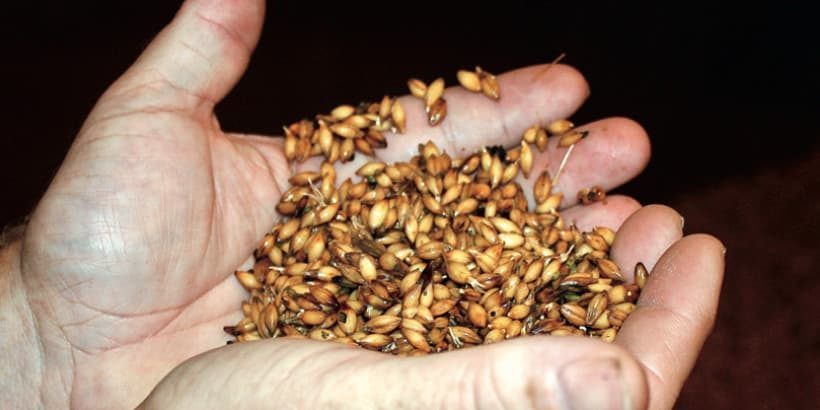
Do you think making a 100%-from-scratch beer is near-to-impossible? We’re here to tell you, it’s not! With just a few ingredients and a little patience, you can malt your own grain at home and get started on a brewing a batch of beer completely from scratch!
The following excerpt is from Brew Beer Like a Yeti by Jereme Zimmerman. It has been adapted for the web.
(Photographs courtesy of Jereme Zimmerman unless otherwise noted.)
Malt Your Own Grain at Home
It’s quite simple to malt your own grain. All you need are whole, unhulled grains, water, and a bit of patience. Barley works best due to its high potential for enzyme conversion, but other grains such as sorghum or field corn (dried, not sweet and right off the cob) will work as well. I recommend starting with enough for a 1-gallon (4 L) batch of all-grain beer, as it will help you to understand the process before you try malting larger amounts. Once the grains are malted, you can follow my technique for 1-gallon all-grain brewing in chapter 8, and you’ll have the pleasure of being able to say that you made a batch of beer entirely from scratch! You can easily scale up from there. The whole process should take two to three days.
Ingredients and Equipment
- 2 pounds (1 kg) unhulled barley or other whole grain
- Around 1⁄2 gallon (2 L) warm springwater or dechlorinated tap water (enough to cover the grains)
- Widemouthed 1-gallon (4 L) or larger glass jar
- Cheesecloth or dish towel with a rubber band, or sprouting lid (basically a lid with a fine-mesh screen)
Procedure
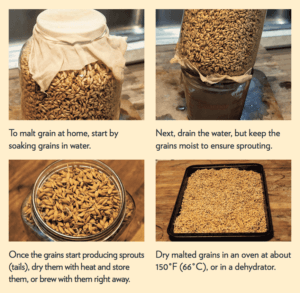
- Fill the jar with grains up to about 2 inches (5 cm) below the opening, to allow room for them to swell. Cover the grains with the water and secure a sprouting lid, or use a rubber band to secure a cloth, over the jar’s opening.
- Let the grains soak in a warm area (60–70°F/15–21°C or higher) for 12 to 24 hours.
- Sometime between the 12- and 24-hour mark (wait longer in cooler temperatures), drain all water off, or the grains will ferment and eventually rot. To do this, let the jar sit upside down in a bowl or draining rack, making sure it is not resting in the drained water. The grains will only germinate if they’re moist but not covered by water, as they require both water and oxygen to sprout.
- Place the jar back in its warm area and proceed to rinse the grains two to three times (or more) a day; be sure to drain off all water each time. You want them to stay moist, but keep from molding.
- Watch for sprouts (tails) to start emerging from the seeds. Once the tails are about three-quarters the length of the seed, they are at peak fermentation viability. Use them within a day or store them for a couple of days in a refrigerator, as the enzymes and sugar will diminish quickly.
- If you plan on saving them for later, dry them in an oven at about 150°F (66°C) or in a dehydrator. Dry them until they are too hard to bite through when put between your teeth.
- If desired, roast the grains before storing (using the Roasting Your Own Malt guidelines on page 64).
- Store the grains in an airtight container in a cool place until you’re ready to use them.
Recommended Reads
Read The Book

Brew Beer Like a Yeti
Traditional Techniques and Recipes for Unconventional Ales, Gruits, and Other Ferments Using Minimal Hops
$24.95
You may like...
-
 $45.00
 -
$29.95
-
$29.95


Recent Articles

This recipe is inspired by the classic maple taffy-like candy Sugar on Snow. A much enjoyed tradition! Unlike flavor-neutral simple syrup, maple syrup’s contribution to cocktails isn’t just sweetness but also buttery, nutty & vanilla flavors.
Read More
Unwind with a twist! Ditch the booze and elevate your evenings with this delightful herbal nightcap mocktail syrup. Relax before bed or spice up your tea time!
Read More
Searching for a new way to utilize seasonings? Shake up your cooking routine with a fresh twist on salt and seasonings. Introducing… Mint Salt Recipe!
Read More
Warm up from the inside out with Fire Cider! Great for stimulating digestion and warming you up from the inside out, no matter the season. It can be prepared in water or tea as desired.
Read More
Ready to shake up your fermentation game? Try making Kvass, the ultimate beginner-friendly recipe! This nourishing beverage calls for just a few simple ingredients and only takes a couple of days to ferment. It’s easy, delicious & perfect for beginners.
Read More