

Sprouted Amaranth Alegria Energy Bars
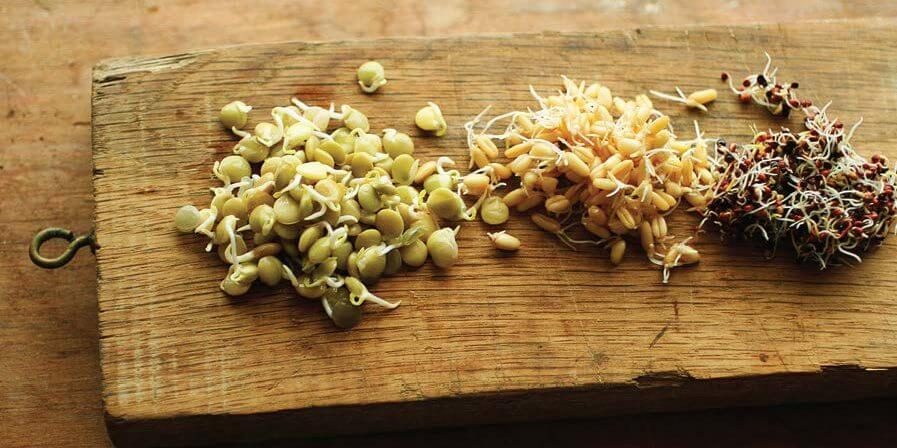
One simple and healthy way to breathe life back into your diet is by sprouting your own seeds. You can make nutrient-rich sprouts from all kinds of edible seeds right in your own kitchen.
Sprouts are incredibly versatile too! You can make chickpea sprout hummus, salads, or in this case: energy bars!
The following is an excerpt from The Wild Wisdom of Weeds by Katrina Blair. It has been adapted for the web.

Sprouted Amaranth Alegria Bars
Ingredients
1⁄4 cup sprouted amaranth seeds
1 cup sprouted sesame seeds
1 cup sprouted sunflower seeds
2 tablespoons raw cacao powder
1 cup sprouted pumpkin seeds
3 tablespoons raw honey
Procedure
- Mix all ingredients together and shape into bars.
- Dehydrate either in the sun for a day or in the dehydrator for several hours until firm.
- Enjoy this living raw treat as a snack on adventures in the wild. You can also make this bar by toasting the amaranth in a dry skillet and then adding raw, unsprouted, lightly ground sunflower and pumpkin seeds. Although sprouting the seeds brings a higher energy to the bars, toasting them is another way to make the recipe in a very short time so as to have it available when you need it and to bring a unique flavor into the recipe.
Growing Sprouts: The Eva Way
By Didi Emmons
Growing sprouts is one of the simplest things you can do to breathe life into the deprivations of winter. As an urbanite who doesn’t have much space or sun to grow food, sprouts are one thing I can grow at any point in the year. Sprouts are replete with vitamins, minerals, proteins, and enzymes. Sprouting is easy, as easy a process as cooking rice. And there is a satisfaction in fostering and watching them grow and prosper. It feeds my maternal side, without the crying and diapers.
Most any edible seed can become an edible sprout, but I like to sprout wheat berries, kamut, quinoa, lentils, and chickpeas. Other possibilities include hulled sunflower seeds, buckwheat groats, spelt, soybeans, peas, brown mustard seeds, radish seeds, broccoli seeds, rye seeds, cabbage seeds, and herb seeds. You can also sprout raw peanuts, black-eyed peas, adzuki beans, green channa, and, more commonly, alfalfa, clover, and mung bean. Tomato and potato sprouts are said to be poisonous.
Two Ways To Grow Sprouts
There are two main ways to grow sprouts at home: in a jar or in a bag (of any sturdy mesh fabric, whether natural or synthetic fiber).
- In either case, start by rinsing about 1 cup of legumes or seeds and then letting them soak overnight.
- Drain, rinse again, and transfer the legumes or seeds to a big glass jar or mesh bag large enough to hold five times the quantity of seeds or legumes that you have.
- Tie the bag closed or secure cheesecloth over the mouth of the jar to keep debris out and to facilitate easy straining. Hang the bag or store the jar in a dark, humid place if possible, and rinse morning and night.
- Eventually, after somewhere between two and ten days, depending on the type of seed, you will notice that the seeds have sprouted.
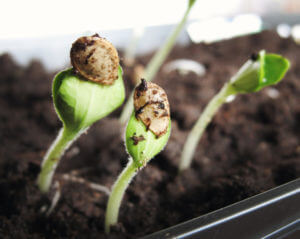 You may have noticed that there is a lot of rinsing involved here, and watching all of that barely used water head down the drain goes against every fiber in Eva’s body. When she rinses the seeds or legumes the first time, she catches that liquid in a bowl. To rinse the seeds or legumes afterward, she simply dips her bag into the captured water, lifts it up, and shakes the liquid out. Once the seeds or legumes have sprouted and the rinsing has ended, she uses the liquid for a variety of creative uses, from cooking her morning cereal to watering (and nourishing) plants.
Sources
Don’t buy your seeds at a garden center, there is a risk they may be contaminated with chemicals or bacteria. I get my seeds at a local natural foods store and they sprout—no problem. But if you are serious, there are plenty of websites like Sproutman.com that sell seed grown specifically for human consumption. “The Sproutman” also offers a helpful circular sprout chart for $5 that lists an array of seeds you can sprout, with the corresponding sprouting times, the suggested method, the level of difficulty, uses, flavors, and so on. It is worth getting.
Storage
After giving sprouts one final rinse, put them back in the same container you grew them in or in a plastic bag poked with a knife to ensure air circulation. Sprouts are living plants. They last about a week in the fridge in a plastic container, though legume sprouts may last longer.
Recommended Reads
Read The Book

The Wild Wisdom of Weeds
13 Essential Plants for Human Survival
$34.95
You may like...
-
 $27.95
 -
$29.95
-
$24.95


Recent Articles

Growing no-till arugula is a simple way to grow your own food. These greens can be used on pizzas, salads, and as a garnish on almost any dish.
Read More
This triple apple snack cake uses applesauce, cider, and apples for a one-two-three apple punch. Don’t take our word for it though, give it a go yourself!
Read More
The leaves are falling, which means it’s time start figuring out what to do with them. This year, try turning your fallen leaves into mulch for your garden!
Read More
These small fruits are a delicious source of nutrients that you can find almost anywhere. Get started on acorn harvesting with help from these simple tips!
Read More
Enjoy fresh produce all year long by growing your own food! Achieving a twelve-month growing season is as simple as using the right crop protection structure.
Read More