

Chickpea Sprout Hummus: Breathe Life Back Into Winter
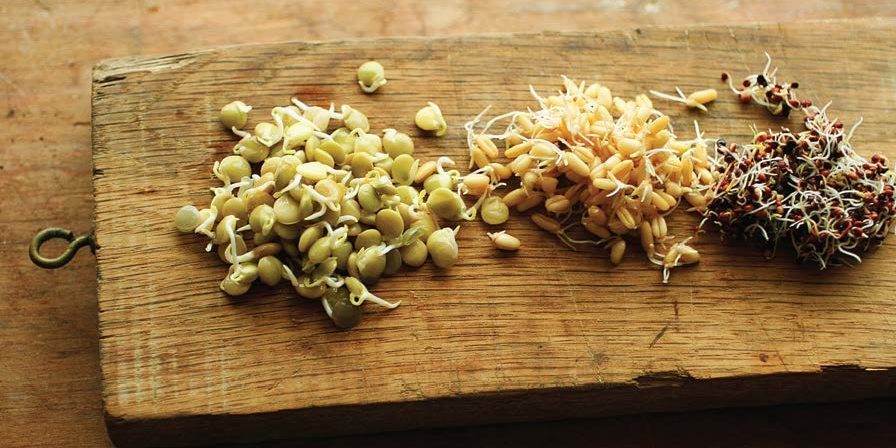
Just because the months are getting colder doesn’t mean you can’t still have homemade hummus with fresh chickpeas; you just have to get creative with it. This hummus recipe uses chickpea sprouts, which are growable indoors and during winter.
The following is an excerpt from Wild Flavors: One Chef’s Transformative Year Cooking from Eva’s Farm by Didi Emmons. It has been adapted for the Web.
RECIPE: Sprouted Hummus
I had survived another yoga session and was basking in Shivassana when the inspiration of sprouted chickpea hummus arrived into my head. I thought I had just invented a recipe, but I Googled it when I got home and realized it was a very unoriginal thought. Still, I went ahead with my own version. I like to eat the hummus with tart apple slices or fresh whole-grain (sprouted!) bread
Makes 1½ cups
Ingredients
- 3 or 4 garlic cloves
- 1 cup chickpea sprouts
- 2 tablespoons lemon juice (about ½ lemon)
- ¼ cup tahini
- 1 teaspoon ground cumin
- ½ teaspoon salt
- ½ teaspoon freshly cracked black pepper
- 3 tablespoons extra-virgin olive oil
Procedure
- Toss the garlic in a food processor and run the machine until itis finely chopped. Add the chickpea sprouts and pulse until they are pureed. Add the lemon juice and 2 or 3 tablespoons water and puree again until the mixture is mostly smooth.
- Add the tahini, cumin, and salt and pepper. With the machine running, slowly add the olive oil. Taste for seasoning and serve
Growing sprouts is one of the simplest things you can do to breathe life into the deprivations of winter. As an urbanite who doesn’t have much space or sun to grow food, sprouts are one thing I can grow at any point in the year. Sprouts are replete with vitamins, minerals, proteins, and enzymes. Sprouting is easy, as easy a process as cooking rice. And there is a satisfaction in fostering and watching them grow and prosper. It feeds my maternal side, without the crying and diapers.
Most any edible seed can become an edible sprout, but I like to sprout wheat berries, kamut, quinoa, lentils, and chickpeas. Other possibilities include hulled sunflower seeds, buckwheat groats, spelt, soybeans, peas, brown mustard seeds, radish seeds, broccoli seeds, rye seeds, cabbage seeds, and herb seeds. You can also sprout raw peanuts, black-eyed peas, adzuki beans, green channa, and, more commonly, alfalfa, clover, and mung bean. Tomato and potato sprouts are said to be poisonous.
Growing Sprouts At Home
There are two main ways to grow sprouts at home: in a jar or in a bag (of any sturdy mesh fabric, whether natural or synthetic fiber).
- In either case, start by rinsing about 1 cup of legumes or seeds and then letting them soak overnight.
- Drain, rinse again, and transfer the legumes or seeds to a big glass jar or mesh bag large enough to hold five times the quantity of seeds or legumes that you have.
- Tie the bag closed or secure cheesecloth over the mouth of the jar to keep debris out and to facilitate easy straining. Hang the bag or store the jar in a dark, humid place if possible, and rinse morning and night.
- Eventually, after somewhere between two and ten days, depending on the type of seed, you will notice that the seeds have sprouted.

Sources
Don’t buy your seeds at a garden center, there is a risk they may be contaminated with chemicals or bacteria. I get my seeds at a local natural foods store and they sprout—no problem. But if you are serious, there are plenty of websites like Sproutman.com that sell seed grown specifically for human consumption. “The Sproutman” also offers a helpful circular sprout chart for $5 that lists an array of seeds you can sprout, with the corresponding sprouting times, the suggested method, the level of difficulty, uses, flavors, and so on. It is worth getting.
Storage
After giving sprouts one final rinse, put them back in the same container you grew them in or in a plastic bag poked with a knife to ensure air circulation. Sprouts are living plants. They last about a week in the fridge in a plastic container, though legume sprouts may last longer.
Recommended Reads
You may like...
-
 $29.95
 -
$29.95
-
$27.95


Recent Articles

Small But Mighty! Crab Apples are easy to find, simple to store, and incredibly flavorful. Keep reading to learn more about the unsung heroes of the apple family.
Read More
All hail the mighty garlic clove! Become a master at garlic growing with these simple tips for growing no-till garlic from seed to harvest.
Read More
Try your hand at preserving veggies by freezing them! Freezing vegetables is a quick, simple way to preserve them for winter meals.
Read More
If you keep your hens in a stationary coop, you’re missing out on their soil building talents. Un-coop that poop by putting your flock in chicken tractors!
Read More
Growing mushrooms on logs is an easy way to cultiavte your own fungi! Work in tandem with nature to grow many varieties of mushrooms.
Read More