

Getting Healthy in Toxic Times
An ecological doctors prescription for healing your body and the planet

EXCERPTS
| Pages: | 272 pages |
| Book Art: | 10 black & white illustrations |
| Size: | 6 x 9 inch |
| Publisher: | Chelsea Green Publishing UK |
| Pub. Date: | July 11, 2024 |
| ISBN: | 9781915294333 |
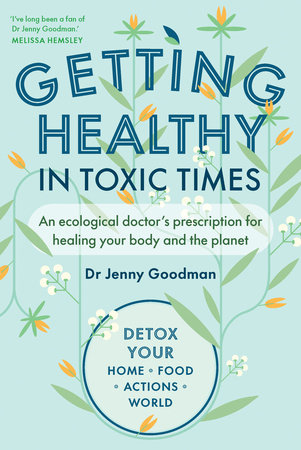
Getting Healthy in Toxic Times
An ecological doctors prescription for healing your body and the planet
How can we protect ourselves from the pollution, chemicals, and toxins that pervade our environment? Dr. Jenny Goodman connects the health of our planet with our own well-being, addressing the questions that very few doctors ask.
We’re all too aware of the traffic pollution in the air, the chemicals in our water, the toxins in the soil (and therefore our food), and the electromagnetic energy emanating from our gadgets.
If we can also understand how they affect our health, not least in the worrying rises in asthma and allergies, infertility, obesity, heart disease, behavioral and neurological disorders, as well as cancer, then we can take positive steps to avoid them.
With the right information, we can:
• Safeguard ourselves with protective measures
• Minimize our interactions with pollutants
• Ensure our bodies have the right anti-toxin nutrients
• Take collective action to fight for our health and that of the environment
Backed by the latest scientific and medical research, Getting Healthy in Toxic Times will empower you to look after your own health—and that of the planet. Let’s put the good stuff in and take the bad stuff out!
Reviews & Praise
“Dr Jenny Goodman’s new book is a treasure! It should be required reading in all high schools. The author has first-hand knowledge of her subject matter. Lots of great advice on how to avoid toxic exposures and what to do to restore health once they’ve made you ill, while eschewing pharmaceutical drugs. The science is highly accurate but not too technical for the lay public. The book is sprinkled with engaging stories of specific cases and is so timely in this age of pervasive toxic chemicals in our food, water and air.”—Stephanie Seneff, PhD, author of Toxic Legacy
“Dr Jenny Goodman has a rare ability to communicate complex science in the most easily digestible way. Despite the alarming nature of the subject matter, Getting Healthy in Toxic Times is an easy and compelling read. Dr Goodman tackles what is arguably the most pressing issue we face as humans: the damage we have inflicted on our environment and the inevitable harvest of suffering we are now reaping. At the heart of the message she wants to convey to the public is the appreciation of our utter inseparability from nature, of the fact that we are nature and that damaging our environment is an act of self-harm.
In the interests of our well-being, Dr Goodman tackles multiple thorny issues head on, bringing a wholesome mix of science and humanity to bear on a situation that she finds simply too urgent to mince her words. This book contains a mass of invaluable information collected together to provide a comprehensive resource to protect the health of our and our family’s health and well-being, and thereby to contribute to the well-being of our environment and all the other people and species depending on it.
Getting Healthy in Toxic Times needed to be written and Dr Jenny Goodman was ideally placed to have been its author. Now it needs and deserves to be widely read.”—Robin Daly, founder and chairman of Yes to Life, the UK’s integrative cancer care charity
“Getting Healthy in Toxic Times is an important book. It shows what humanity is doing to their own environments and to the whole planet, damaging the health of every form of life on earth. Small improvements have been made here and there, but the whole situation is getting worse day by day. In order to make a real difference, we need to think of the root cause of all of this and address that root cause. Is it human greed? Is it the ever-increasing tyranny of global corporations? Is it money-based, merry-go-round “economy”? Is it the modern religion of “individualism” and “looking after number one”? The toxicity of our environment is connected to all other aspects of our lives. To address the environment, we must change as individual human beings and as humanity as a whole. We must become kinder and more loving to everything alive around us and we must get closer to nature.”—Dr Natasha Campbell-McBride, MD, the creator of the GAPS concept and the GAPS Diet
“Dive into Dr Goodman’s engaging exploration of our modern world’s hidden hazards in Getting Healthy in Toxic Times. Blending heartfelt personal accounts with rigorous research, Dr Goodman demystifies the pervasive toxicants infiltrating our soil, water and air. With an accessible and captivating style, this book offers practical solutions for those committed to environmental stewardship. Uncover the latest findings on electromagnetic frequencies and other contemporary threats, all while being empowered to make impactful changes. Toxic Times is an indispensable guide for anyone eager to understand and combat the contamination issues shaping our lives today.”—Michelle Perro, MD, DHom, co-author of What’s Making Our Children Sick?
About Jenny Goodman
Jenny Goodman is a medical doctor, lecturer and broadcaster. She qualified at Leeds University School of Medicine and worked as a junior doctor but, disillusioned with conventional medicine’s inability to heal sick people and its failure to enquire about the causes of illness or to do preventive healthcare, she qualified in Ecological Medicine with British Society for Ecological Medicine, a group of doctors and other practitioners who help patients to attain dramatically better health through changes in diet and nutrition, and through detoxification.
She has been practising Ecological Medicine for twenty-two years now and is the author of Staying Alive in Toxic Times. Jenny has appeared with Terry Pratchett in ITV’s documentary What’s in Your Mouth? and has been featured on the Victoria Derbyshire show, BBC One’s Inside Out and numerous other TV and radio shows.
Books by Jenny Goodman
You may also like...
-
 $20.00
 -
$19.95
-
$24.95


