

The Story and Legacy of a Radical Industrialist and his Quest for Authentic Change

Ray C. Anderson’s Mid-Course Correction, originally published 20 years ago, became the definitive case study for sustainable business. Now fully updated and expanded for the twenty-first century, Mid-Course Correction Revisited includes new chapters penned by Anderson’s grandson, John A. Lanier.
The following is an excerpt from Mid-Course Correction Revisited by Ray Anderson & John Lanier. It has been adapted for the web.
I have this mental picture of a mountain that is higher than Everest. It rises steeply out of a jungle that surrounds it. Most of us, people and companies, are lost and wandering around in that jungle, and don’t know the mountain exists at all.
Rather, we are preoccupied with the threatening, competitive “animals” all around us. A few have sensed the upward slope of the mountain’s foothills under their feet. Still fewer have decided to follow the upward slope to see where it leads. And a very few are far enough along to have had a glimpse of the mountain through the leaves of the trees, to realize what looms ahead and above.
Very few indeed have set their eyes and wills on the summit.
What will the view from there, from the vantage point of sustainability, be like? I believe it will be wonderful beyond description, and I hope to see it before I die. I also hope others, still lost in the jungle or just becoming conscious of the upward slope, even beginning to explore it, will hear our cries of joy through the foliage and rush ahead to follow our path, someday soon to join us at the summit (or better yet beat us there). There’s room there for everyone, and certainly anyone headed in that direction welcomes the companionship, as we seek to create the prototypical company of the twenty-first century, of the next industrial revolution.
About the authors

Ray C. Anderson was founder and chairman of Interface, Inc., one of the world’s leading carpet and flooring producers. His story is now legend: Anderson had a “spear in the chest” epiphany when he first read Paul Hawken’s The Ecology of Commerce, inspiring him to revolutionize his business in pursuit of environmental sustainability. In doing so, he proved that business can indeed “do well by doing good.” The Georgia-based Interface has been ranked number one in a GlobeScan survey of sustainability experts, and the company has continued to be an environmental leader even after Anderson’s death in 2011.
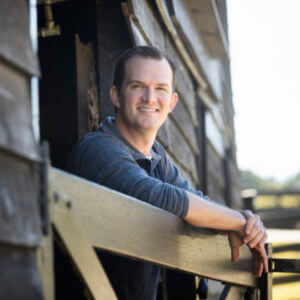
John A. Lanier joined the Ray C. Anderson Foundation as executive director in May 2013 to advance the legacy of Ray, his grandfather. He is chair of the board of directors for Southface, the southeast’s nonprofit leader in the promotion of sustainable homes, workplaces, and communities through education, research, advocacy, and technical assistance.
Recommended Reads
You may like...
-
 $17.95
 -
$22.95
-
$24.95


Recent Articles

When it comes to how we think about the economy, we’re centuries behind the times. Renegade economist, Kate Raworth, proposes an entirely new approach to economic systems thinking designed to help us develop new standards for economic success.
Read More
Using herbal medicine to heal the body is an ancient practice. It has since become a worldwide industry. Today, modern-day doctor’s visits and industrial medicine have displaced common knowledge of herbal medicine. Some still remember the ancient practice. In her book Following the Herbal Harvest, Ann Armbrecht interviews one such person, Phyllis Light, a fourth-generation…
Read More
Addressing the pressing issues affecting everyday Americans is essential—and one of our nation’s most profound challenges is the devastating impact of mass layoffs. Layoffs upend people’s lives, cause enormous stress, and lead to debilitating personal debt. The societal harm caused by mass layoffs has been known for decades. Yet, we do little to stop them.…
Read More
In a personal investigation into ethical and traceable leather, fashion designer Alice Robinson begins a ground-breaking journey into the origin story of leather and its connection to food and farming. Keep reading to learn more about her process of cutting & shaping leather to create handbags, shoes, clothing, and more! The following is an excerpt from…
Read More
We’ve all heard of the phrases “time flies” and “time heals all wounds,” but what really is time, and how does it impact our lives? The concept of time may be even more powerful than we think, especially when it comes to the money we save and spend. The following is an excerpt from The…
Read More