Garden & Agriculture Archive


Save 25% on Desert or Paradise

Monday, January 7th, 2013

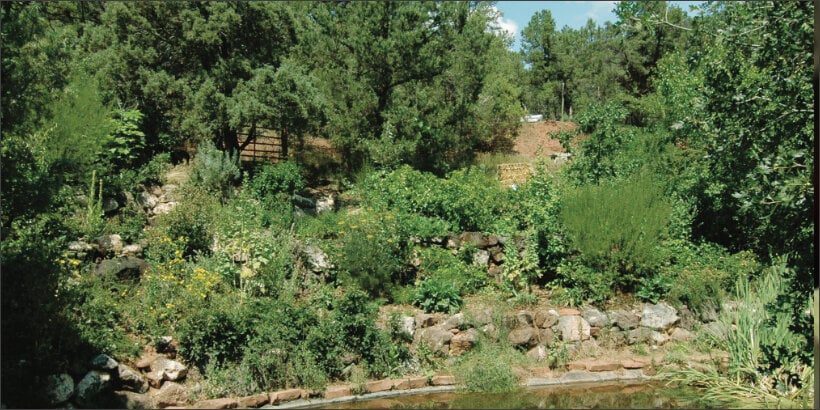
Sepp Holzer was doing permaculture before he even knew what permaculture was. He started playing around in his mother’s garden as a little boy, learning how nature functioned and what helped plants thrive. When permaculture practitioners visited Holzer’s homestead, they were astonished to find the theories they learned from Bill Mollison and David Holmgren applied to beautiful effect — and in a steep, northern, high-altitude (read: really harsh) climate.

Since then, Holzer has been recognized as one of the premier permaculturists on the planet, and has consulted on landscaping projects around the world. Especially important to the success of Holzer’s landscapes is his use of ponds and terraces to manage water, especially in semi-arid climates. His latest book, Desert or Paradise, focuses on these water control methods.  This week only you can get it for 25% off.

In the excerpt below, read about Holzer’s understanding of how water affects a landscape, and his attitude toward nature.

“My most important rule is to put myself in the position of the other. I imagine that I am the tree…the same goes for the pig, the earthworm, the ladybird, the nasturtium or the sunflower and of course the other human being. Would I feel good in their place? If the answer is ‘yes’, I am doing everything right. If the answer is ‘no’, I have to find out what is wrong. When I am lacking sun or shade, when I realize my feet are in the water or that my movements are limited I have to change things. All beings need to feel good and then they function at their best. I need to remember that, and so do you.”

Desert or Paradise is full of case studies from Holzer’s work around the world, especially in the Mediterranean region, which suffers from rampant desertification after millenia of agricultural overuse (and a few especially bad centuries of industrial fertilizers and pesticides).

If you’re interested in learning from Holzer himself, check out his upcoming US workshops, here. He will be holding three multi-day intensives on agroecology in Loma Mar, California from March 21-25; Bozeman, Montana from March 27-31; and Duluth, Minnesota April 6-10.

Reading Nature: An Excerpt from Desert or Paradise

How to Spot a Farm with a Future - Grist Interviews Rebecca Thistlethwaite

Thursday, January 3rd, 2013

If you follow the farming blog Honest Meat, you already know who Rebecca Thistlethwaite is. Thistlethwaite and her husband have traveled the country visiting farms and documenting their travels on Honest Meat. They once were farmers themselves, but decided to stop for a while to do some on-the-ground research to answer the most important question they knew: what makes a farm truly sustainable? 

Thistlethwaite’s brand new book, Farms with a Future, poses many answers to that question, gleaned from successful, innovative small farmers around the nation.

Recently, Grist.org interviewed Rebecca about her farming journey, the challenges farmers face, and the lessons she learned while traveling and writing Farms with a Future. Read an excerpt from the interview below, and the entire interview here.

~

By Twilight Greenaway

A few years ago, Rebecca Thistlethwaite and her husband were working 80 hours a week running a large pastured meat and egg operation called TLC Ranch on rented land. The couple had spent six years barely making ends meet. They wanted to buy their own ranch, but the cost of land in Monterey County, Calif., was astronomical. Getting their meat processed presented several challenges (as it does for many small producers) and many of their loyal customers were cutting back on local and ethically produced food after the economic downturn. So, the couple decided to sell the farm and throw in the towel. Kind of.

In October of 2010, Thistlethwaite wrote on her blog Honest Meat:

… we are off to live in an RV for the next couple years, volunteer on farms and ranches around the country that we admire and hope to learn from, write a little blog about our adventure, and have some fun too.

And that’s exactly what they did. The result of this adventure is Thistlethwaite’s new book, Farms with a Future: Creating and Growing a Sustainable Farm Business. As she sees it, the book is a “practical, accessible guide that doesn’t sugarcoat the challenges of farming, but gives people some good ideas.” It’s chock full of concrete suggestions based on Thistlethwaite’s year of research and observation, the kind of book you write precisely because you need just such a guide yourself but can’t find it anywhere. And it will probably help a lot of young farmers. It might also dissuade some from jumping headfirst into a business that is not for the faint of heart — but Thistlethwaite is fine with that.

We spoke with Thistlethwaite recently about the book, the journey, and the farm she hopes to start next.

farms_future_cover

Q. Do you want to talk a little about why you and your husband chose to sell your ranch?

A. We decided to take a break because we felt like the conditions under which we were operating were just not conducive to running a successful farm. We were paying some of the highest land rent in the country. And we were leasing land, so we really never knew what was going to happen the following year. We were also living in an area with a lot of crime. We had animals and equipment stolen; that made it really hard to run a business.

We didn’t want to quit farming, but we wanted to change where and how we were going to do it. So we thought we’d learn about how other farming operations around the country were doing it, how they are grafting together sustainable business models that meet their quality-of-life goals while being good for the earth and economically viable. It was a way to get inspired and learn. And it was a much-needed vacation!

We visited and interviewed about 19 farms total. And I think 14 of them ended up in our book.

Q. And where did you end up after the trip?

A. Now we’re located in the Columbia River Gorge on the Washington side.

Q. Do you want to speak about the challenge you and the farmers you visited face when it comes to conveying the value of sustainably produced food?

A. With the contraction of the economy, consumers are actually looking for more than cheap food. They’re looking for something that is affordable, but also embodies their other values — whether it be environmental values, social values, or the value of supporting their local economy.

So even if you’re a wholesale farmer, I think it’s really important to get your brand and your values across to your eventual customers. To just be an anonymous farmer producing an anonymous commodity doesn’t give you a chance to let your customers know who you are and what your story is. Telling that story and getting it all the way to the end user is really important. And you will be rewarded if it’s done right.

Keep reading over at Grist…

Photo Credit: Jen Jones

For Healthy Bees, Try Top-Bar Hives

Monday, December 31st, 2012

Beekeeping is growing in popularity as gardeners, small farmers, and locavores learn more about the plight of bees in the face of industrial agriculture. After years of being babied with pesticides and fungicides, bee populations are weak and struggling, while the myriad pests that plague them have only grown stronger. Thankfully, aspiring beekeepers using selective breeding and organic methods are attempting to reverse the alarming trend of Colony Collapse Disorder.

One more tool in the sustainable beekeeper’s kit is the top-bar hive. Unlike the typical box-shaped hives that are widely used for industrial honey production, top-bar hives mimic the shape of a hollow log, and allow bees to create comb in natural shapes instead of following pre-made plastic guides. Top-bar hives produce slightly less honey than box hives, but more beeswax for use in candles and soaps.

Les Crowder and Heather Harrell are the authors of the new book Top-Bar Beekeeping: Organic Practices for Honeybee Health, a step-by-step guide to using these innovative and bee-friendly hives.

The authors are also the stars of a DVD featuring a filmed workshop, in which they discuss everything from hive management techniques to how to harvest and process honey and beeswax to the best plants to grow for the foraging bees. Now the book and DVD are available as a convenient and low-priced set.

For more information about the Top-Bar Beekeeping Set, and to order, visit our bookstore.

Winter Gardening Without Heated Greenhouses

Friday, December 28th, 2012

“You can have a salad every night all winter long.” So says Eliot Coleman, New England’s guru of the four-season harvest. There’s no big secret. As long as there is ample daylight—and even in Coleman’s home of Harborside, Maine, there is ample daylight—you can use a variety of techniques for cold-weather gardening that will extend your growing season, effectively “moving” your garden beds 500 miles south.

From Yankee Magazine:

For more than 30 years, Eliot Coleman of Harborside, Maine, has successfully grown food in winter without heated greenhouses. Think outside your zone. Each winter, his gardens head south, to Georgia, without moving an inch.

How? For every layer of protection–a cold frame, for example–the growing environment shifts 500 miles. By doubling up, says Coleman, winter farmers never have to contend with frozen soil, not even when the mercury drops well below zero. “You might get a little surface freezing, but by 10 a.m. it will be unfrozen,” he says. “The minute the sun comes out, all of a sudden it’s 50 degrees in there. We’ve never had a day when we couldn’t put seeds in the greenhouse beds.”

For more on winter gardening, go to: Four Season Farm

Hoop Houses

Coleman says you can find simple, inexpensive options out there to protect your plants. If you’re already using a cold frame, he recommends getting six unused 2×4s and building an A-frame around the structure, then wrapping the new enclosure in greenhouse plastic.

No cold frame? No problem. Coleman is also a big fan of “hoop houses,” small enclosures made from semicircle-shaped strips of metal or plastic piping covered in plastic. “I’ve been doing this a long time, and I’m still like a little kid when I go in there and see what’s happening,” he says. “It’s amazing that it just works.”

Read the whole article here.

Related Articles:

Learn About Perennial Vegetables with our New Book/DVD Set!

Monday, December 24th, 2012

Imagine growing vegetables that require just about the same amount of care as perennial flowers and shrubs, need no annual tilling or planting, yet thrive and produce abundant and nutritious crops throughout the season.

Get the best information on growing these easy and interesting crops from Eric Toensmeier’s award-winning book Perennial Vegetables, and tour his own lush forest garden in the new DVD, Perennial Vegetable Gardening with Eric Toensmeier. The book and DVD are now available in a convenient set.

About Perennial Vegetables:

In Toensmeier’s book, Perennial Vegetables (Chelsea Green, 2007), the adventurous gardener will find information, tips, and sound advice on less-common edibles that will make any garden a perpetual, low-maintenance source of food. In his book, readers will find perennial vegetables are perfect as part of an edible-landscape plan or permaculture garden. Profiling more than a hundred species, with dozens of color photographs and illustrations, and filled with valuable growing tips, recipes, and resources, Perennial Vegetables is a groundbreaking and ground-healing book that will open the eyes of gardeners everywhere to the exciting world of edible perennials.

About Perennial Vegetable Gardening with Eric Toensmeier (DVD):

In the DVD—a culmination of workshops recorded in Mexico, Florida, and Massachusetts—plant specialist Eric Toensmeier introduces gardeners to more than 100 species of little-known, underappreciated plants. Ranging beyond the usual suspects (asparagus, rhubarb, and artichoke) to include such delights as ground cherry, ramps, air potatoes, the fragrant spring tree, and the much-sought-after, antioxidant-rich wolfberry (also known as the goji berry), Toensmeier explains how to raise, tend, harvest, and cook with plants that yield great crops and culinary satisfaction. Toensmeier also takes viewers on a plant-by-plant tour of his garden in Massachusetts. Get a sneak peek in this video:

Toensemeier has been gardening in Holyoke, Massachusetts for more than a decade, and has turned his tenth of an acre lot into a lush paradise full of delicious fruits and vegetables — many of them perennials. His newest book, Paradise Lot, tells the story of developing the garden, and hoping for love as well. Paradise Lot is available for pre-order now.

Farms with a Future is Here!

Tuesday, December 18th, 2012

Farming isn’t easy. In fact, it’s probably one of the most challenging jobs on Earth. Farmers grapple with unpredictable weather, back-breaking days of weeding and seeding, small and sometimes finicky markets for their wares, and the ever-present danger that Murphy’s Law will rear its contingent head (this especially applies to farms with livestock, who are always testing fences, attracting predators, sometimes fighting with each other, eating things they shouldn’t, etc.). On a farm, whatever can happen will, and it’s not always fun.

But the ever-shifting nature of the work also makes farming an incomparable adventure, and as we begin the second decade of the millenium, many are being tempted away from cubicles and suits to try their hand at tending the land.

Our new book, Farms with a Future, by Rebecca Thistlethwaite, is designed to help beginning farmers get started on the right foot, and guide those who have been at it a few years to fine-tune their processes to make their farms run sustainably. Thistlethwaite offers advice from her own years raising grassfed beef, as well as from her journeys across the United States, visiting dozens of farms and taking note of what works.

In the excerpt below, Thistlethwaite outlines some quick tips for beginners. Grab a notebook and pen and check it out!

For the Beginner: An Excerpt from Farms With a Future

Simple and Tasty Recipes You Can Make Using Your Homegrown Sprouts

Friday, December 14th, 2012

The winter solstice is just one week away, making this the darkest time of the year.

Gardens have long gone dormant as the days have grown shorter, but you don’t have to stop eating fresh food just because the ground outside is frozen and sunset now happens around three in the afternoon.

Sprouts are a quick, simple, and ridiculously healthy way to keep your locavore appetite satisfied during the winter. We’ve got some simple tips for how to grow them here. And below, some easy ways to use your sprouts in recipes beyond just tossing them into salads or topping sandwiches with them.

The following is an excerpt from Fresh Food from Small Spaces: The Square-Inch Gardener’s Guide to Year-Round Growing, Fermenting, and Sprouting by R. J. Ruppenthal. It has been adapted for the Web.

Vietnamese Sprouted Spring Rolls

This is a great appetizer. You can customize the ingredients depending on availability and preference. Dip the rolls in your favorite sauce, such as Thai hot sauce, hoisin sauce, sweet-and-sour sauce, or salad dressing. For a simple Asian-inspired dipping sauce, combine 1 T cider vinegar or lime juice, 1 T sesame oil, 1 tsp soy sauce, and a few freshly chopped chives. For a peanutty version, substitute salad oil for the sesame oil and then stir in 1 T peanut butter.

  • 6 large egg roll wrappers (These are available in Asian grocery stores and many supermarkets. Alternately, you can use large iceberg lettuce or cabbage leaves. The cabbage leaves can be boiled first to make them more flexible.)
  • 2 oz. vermicelli or thin rice noodles, cooked according to label directions and drained
  • 1 cup alfalfa sprouts, clover sprouts, or baby lettuce leaves
  • 1/2 cup mung bean sprouts (raw or lightly stir-fried, per your preference)
  • 1 medium-sized cucumber, grated
  • 1 carrot, grated
  • 1 bunch cilantro
  • 1 handful of fresh mint
  • Some different options: 1/2 avocado, thinly sliced or 1/2 cup stir-fried tofu, thinly sliced or 1/2 cup stir-fried shiitake mushrooms or 1/2 cup coarsely grated red bell pepper

To make the rolls, take out the first egg roll wrapper and dip it in warm water for 30 seconds or until softened. Then lay it out flat on a plate or cookie sheet. Fill it as you would a burrito, leaving a little wrapper space on each end. Place cooked noodles into the wrapper lengthwise from end to end. Then add an equal part of each of the other ingredients, saving a few leaves of mint for a garnish. When it looks full, fold over the two ends of the wrapper. Then fold up the bottom, which should stick to each end, and roll it up to the top of the wrapper. Make sure that it all sticks well. Eat raw with dipping sauce (see instructions above). May also be pan-fried or deep-fried like an egg roll. Garnish with remaining mint leaves or extra cilantro.

Serves 2–3 as an appetizer course.

Sprouted Lentil Burgers

  • 1 cup sprouted lentils (or your favorite sprouted beans), sprouted for 3 days.
  • 1/2 cup chopped walnuts
  • 1/2 cup cooked brown rice
  • 1 onion, chopped
  • 1 celery stalk, chopped
  • 1/2 cup red bell pepper, finely chopped
  • 1/2 cup mung bean sprouts, finely chopped
  • 1 egg or equivalent amount of egg substitute (can be omitted, but burgers may be crumbly)
  • 2 T olive oil, plus additional oil to cook the burgers
  • 2 T barbecue sauce
  • 1 tsp herbs (whatever you have on hand: parsley, thyme, oregano, marjoram, or rosemary)
  • Salt and pepper to taste
  • Option 1: 1/4 cup crumbled feta cheese or shredded hard cheese (Asiago, Parmesan, or Romano).
  • Option 2: 1/4 cup chopped olives
  • Option 3: 1 tsp chili peppers, finely chopped, or a few shakes of hot sauce
  1. Stir-fry onions, celery, red bell pepper, and mung bean sprouts in oil until onion is cooked. If any liquid remains, pour out and discard. Add herbs and a sprinkle of salt.
  2. In a bowl, combine lentils, chopped walnuts, and cooked brown rice. Add stir-fried vegetables and stir.
  3. Add optional ingredients (cheese, olives, and/or chili peppers) and stir. Taste mixture and adjust seasoning to your preference by adding more salt, pepper, herbs, or barbecue sauce as desired.
  4. Add egg and mix thoroughly.
  5. Heat oiled skillet to medium-high heat. Form mixture into small burgers, flatten as much as possible, and cook on medium high heat until bottom side is browned (about 5 minutes). You may cover pan for part of this time if you want to cook by steaming. Then flip over and cook other side equally, adding more oil to pan if needed.

Makes 12 burgers.

Korean Soybean Sprout–Miso Soup

This is a hybrid version of two traditional Korean soup recipes, using miso and soybean sprouts for the soup base. It goes very well with steamed brown rice. You could also add meat or seafood to the broth if you wish. Miso is a very salty fermented soybean paste that makes a terrific soup base; it is available in Asian grocery stores, health food stores, and many supermarkets. For a thin, mild soup start with 1 T of miso and add more as needed; 3T makes a thicker, saltier stew.

  • 8 ounces soybean sprouts, washed and with bean pod skins removed.
  • 1–3 T miso
  • 7–10 cups water
  • 1 zucchini squash, chopped into small cubes
  • 1 potato, chopped into small cubes
  • 1/2 package tofu, cut into small cubes
  • 1–2 cups chopped napa cabbage, or mustard, turnip or radish greens
  • 1 cup sliced mushrooms
  • 1 onion, chopped
  • 2 scallions, chopped
  • 3 cloves garlic, crushed or finely chopped
  • Optional: 1 small chili pepper, sliced, or a few shakes of hot sauce

Wash and cut the vegetables, mushrooms, and tofu.

Put 5 cups water in a soup pot on high heat. Add the bean sprouts, cover, and bring to a boil. Turn it down and let this simmer for about 15–20 minutes to create a bean sprout broth.

Stir in the miso.

Add the onion, potato, and mushrooms. Turn the heat up to high again. Let the soup boil for a few minutes.

Add the chopped zucchini, greens, and optional chili pepper. Let it boil a few minutes more, then turn down the heat to a simmer.

Stir the soup and taste it. If it is too thin and bland, add more miso. If it is too strong and salty, add more water.

Add in the chopped scallions and tofu. Cook about three more minutes.

Add the crushed garlic. Stir well, cover, turn off the heat, and let it sit for a few minutes before serving.

Serves 4–6.

Related articles:

Coming Soon: Farms with a Future

Monday, December 10th, 2012

After years of hard work raising grassfed cattle, Rebecca Thistlethwaite and her husband decided to put their farm dreams on pause for a while, travel the country, meet other farmers, and figure out what makes the best farms work. They were well beyond any romantic notions of the farming life themselves, but Rebecca wanted to know more.

Farms with a Future: Creating and Growing a Sustainable Farm Business introduces readers to some of the country’s most innovative farmers who are embracing their “inner entrepreneur”: unabashedly marketing and sharing the pride they have for what they produce; building systems and finding efficiencies and cost savings so they don’t have to keep raising prices every year; shying away from huge debt loads by developing ways to build their businesses patiently over time using earned income or creative arrangements with their community of customers; harnessing natural processes to ensure they are not degrading the natural resources the farms depend upon, and treating their employees and volunteers like family.

Each chapter of Farms with a Future features a case study from one of these exceptional farmers, but you can also follow Rebecca’s travels by reading her blog Honest Meat.

The book has been praised by old-time farmers—the toughest audience around. Gene Logsdon, farmer and author of A Sanctuary of Trees, said,

“What is so great about Rebecca Thistlethwaite’s new book, Farms with a Future, is that it is not a generalized treatment about how to succeed in the new farm and food revolution, but a detailed and complete description of how some fourteen farms of various kinds have done it. This book does what books are supposed to do, that is, it gives the reader on-the-ground experience that would otherwise take years to gain.”

Recently, Publishers Weekly had this to say,

“In this down-to-earth, business-oriented guide to running a farm, Thistlethwaite gives new and prospective farmers a hard-nosed taste of what it takes to run a sustainable farm and what steps are needed to succeed in this field, drawing on her six years of farming and a yearlong adventure visiting and interviewing small farmers across America. . . .Thistlethwaite’s experience teaching beginning farmers is evident in the logical, easy-to-follow, realistic but encouraging text, which will help separate the wheat from the chaff. “

Farms with a Future is on sale this week for 35% off.

The 2012 ACRES Conference Starts Thursday

Tuesday, December 4th, 2012

Acres U.S.A. is North America’s oldest, largest magazine covering commercial-scale organic and sustainable farming. The annual Acres U.S.A. conference is an event where you can find farmers and consultants from every side of eco-farming who come together to share their experience and expertise.

This year, the conference will be held on December 6-8 in Louisville, Kentucky, and three Chelsea Green authors will be speaking. You can get more information here, including a full schedule and how to register.

Janisse Ray, author of The Seed Underground, will give a keynote speech on December 7 at 7:30 PM. Ray’s most recent book explores the quiet revolution underway as gardeners across the country learn how to save seeds from rare and beloved crops. In a world of crisis and fear, Ray reminds us, “There is no despair in a seed.”

Sandor Katz, fermentation evangelist extraordinaire, will give a talk on, you guessed it: fermentation! Katz’s most recent book, The Art of Fermentation is a New York Times Bestseller, and a sauerkraut- or sourdough-maker’s dream come true. Packed with information about the long history of ferments and in-depth discussion of how the processes work, The Art of Fermentation is quite simply the best book available on the topic. Katz’s talk at Acres will be on Thursday December 6 from 2-5pm, and will include a demonstration of some basic ferments.

Last summer, Acres published an in-depth interview with Katz, which you can read here.

New author Rebecca Thistlethwaite, of the just-released book Farms with a Future: Creating and Growing a Sustainable Farm Business, speaks on Friday December 7 at 2pm. Thistlethwaite’s book is a collection of ideas that work to make small farms functional, fun, and sustainable — both for the soil and for their hard-working owners. Her talk at Acres will explain how to get from the concept of running a small farm to planning for the reality of this exciting but challenging way of life.

For more information about the Acres Conference, visit their website.

Last Chance: Enter to Win a Chelsea Green Starter Library

Thursday, November 8th, 2012

You’re a beekeeping, seedling starting, chick brooding, sauerkraut-making master, but there’s always another skill you could add to your homesteading repertoire.

Maybe you’ve always wanted to build a straw bale guest house, or a wattle-and-daub woodshed. Or you’ve been thinking about what it would take to grow your own grains as well as your own greens.

Well, homesteader, this is your lucky day! There’s still time to sign up for our latest giveaway to win a selection of books to teach you just what you need to know. We’ve teamed up with the folks at Mother Earth News to offer the following books to one fortunate winner this month.

Chelsea Green publishes standby favorites like Eliot Coleman to more recent “instant classics” like Sandor and Harvey’s books.

The contest ends in mid-November so don’t delay.

Sign up here for your chance to win.

Here are the books:

Up Tunket Road: The Education of a Modern Homesteader

By Philip Ackerman-Leist

The inspiring true story of a young couple who embraced the joys of simple living while also acknowledging its frustrations and complexities.

The Art of Fermentation: An In-Depth Exploration of Essential Concepts and Processes from Around the World

By Sandor Ellix Katz

Quite simply the most comprehensive guide to do-it-yourself home fermentation ever published.

The Resilient Gardener: Food Production and Self-Reliance in Uncertain Times

By Carol Deppe

Filled with detailed information about growing and using five key crops: potatoes, corn, beans, squash, and eggs.

When Technology Fails: A Manual for Self-Reliance, Sustainability, and Surviving the Long Emergency

By Mat Stein

A comprehensive primer on sustainable living skills—food, water, shelter, energy, first-aid, and more.

The Winter Harvest Handbook: Year-Round Vegetable Production Using Deep-Organic Techniques and Unheated Greenhouses

By Eliot Coleman

Grow produce of unparalleled freshness and quality in customized un- or minimally-heated greenhouses.

Small-Scale Grain Raising: An Organic Guide to Growing, Processing, and Using Nutritious Whole Grains for Home Gardeners and Local Farmers

By Gene Logsdon

Logsdon covers the basics of grain production—planting, dealing with pests, harvesting, processing, storing, and using whole grains.

Gaia’s Garden: A Guide to Home-Scale Permaculture

By Toby Hemenway

Learn how to apply basic permaculture principles to make your garden more diverse, more natural, more productive, and more beautiful.

The Carbon-Free Home: 36 Remodeling Projects to Help Kick the Fossil-Fuel Habit

By Stephen and Rebekah Hren

Transform your home with projects both small and large, listed by skill, time, cost, and energy saved.

The Small-Scale Poultry Flock: An All-Natural Approach to Raising Chickens and Other Fowl for Home and Market Growers

By Harvey Ussery

The most comprehensive and definitive guide to date on raising all-natural poultry.

Top Bar Beekeeping: Organic Practices for Honeybee Health

By Les Crowder and Heather Harrell

Provides complete information on hive management and other aspects of using innovative and natural top-bar beehives.

Don’t forget to share the giveaway with your gardening, farming, and fermenting friends. Good luck, and happy homesteading!