

From the Wood-Fired Oven
New and Traditional Techniques for Cooking and Baking with Fire

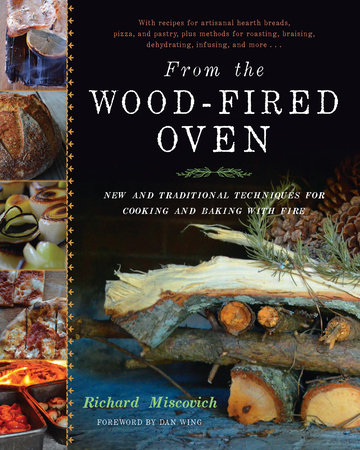
| Pages: | 352 pages |
| Size: | 8 x 10 inch |
| Publisher: | Chelsea Green Publishing |
| Pub. Date: | September 30, 2013 |
| ISBN: | 9781603583282 |
From the Wood-Fired Oven
New and Traditional Techniques for Cooking and Baking with Fire
“Richard Miscovich’s descriptions and instructions are both practical and inspirationally poetic—dare I say, soulful. He ignites the fire within and compels us to want to know what he knows and to bake as well as he bakes.”—Peter Reinhart, author of The Bread Baker’s Apprentice
In the last several years, interest in wood-fired ovens has increased dramatically in the United States and abroad, but most books focus on how to bake bread or pizza in an oven. From the Wood-Fired Oven offers many more techniques for home and artisan bakers—from baking bread and making pizza to recipes on how to get as much use as possible out of a single oven firing, from the first live-fire roasting to drying wood for the next fire.
From the Wood-Fired Oven offers a new take on traditional techniques for professional bakers, but is simple enough to inspire any nonprofessional baking enthusiast. Leading baker and instructor Richard Miscovich wants people to use their ovens to fulfill the goal of maximum heat utilization. Readers will find methods and techniques for cooking and baking in a wood-fired oven in the order of the appropriate temperature window. What comes first—pizza, or pastry? Roasted vegetables or a braised pork loin? Clarified butter or beef jerky?
In addition to an extensive section of delicious formulas for many types of bread, readers will find chapters on:
• Making pizza and other live-fire flatbreads;
• Roasting fish and meats;
• Grilling, steaming, braising, and frying;
• Baking pastry and other recipes beyond breads;
• Rendering animal fats and clarifying butter;
• Food dehydration and infusing oils;
• And myriad other ways to use the oven’s residual heat.
Appendices include oven-design recommendations, a sample oven temperature log, Richard’s baker’s percentages, proper care of a sourdough starter, and more. . . .
From the Wood-Fired Oven is more than a cookbook; it reminds the reader of how a wood-fired oven (and fire, by extension) draws people together and bestows a sense of comfort and fellowship, very real human needs, especially in uncertain times. Indeed, cooking and baking from a wood-fired oven is a basic part of a resilient lifestyle, and a perfect example of valuable traditional skills being put to use in modern times.
*Author Richard Miscovich and From the Wood-Fired Oven have been mentioned or featured in the New York Times, Saveur, Bon Appétit, NPR’s “The Splendid Table”, the Boston Globe and the Los Angeles Times
Reviews & Praise
“Even if you don’t have a wood-fired oven, and you bake bread, get this book. The technical information about bread is approachable and correct and will bring your bread baking to the next level.”—Solveig Tofte, co-owner, Sun Street Breads, Minneapolis
“Finally, a modern and comprehensive wood-fired oven management book! Richard addresses innovations in oven design and offers intelligent approaches to getting the most out of your wood-fired oven. Interweaving homespun anecdotes with solid bread baking and culinary instruction while offering clear explanations of oven design, this book answers the questions and concerns of bakers of all levels.”—Melina Kelson, certified master baker, Bootleg Batard and Kendall College
“So, you want a wood-fired oven to bake bread and have pizza parties? What should you build? How does it work? What else can it cook? As an oven-builder I hear these questions a lot, but the books I can recommend for cooking with fire say little about ovens, and the ones about bread and ovens don't take you very far with cooking. So I’m glad to now be able to recommend Richard Miscovich’s From the Wood-Fired Oven. He speaks with the authority of a professional baking instructor (and cook), an experienced mason, and a neighborhood baker; he also writes well, takes beautiful photos, and has a wealth of stories to tie it all together. He’s worked with leading professionals in many fields, and teaches from extensive experience with bread, pizza, meats, vegetables, desserts, etc., as well as ovens, masonry, fire, heat, and more.”—Kiko Denzer, author of Build Your Own Earth Oven
“When it comes to anything wood-fired, Richard Miscovich has set the new gold standard with his comprehensive book, From the Wood-Fired Oven. Both well written and inspiring, his book takes the reader on a journey that will delight and educate amateur and professional bakers alike. Richard is a master of this ancient craft, and his expert command of formula development, along with his knowledge of the classic and cutting-edge concepts in wood-fired oven construction, use, and maintenance, make this book unique and a must-have for any baker's library!”—Ciril Hitz, author of Baking Artisan Bread and Baking Artisan Pastries and Breads
“Richard has done so much more than just transfer his extensive knowledge about baking and wood-fired ovens onto paper in this book; he talks to the reader in a way that makes you feel that he is right in front of you, sharing his experiences, encouraging you to travel down a path that has brought him to where he is. His personal stories and experiences take this book beyond great, to one of a kind. I like that he doesn’t assume the reader knows anything. You will learn about the bones of a wood-fired oven, including not just how to use it but how to make the most of it. He covers all the details and answers all the questions before you have to ask. It is a must-have addition to the collection of any food enthusiast, amateur or professional!”—Jeff Yankellow, board chair, Bread Bakers Guild of America
“This is the book for which all wood-fired oven owners, hopeful owners, and serious bakers have been waiting. Richard Miscovich’s descriptions and instructions are both practical and inspirationally poetic – dare I say, soulful. He ignites the fire within, and compels us to want to know what he knows and to bake as well as he bakes. In this book, he shares it all.”—Peter Reinhart, author of The Bread Baker’s Apprentice and Artisan Breads Everyday
"It’s safe to say that most of us won’t be baking in a wood-fired oven . . . at least, in the foreseeable future. On the other hand, for bread aficionados and others addicted to the tastes emanating from these kinds of ovens, there’s no better substitute for the knowledge and expertise Miscovich imparts—not to mention the 50-something recipes. He begins with the foundations: understanding ovens and fuel, operating guidelines, and all the processes that comprise bread-baking, from ingredients to proofing. Every chapter is filled with color photographs and, when necessary, step-by-step sequences. Where the author truly excels is in his very thorough explanation of recipes. They’re woven into the text, using a narrative style. He freely gives advice, variations, and commentary on best and not-as-good versions, as well as caveats (e.g., what to expect from a bread starter when it’s been transferred from another region). At times, personal stories appear, from his relationship with the late Alan Scott (a master brick-oven builder and coauthor of the seminal work on wood-fired ovens) to his bout with carpal tunnel syndrome. Thorough and completely engaging."—Booklist

About Richard Miscovich
Richard Miscovich is a Department Chair and teaches artisan bread baking to culinary students at Johnson & Wales University in Providence, Rhode Island, and to home and professional bakers at classes and conferences around the country. Richard is a Bread Bakers Guild of America Certified Bread Baker and served three terms on the Board of Directors. In 2014 he received the Johnson & Wales Distinguished Scholarship Award and was also inducted into the International Les Amis d'Escoffier Society. He is the author of From the Wood-Fired Oven and instructs the online Craftsy course “Handmade Sourdough: From Starter to Baked Loaf.”
Books by Richard Miscovich

About Daniel Wing
Dan Wing, a biologist and physician by training, has written for publications as various as Fine Homebuilding and The Archives of Physical Medicine and Rehabilitation. He travels out from his home in Vermont in a gypsy wagon of his own construction, and naturally he built his own bread oven on wheels.
Books by Daniel Wing

You may also like...
-
 $35.00
 -
$21.95
-
$40.00


