Making cheese at home may seem like a time and labor-intensive process — but what if you could have a delicious, high-quality cheese that practically made itself? With chèvre, you can.
The following recipe for all-natural chèvre will change the way you look at homemade cheese!
The cultural circumstances within which chèvre evolved make the production of this cheese ideally suited to our modern times.
With the many distractions and diversions in our lives, it is often difficult to find dedicated time for cheesemaking; chèvre’s simplicity helps it find a place in our daily rhythms.
Using Cows’ Milk for Chèvre
Cows’ milk can be used in this recipe in place of goats’ milk: the soft and creamy curd that results is firmer than yogurt cheese and is sometimes called cream cheese, fromage frais, or Neufchâtel, though that final name is an American bastardization of a very different bloomy-rinded French cheese.
The long fermentation of the cows’ milk allows its cream to rise, creating a beautiful layer of creamy curd atop the whiter curd below.
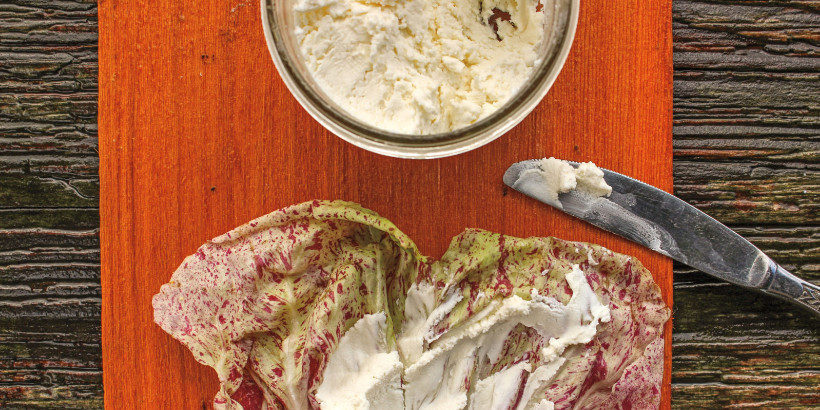
Using Chèvre As A Canvas
Chèvre is excellent on its own but also serves as a delicious canvas for adding many other herbs, spices, and flavors.
Roasted or raw garlic, cracked pepper, preserved lemons, even fruit preserves all pair well with chèvre. But be sure to add them at the end of the cheesemaking process, when the cheese is salted and drained; if the flavorings are added too soon, their flavor will flow away with the whey.
RECIPE: Natural Chèvre
Chèvre is generally eaten fresh in North America, so it is a little-known fact that it can also be aged! Chèvre is the foundation of an entire class of aged cheeses that start as this fresh cheese.
Time Frame
30 minutes to make; 2 days total
Yield
Makes about 1 1/2 pounds (700 g) chèvre
Equipment
1-gallon (4-L) capacity heavy-bottomed pot
Wooden spoon
Ladle
Du-rag or other good cheesecloth
Steel colander
Large bowl
Ingredients
1 gallon (4 L) good goats’ milk
1/4 cup (60 mL) kefir or active whey
1/4 dose rennet (I use less than 1/16 tablet WalcoRen calf’s rennet for 1 gallon milk)
1 tablespoon (15 mL) good salt
Procedure
Warm the goats’ milk to around 90°F (32°C) on a low heat, stirring occasionally to keep it from scorching.
Stir in a cheesemaking starter culture: Pour in the kefir or whey and mix it in thoroughly.
Stir in a small amount of rennet: Dissolve the quarter dose of rennet in 1⁄4 cup (60 mL) cold water. Mix it into the warm milk gently but thoroughly.
Leave at room temperature, covered, for 24 hours.After the long fermentation period, the curd will shrink and sink to the bottom of the pot.
Ladle the curds into a cheesecloth-lined colander perched over a bowl to catch the whey. Tie the cheesecloth into a bag, and simply leave it in the colander to drain.
Drain for at least 6 hours, at room temperature. Cover with a clean towel if need be to keep flies from landing on it. Be sure that the curds are well suspended above the level of the whey.
Salt the curds: Open up the cheesecloth bag and sprinkle 1 tablespoon (15 mL) salt over the surface of the cheese. With a wooden spoon, mix the salt into the cheese thoroughly.
Tie up the cheesecloth bag, and let the salted curds drain for another hour or two.Once the cheese feels quite dry, it’s ready to eat, or have herbs or spices added to it.
Keep chèvre in the refrigerator if you don’t eat it right away. It will keep for at least 2 weeks.
To make chèvre, ferment goats’ milk with rennet until it yields a soft curd; hang the curd to drain its whey; and salt the cheese to preserve it.
Looking for something to munch on that’s both tasty and good for you? These ginger carrots are a healthy snack that are easy to make at home! The following excerpt is from The Heal Your Gut Cookbook by Hilary Boynton and Mary G. Brackett. It has been adapted for the web. Ginger Carrots Recipe…
Mead is one of the oldest fermented beverages and is made by fermenting honey with water, offering countless flavor possibilities. Let’s dive into the world of mead making!
Hot sauce fans, this one’s for you! This easy recipe for fermented hot sauce with wild greens is sure to add an extra punch of flavor to your favorite meal.
Known for their tall stature and distinctive flower heads, cattails thrive near lakes and marshes. From edible shoots and nutrient-rich roots to pollen used in baking, cattails offer a wealth of uses.