
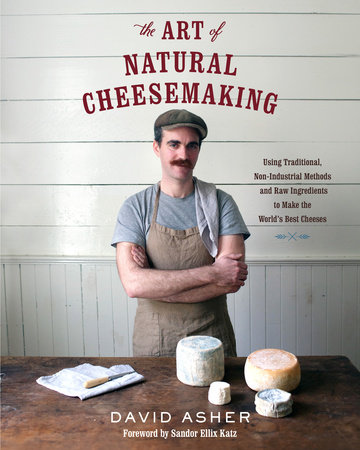
The Art of Natural Cheesemaking
Using Traditional, Non-Industrial Methods and Raw Ingredients to Make the World’s Best Cheeses

| Pages: | 320 pages |
| Size: | 8 x 10 inch |
| Publisher: | Chelsea Green Publishing |
| Pub. Date: | July 8, 2015 |
| ISBN: | 9781603585781 |
The Art of Natural Cheesemaking
Using Traditional, Non-Industrial Methods and Raw Ingredients to Make the World’s Best Cheeses
Paperback
$34.95
The DIY bible for home cheese makers from expert David Asher from the Black Sheep School of Cheesemaking, author of Milk into Cheese
Includes more than 35 step-by-step recipes, from kefir and paneer to washed-rind and alpine styles
David Asher practices and preaches a traditional but countercultural way of making cheese—one that is natural and intuitive, grounded in ecological principles and biological science. Fully illustrated with hand-drawn diagrams and photos, David’s guide for home and small-scale commercial cheesemakers includes:
• An exploration of the basic elements of cheese: milk, cultures, rennet, salt, tools, and the cheese cave
• How to source good milk, including raw milk
• How to keep your own bacterial starter cultures and fungal ripening cultures
• How to make your own rennet—and how to make good cheese without it
• How to use appropriate technologies and avoid the use of plastic equipment and chemical additives
• Chapters covering cheeses like Gouda, Feta, Chèvre, and Blue
The Art of Natural Cheesemaking is a clarion call to cheesemakers to adopt more natural, sustainable practices. It may well change the way we look at cheese, and how we make it ourselves.
Reviews & Praise

About David Asher
David Asher is a natural cheesemaker, bringing the traditions of dairying, fermentation, and coagulation back into this age-old craft. A former farmer and goatherd from the west coast of Canada, David now travels widely, sharing a very old but also very new approach to cheese production with his Black Sheep School of Cheesemaking. Through teaching about the use of in-house starter cultures and natural rennet from calves and kids, David helps cheesemakers around the world reclaim their traditional cheeses. He also explores the connections between all fermented foods and the important role of small-scale and traditional food production in our modern world.
Connect with David Asher
Books by David Asher


About Sandor Ellix Katz
Sandor Ellix Katz is a fermentation revivalist. A self-taught experimentalist who lives in rural Tennessee, his explorations in fermentation developed out of his overlapping interests in cooking, nutrition, and gardening. He is the author of four previous books: Wild Fermentation, The Revolution Will Not Be Microwaved, The Art of Fermentation—which won a James Beard Foundation Award in 2013—and Fermentation as Metaphor. The hundreds of fermentation workshops he has taught around the world have helped catalyze a broad revival of the fermentation arts. The New York Times calls Sandor “one of the unlikely rock stars of the American food scene.”
Connect with Sandor Ellix Katz
Books by Sandor Ellix Katz


You may also like...
-
 $40.00
 -
$24.95
-
$17.95


