

Urban Gardening Tips: No Space? No Problem!
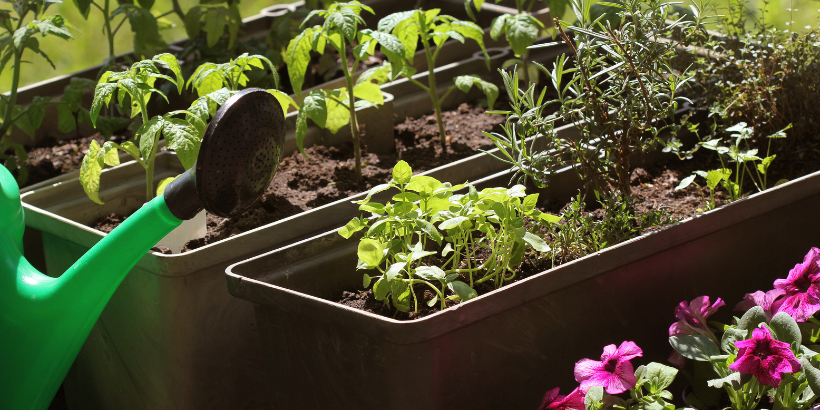
Do you want to learn how to transform your balconies and windowsills into productive vegetable gardens? Try urban gardening!
Choosing the right crops based on climate and light conditions, along with creating a companion planting strategy to prevent pests and attract pollinators, can help maximize food production with limited space.
The following is an excerpt from Fresh Food From Small Spaces, by R.J. Ruppenthal. It has been adapted for the web.
Deciding What to Grow in Your Urban Gardening Space
Those of us with limited space are forced to make decisions. How can I use my small space most productively? If I want to put in a small garden, what should I grow?
You can experiment by growing a variety of different plants, or you may decide to focus on just one or two items that perform well in your conditions. There are good arguments for each strategy.
Growing a variety of crops is fun, and although it won’t provide you with huge amounts of any particular food crop, you’ll get some of many.
This approach offers more balanced nutrition to complement your overall diet and the likelihood of a rolling harvest (with your plants producing food at different times, not all at once). However, you should also consider the benefits of focusing on a crop or two that grow well in your space.
Focusing On Certain Crops
Why focus? Because some crops will do well in your area, while others will not. You may find it very easy, for example, to grow prodigious quantities of fresh herbs or leafy greens, but not have enough light to grow fruiting vegetables such as tomatoes, peppers, and cucumbers effectively.
Or you might decide not to garden at all, and instead perhaps cover your whole available space with a chicken coop.
This is fine; specializing has its benefits too. With this focus on just one or two food crops, you may be able to meet all your family’s needs for fresh herbs or leafy greens or chicken eggs.
And, if you have extra, you might sell or barter the surplus for something else that you can’t produce. This is free trade in its simplest, most elegant form.
Starting An Urban Gardening Space
When I started my first balcony garden, I tried to grow a little bit of everything. In a 10-foot-square area over a two-year period, I grew (or tried to grow) tomatoes, peppers, beans, peas, cabbage, chard, beets, herbs, strawberries, cucumbers, and summer squash.
I even had a scraggly little blueberry bush that gave me a few berries in its second summer. Experimenting with different crops was fun, and it helped me learn what grew best in my small space.
Through this experience, I learned to focus on certain crops that I could depend on, thus making the best use of my space.
Considering Climate, Light, and Other Factors
Due to differences in climate and the amount of light and heat that your urban garden area receives, you will be able to grow some crops more effectively than others.
Through trial and error, I learned that my little garden could produce prodigious amounts of cherry tomatoes, green beans, peas, and chard. Unfortunately, I also learned that other things did not grow well in my space: strawberries and cucumbers were the worst performers, for various reasons.

Peppers, eggplant, and cucumbers are basically subtropical plants that we try to coax into producing fruit in cooler climates.
They need a lot of light, warmth, and long days. Squash is much easier to grow, but the plants take up too much space for small-scale container growing; they are great additions to a larger garden if you have a backyard.
However, even container gardeners can grow compact varieties of summer squash (zucchini).
An Urban Gardening Challenge
An added urban challenge for squash, cucumbers, and melons is that they require bees or other insects for pollination of their flowers in order to be fully productive, and it’s not a given that your small space will attract the notice of neighborhood bees (though you will, almost inevitably, attract neighborhood pests).
Although it is possible to hand-pollinate squash, cucumber, and melons, this requires the extra effort of waking up at dawn and transferring pollen from male to female blossoms with a paintbrush.
If you have the full day’s light and warmth that is necessary for squash, cucumber, and melons, and can attract pollinating insects (perhaps with some additional flowering plants or herbs), then you can try to grow them vertically by building a trellis and training their vines upward.
Vertical Urban Gardening
Vertical gardening (described at more length in Chapter 4) saves you precious horizontal space and gives your plants the chance to be quite productive.
A trellis can be made from wood, wire, string, or even fishing line; the point is to give the plant something to hang on to as it climbs.
My balcony has a metal railing that I use as a trellis base for my tomatoes and pole beans; I extend it with string and bamboo poles, and affix the growing plants to this frame using twist-ties from the supermarket or small pieces of string.
When plants begin producing heavy fruit, you also need to tie up or somehow support the fruiting branches to keep them from falling.
Starting Out: Growing Strawberries
Some people find strawberries very easy to grow, and I encourage you to try them. Strawberries can be squeezed into very small spaces and even window boxes.
A European species, Fragaria vesca, commonly called Alpine strawberry, is a hardy perennial and bears continuously from around midsummer to the end of the growing season. It is often advertised as a shade crop and has a truly magnificent flavor.
If you enjoy eating strawberries, then they may be worth a try where you live, particularly because of the many different varieties that have been developed in recent years to suit different conditions.
In terms of other berries, blueberries can grow in containers and produce well in certain climates, though most require specific soil conditions.
You also could investigate blackberries and raspberries, which can be trained vertically to increase production and maximize your use of space. Currants and gooseberries grow well in some northern climates, and can fruit well even in partial shade conditions.
Growing Beans and Peas
Beans and peas are wonderful additions to the small urban garden. I grow beans in the warm summer and peas in cooler weather. Both plants can produce high-protein shelled beans and peas, or they can be eaten in the young pod stage as a nutritional supervegetable.
Both can be grown vertically and in crowded garden conditions, saving you space. Both plants are legumes, so they fix nitrogen in their root systems, making them a great companion plant next to other crops.
Beans and peas (especially bush varieties) also can produce quite well in lower light conditions.
Vegetables for Low-light Conditions
For many people living in urban apartments and condos, lack of sunlight is a big issue. Your unit may face away from the sun or get only morning or afternoon exposure. Oftentimes, other buildings surround you and block much of the light. But do not despair; you still have space to work with.
The good news is that cities are rarely dark; there is a lot of diffuse sunlight, reflected light off walls and windows, and warmth collected in the concrete and building materials.
Fruiting Vegetables
You should know that fruiting vegetables (tomatoes, peppers, eggplant, cucumbers, squash) need plenty of light to set and ripen their fruit.
Ideally, we are talking about 6 to 8 hours of full sunlight for these, though, as you will see in the vertical gardening chapter, there are ways to succeed with less light than this.
Next among vegetables come those that will flourish in full sunlight, but also can set productive crops with partial sun.
Urban Gardening: Veggies That Love Sunlight
These include peas, beans, and root/tuber crops such as beets, turnips, carrots, and even potatoes. I have grown bush peas and bush beans in full shade with only 3 to 4 hours of indirect, reflected light.
These plants grew more slowly than their counterparts in the full sun, but they had no trouble setting a crop eventually and the output (though a few weeks later) was nearly as good as that from plants grown in full sun.
If you like to eat peas and beans, they are some of the most rewarding plants to grow, even in partial shade or indirect light. When picked tender and eaten in the pod as green beans or snap peas, both are classified as nutritional supervegetables.
Alternately, the same plant also can provide some amazing protein if you let the pods grow to maturity.
Keeping Veggies for Later Use
You can then shell the beans or peas and cook them fresh or dry them for later use.
Peas and beans make great complementary crops, as each one grows in a different season: Beans like the warmth of summer, while peas thrive in cooler temperatures and can make a great short-season crop in spring, fall, or even in winter in milder climates.

When you buy seeds, you will notice that each variety of pea and bean is labeled as either “pole” or “bush.”
Pole beans produce heavier crops over a longer period and are ultimately more productive over the same amount of space. So, if you have plenty of sunlight and a nice vertical space, then pole beans and tall-growing varieties of peas might work well for you.
Considerations for Low-Light Gardens
However, for low-light or short-season gardens, I recommend bush peas and bush beans.
These plants are shorter, stockier, and essentially dwarf versions of the traditional pole beans and peas; they need very little trellising support and can be grown close together for maximum yields.
They will produce a single crop (and sometimes a bit more) in short time frame, using less overall light energy than pole beans require.
Depending on the variety of bush bean, it is not impossible to have a full crop of delicious green beans or snap peas ready to pick within 35 to 40 days after seeding.
These plants also add some nitrogen to the soil, which means that they are a great rotation crop that will help build the soil for your next round of veggies. (This is particularly useful with peas, since they can grow in cooler temperatures.)
When choosing seeds, also consider whether you would like to shell them or eat them in the pod, as some varieties are optimal for one or the other use.
Best Peas for Urban Gardening
The best peas for eating in the pod are the sugar snap peas, which have peas surrounded by thick, edible pods, or the flat-podded snow peas so common to Asian cuisines, which can be eaten raw (some are as sweet as candy) or added to a stir-fry for a quick, delicious nutritional boost.
With root and tuber crops, you can do almost as well in low-light conditions, but you will need to experiment.
In my opinion, the key to growing these crops is to realize that the beet, carrot, turnip, or potato we eat is actually the plant’s way of storing its energy underground.
Therefore, the more light energy it receives, the better your chances of getting a nice big, sweet carrot or turnip.
Lighting for Urban Gardening
Luckily for urban gardeners, the amount of light per day is sometimes less important for these crops than the total amount of light that the plants receive during the entire season they are growing their roots or tubers.
So you may be able to get a nearly full crop in partial shade if you wait a little longer to harvest. In fact, full direct sunlight may be too strong for beets and turnips anyway, so a little shade can even help.
Also, each of these vegetables can be picked and eaten when small, so a row of plants that never reach their full height may still yield a bountiful crop of petite carrots or beets.
For a potato crop grown in partial shade, the plant may only get around to flowering fairly late in the season, but this is a great time to pick the tender new potatoes that are prized as a gourmet treat.
Light Requirements for Leafy Greens
Finally, leafy greens have lower light requirements than other vegetables because you eat the actual plant and do not need to wait for it to set seeds or fruit. This list includes chard, beet greens, turnip greens, spinach, lettuce, kale, cabbage, arugula/roquette, and other edible greens with similar characteristics.
Some of these plants actually will wilt or burn in full sunlight and so they prefer some partial shade or reflected light.
You can get a productive crop of delicious, nutritious greens without any direct sunlight, provided you have some indirect, reflected light for a few hours per day.
Any of these greens are great plants to use in a small garden because you can choose to harvest them “cut and come again” style (a leaf or two at a time, which the plant will regrow) or else eat the whole plant at once, take it out, and replace it with something else.
One note on leafy greens, including beet greens and turnip greens: Try growing them almost any time of the year, provided the ground is not frozen. The cost of a handful of seeds is no more than a few pennies, and you will be amazed at the vigor of these plants.
Although other books you read may discourage you from trying to plant a new crop in the fall or over a mild winter, many greens are pretty hardy, and can be given a few extra degrees of frost protection by growing them in a cold frame or under a heat-retaining fabric blanket, or “floating row cover.” (See “Growing in Cold Climates,” below.)
At the very least, you may end up with a very short-season crop of baby greens for salad, soup, or stir-fry.
Adding Small Fruits and Berries to Your Urban Garden
Many berry plants and small fruit trees can be raised in container gardens or in small patches of open ground.
There are dwarf fruit trees and various kinds of berries that will grow in almost any climate and can be a nice complement to your vegetable garden.
Most importantly for many urban gardeners, small fruit trees and berry shrubs can make the best use of your vertical growing space. Please see Chapter 6 for a more in-depth exploration of which types of fruits and berries to consider growing in your space.
Companion Plants For Your Veggies
Companion plants, many of which fall in the herb and flower categories, add beauty and diversity to a vegetable garden. From a functional perspective, these plants are important in preventing pests and attracting pollinators like bees to your vegetables.
For both of these reasons, you need to incorporate some companion plants into your containers or ground-based beds.
Most companion plants can be grown in compact form alongside your vegetables. Planting them can increase your garden’s productivity through better pollination and pest deterrence.
Types of Plants for Urban Gardening

Rosemary, thyme, oregano, and sage are examples of plants that can improve your vegetables’ resistance while providing you with some tasty herbal additions to your culinary dishes.
Try bee balm and hyssop as well. Nasturtiums, marigolds, tansy, and cosmos add beauty to your garden while discouraging harmful pests. Marigolds deter beetles and some soil-based nematodes.
Nasturtium Flowers
Nasturtium flowers and leaves provide a colorful, peppery accent to any salad and, like marigolds, their aromatic foliage can deter some potential pests.
Although nasturtiums are frequently mentioned as a pest deterrent, I have found that black aphids in my garden really like them. This worried me at first until I noticed that all the black aphids gravitated to my nasturtium plants, and they left everything else alone.
My nasturtiums were acting as a trap crop, and some gardeners plant such crops at a distance away from food crops, though if black aphids do not bother your garden, then nasturtiums would fit well on the edge of containers and tumble gracefully over the edges.
Garlic, Onions, Leeks, and More
Garlic, onions, leeks, scallions, and chives are wonderful additions to any garden, whether grown for their bulbs or for their green stalks.
Also, these plants deter aphids and other harmful insects. Interplanting them with other vegetables may confuse pests or throw them off from the scent of your sweeter-smelling crops.
For example, two good companion plants are carrots and leeks: Leeks repel carrot flies, while the smell of carrot plants is strong enough to confuse the onion fly and leek moth, two common pests.
However, members of the onion family (Alliaceae) should not be planted in the same container or bed with peas or beans, as they tend to stunt these vegetables’ growth.
The topic of companion crops is a larger one than can be fully addressed here. Although I have focused on a few useful pest-deterrent plants, there are also many useful planting combinations for vegetables themselves.
The most famous of these is the Native American and Mesoamerican “Three Sisters” combination of corn, beans, and squash.
Corn: A Go-To Companion Crop
Corn is a nitrogen-heavy crop, while beans fix nitrogen in the soil. The stalks of corn, in turn, provide support for the climbing beans, while the squash plants provide a thick groundcover of living mulch, preserving moisture in the soil.
These plants also come from different families and have different root structures, so they do not compete heavily with one another for nutrients, and their combination in a garden can throw off potential pests of any one crop.
To learn more about which vegetables complement each others’ growing habits (as well as the few combinations you should avoid), try doing an Internet search for “companion crops.”
Recommended Reads
Read The Book

Fresh Food from Small Spaces
The Square-Inch Gardener's Guide to Year-Round Growing, Fermenting, and Sprouting
$27.95
You may like...
-
 $24.95
 -
$29.95
-
$34.95


Recent Articles

All hail the joyful juneberry! While these berries taste wonderful when they’re fresh, you can also preserve them and create beverages with them.
Read More
Looking for something to munch on that’s both tasty and good for you? These ginger carrots are a healthy snack that are easy to make at home! The following excerpt is from The Heal Your Gut Cookbook by Hilary Boynton and Mary G. Brackett. It has been adapted for the web. Ginger Carrots Recipe…
Read More
Raised garden beds are a great way to utilize small space to create a bountiful garden. Discover how to create beautiful, easy-to-maintain raised garden beds!
Read More
Mead is one of the oldest fermented beverages and is made by fermenting honey with water, offering countless flavor possibilities. Let’s dive into the world of mead making!
Read More
Learn how to make the anti-inflammatory cocktail, Gates of Immortality! This is a vibrant, botanical twist on the classic Whiskey Smash.
Read More