

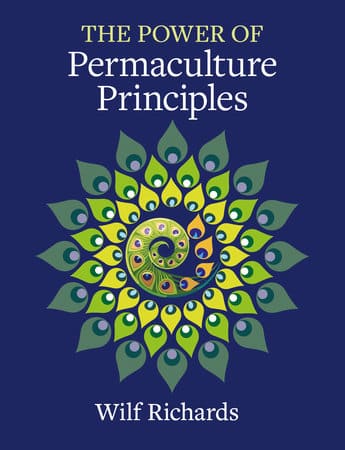
| Pages: | 224 pages |
| Book Art: | Color photos throughout |
| Size: | 7-11/25 x 9-11/16 inch |
| Publisher: | Permanent Publications |
| Pub. Date: | March 3, 2026 |
| ISBN: | 9781856231954 |
The Power of Permaculture Principles
Paperback
$26.95
The Power of Permaculture Principles is both inspiring and practical, written from years of experience and testing the ideas. Full of stories and case studies, it will enable you to enrich your knowledge of permaculture and how to apply it to your own life.
What is permaculture design? How can you use it in your personal daily life, in your community or in land-based settings?
Permaculture has spread across the world since it was originated by Bill Mollison and David Holmgren in the 1970s as a response to the degradation of land and loss of species caused by industrial farming methods and the rising cost of fossil fuels. The problems of the world today are far more complex as technology advances at an accelerating pace, along with the ever-growing inequality caused by greed and the concentration of power. Viable solutions and emerging alternatives are commonplace but political will has been destroyed by the super-rich.
Permaculture offers principles that are part of a holistic framework and a set of thinking tools that allow us to creatively re-design our environment and our behaviour in an unravelling world, and like a living system, it has evolved and grown. We can demonstrate and develop that these alternatives work, bringing us back to a unity with nature and community.
In this collaborative book, Wilf Richards and a cohort of many of the most experienced permaculture teachers and elders from across Britain and beyond, explore Holmgren’s 12 permaculture principles, retrieve many of Mollison’s original ones, and include principles from many other worldwide permaculture designers. Together they share a history of each principle, its development since being formed and an analysis of how they are being used, understood and applied.
These principles have evolved from indigenous knowledge, observations of nature’s cycles, and the living, teaching and practice of permaculture, over the past 50 years, in many different climates and cultures. They can be applied to our personal, economic, social and political reorganisation. The ethical foundation of permaculture guides us to use these design tools in appropriate ways for the betterment of the land, our wild relatives, and human culture.
‘The Power of Permaculture Principles is a rich guide for both designers and educators. Wilf and his contributors offer insights that deepen permaculture practice and understanding. I’ll be recommending it in all our courses.’ Morag Gamble, Permaculture Education Institute
Reviews & Praise
About Wilf Richards
Wilf Richards is a permaculture designer, and a Senior Tutor for the British permaculture diploma system. He is co-founder of the worker’s coop Abundant Earth, The Land of Roots CIC and Green Durham CIC and has been co-managing a cooperative smallholding business near Durham City with friends since 2001. The ongoing learning about land, integration of community and creation of systems feeds into his permaculture teaching. On the land he focuses on managing the market garden, the veg box scheme and volunteers.
Books by Wilf Richards

You may also like...
-
 $25.95
 -
$25.95
-
$28.95


