
Like this book? Digg it!

Share on Facebook

Book Data

ISBN: 9781933392004
Year Added to Catalog: 2006
Book Format: Paperback
Book Art: 75 Recipes, Resources, Index
Number of Pages: 376 pages
Book Publisher: Chelsea Green Publishing
Old ISBN: 1933392002
Release Date: March 8, 2006
Web Product ID: 225

Also By This Author

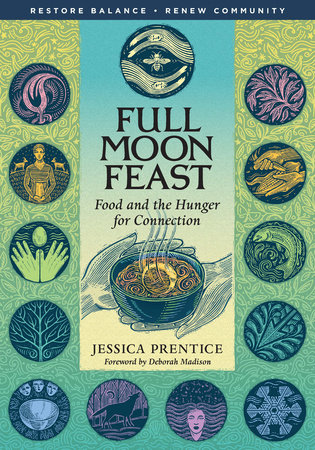
Full Moon Feast

Food and the Hunger for Connection

by Jessica Prentice

Foreword by Deborah Madison

Reviews

Nourished Kitchen

Full Moon Feast: The Review

March 24, 2009 by Jenny

Full Moon Feast: The Hunger for Connection details a love of food, of wellness and most importantly - revives a traditional connection between food and nature’s rhythms.  Written by food activist and chef Jessica Prentice and published by the folks at Chelsea Green Publishing which also publishes titles like Wild Fermentation, Fresh Food from Small Spaces and Renewing America’s Food Traditions, Full Moon Feast is a classic read for the growing traditional and slow food movements.

More than a cookbook and more than a simple book about the love of food, Full Moon Feast is part food philosophy, part autobiography and peppered with  nourishing recipes.    Prentice extols the virtue of reclaiming lost connections and of finding value in the food traditions that nourished our ancestors.  Like so many traditional food activists, Prentice is a former vegan who healed herself through traditional foods including animal foods and wholesome fats.

Each chapter of Full Moon Feast addresses the seasonality of foods from the Hunger Moon of late winter when food is scarce to the Milk Moon which celebrates the value inherent in sweet, raw milks and creams.  Indeed, chapter by chapter, Prentice re-examines our lost connection to the earth, its rhythms and the food it provides.  She delves into food history and traditions throughout the world and the effects of a modern diet on both our bodies and our spirits.  A remarkable advocate of local food, Prentice explains the value inherent in seasonal eating and of understanding where our food comes from.

Each chapter brings forth more information about traditional foods and the manner in which food has shaped human culture worldwide.  In the Egg Moon, Prentice outlines the differences between conventionally produced eggs from battery-cage hens versus farm-fresh eggs produced by Joel Salatin’s model of rotating cows and hens on pasture.  She also introduces us to the manner in which the Inuit traditionally dried fresh salmon roe and the nutritive value of all eggs.  In the Wort Moon, she sheds light on traditional ales and fermented drinks made from medicinal and flavorful herbs.  All in all, she addresses a special food in each of her thirteen chapters - completing the cycle with nourishing recipes that turn food philosophy into practical knowledge.

Even more valuable, Prentice outlines her own struggles with food: the self-denial and punitive philosophy accompanying the modern low-fat “health” food craze that leaves us unsated.  She outlines how a rigid adherence to a misguided, low-fat and animal-food-free diet can prove unhealthful in the end and how reclaiming traditional foods - in all their fermented, fat-dripping glory - can prove as wholesome and healthful for us as they did for our ancestors.

It truly is a remarkable book - and a must-read for anyone just becoming acquainted with the value of real food.  Fulfilling the promise of its title, Full Moon Feast truly satisfies a hunger for connection.


Holiday Reading

The Green Guide
Review by The Green Guide Staff
December 13, 2006

I've never considered myself much of a "foodie." When I was in college, I learned to enjoy cooking, but more as an activity that allowed me to divert my attention from the pressures of academia without feeling like I was wasting time. Food was just a byproduct I took for granted because it was always there, in some burned or multilated form or another.

It's that same perspective, widely held by many Americans, that Jessica Prentice wanted to reverse with her treatise on seasonality, Full Moon Feast: Food and the Hunger for Connection. The book is built upon the 13 moons of lunar calendars used by societies and cultures worldwide, for instance the Lakota people's Moon of Making Fat or the ancient Celtic Milk Moon. Within each moon, Prentice explores the traditions and ancestral context of the foods relevant to that season, wanting to provide a greater appreciation of times when certain foods are abundant and others aren't simply "there"—a notion hard to comprehend given our country's mass-produced industrial food supply.

And she very aptly succeeds. Pointing out that even milk and honey have their respective moons, or seasons, it's hard for me to approach any meal now without undergoing some paradigm shift. After all, why should I sweeten my oatmeal with tropical honey in mid-winter when maple syrup from just across the state line has reached its peak flavor? And why not try my hand at home-brewed root beer in the late summer Wort Moon, when my English ancestors traditionally harvested their herbs? It's in my blood!

Seasonality and locality remain Prentice's primary themes throughout the book (she's also co-founder of Locavores and the Eat Local Challenge), and she's able to make numerous subtle connections between conventional eating habits and the intrinsic values, both taste- and health-wise, of changing them to fit season and locale, all under the guise of connecting readers with their own ancestries and traditions. To help us out, she lists 13 sources for whatever food she happens to be focusing on—13 types of eggs in the Egg Moon, 13 sources for healthy fats in the Moon of Making Fat, 13 traditional ways of preserving fruits and vegetables in early winter's Snow Moon—as well as easy-to-make seasonal recipes developed throughout her years as a professional chef.


Review

Weston Price Foundation
Review by Sally Fallon
August 24, 2006

Part autobiography, part recipe book and part philosophical treatise on traditional customs and food ways, Full Moon Feast is an informative adventure through a year of full moons--from the Hunger Moon in late winter, to the Wolf Moon at the end of the year.

Each moon provides a platform for Prentice to expand on the subject of food, society and health. In the chapter on the Sap or Sugar Moon, which occurs when the sap begins to rise in the trees, Prentice discusses real whole sweeteners from maple, sorghum and palm, versus white sugar, a sugar that is addictive and leads to a kind of slavery of poor health. Discussion of sugar leads to a natural segue into the work of Weston Price.

Many interesting facts emerge throughout the text. For example, as the outrage over slavery grew among northern settlers in the late eighteenth and early nineteenth centuries, maple sugar came to be seen as a socially responsible alternative to the refined cane sugar being imported from the Caribbean. Prentice quotes from a 1903 farmer's almanac: "Prepare for making maple sugar, which is more pleasant and patriotic than that ground by the hand of slavery and boiled down by the heat of misery."

In the chapter on the Milk Moon, we get more on Weston Price via a discussion of raw versus pasteurized milk, followed by wise musings on the sacred feminine as embodied in the dairy cow.

The Wort Moon introduces us to wort cunning--knowledge of worts (that is, herbs) and treats us to delicious lacto-fermented beverages based on summer herbs like verbena, sassafras, yarrow and rose hips.

In the Corn Moon, Prentice explores the subject of grains and bread and looks at the harsh legacy of GMO seeds on local communities and sustainable farms. And in the Blood Moon, she treats us to a profound discussion on the subject of meat eating and vegetarianism.

Full Moon Feast provides a wonderful way to introduce the concepts of traditional diets in a non-preachy way, and in a wider context than simply that of health and fitness. Prentice understands that the way we eat, the way we farm and treat our animals, the way we cook, serve as metaphors for our life and culture.

The icing is a collection of wonderful recipes, from maple roasted nuts to pot roast to after dinner mints.

Full Moon Feast is a classic. Don't miss it!

Sally Fallon is the author of Nourishing Traditions: The Cookbook that Challenges Politically Correct Nutrition and the Diet Dictocrats, and Eat Fat, Lose Fat (both with Mary G. Enig, PhD), as well as of numerous articles on the subject of diet and health. She is President of the Weston A. Price Foundation and founder of A Campaign for Real Milk. She is the mother of four healthy children raised on whole foods including butter, cream, eggs and meat.


Review

Midwest Review of Books
June 5, 2006

Full Moon Feast: Food And The Hunger For Connection by Jessica Prentice is an engaging guide to the beautifully intricate art of culinary creations in synchronization with the cycles of an agrarian calendar. Accurately following the thirteen lunar cycles in periods of their yearly contributions and celebrations, Full Moon Feast knowledgeably explores varying moons cycles with seasonally appropriate recipes ranging from Blood Moon Swedish Meatballs; Stir-fry of Pork and Vegetables with Ginger; and Beef Broth; to Egg Moon's Avocado and Hard-Cooked Eggs with a Lemony Dressing; Stracciatella (Roman Egg Drop Soup); and Spring Tonic Nettle Soup. A unique original concept in cookbooks, Full Moon Feast is very highly recommended as a concise and "kitchen cook friendly" guide to the full-moon celebrations through healthy dining.