

| Pages: | 280 pages |
| Size: | 5 x 8 inch |
| Publisher: | Jenkins Publications |
| Pub. Date: | May 2, 2018 |
| ISBN: | 9780964425866 |
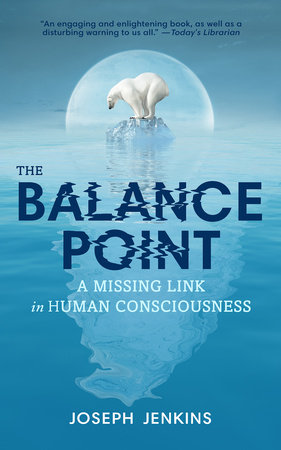
The Balance Point
A Missing Link in Human Consciousness, 2nd Edition
Paperback
$14.95
The Balance Point is the story of a search for something so mysterious that the main character doesn’t even know what it is, or how to recognize it if he finds it. It touches on science, mathematics, economics, and other big-ticket issues such as religion and spirituality, in a manner that is both illuminating and disturbing.
Until her sudden and inexplicable death, Dr. Lucille Boggs, a maverick scientist at a large western university, had been uncovering surprising answers as to why people are so indifferent to environmental degradation. The Balance Point tells the story of her research through the eyes of her nephew, who receives her Last Will and Testament and, with it, becomes her final hope. Lured by the promise of a rich inheritance, Joseph Jenkins reluctantly assumes responsibility for finishing Dr. Boggs’ work, inadvertently plunging himself and his family into the midst of a puzzle of global proportions.
The Balance Point takes the reader on a page-turning adventure from the author’s comfortable Pennsylvania home to the farthest reaches of civilization in a search to solve Lucy’s puzzle. On their quest to locate the missing links to her mystery, though, they discover that some answers lie closer to home, and that sometimes, the only way to find them is to look inside oneself.
A timely book with cutting-edge relevance, The Balance Point conveys a message that will be stay with the reader long after the last page has been turned. Although highly recommended for anyone concerned about the state of the planet, it also makes a great gift for the environmentally complacent.
Reviews & Praise
“A delightful new slant on our environmental mess in a wonderful tale told with passion, wit, and insight."—The Book Reader
“An incredible environmental journey of discovery. Every now and then a book comes along that really speaks to your heart. It is perhaps the best environmental book I have ever read, and I would like to encourage everyone to experience this book.”—Arkansas Environmental Education Association

About Joseph C. Jenkins
Joseph Jenkins is the author of several award-winning self-published books, including The Humanure Handbook, The Slate Roof Bible, The Balance Point, The Compost Toilet Handbook, and Self Publishing: Top Ten Tips.
Connect with Joseph C. Jenkins
Books by Joseph C. Jenkins


You may also like...
-
 $20.00
 -
$24.95
-
$27.95


