Book Data
ISBN: 9780964425859 Year Added to Catalog: 2000 Book Format: Paperback Book Art: maps, b&w illustrations Number of Pages: 5 x 8, 276 pages Book Publisher: Jenkins Publishing Old ISBN: 0964425858 Release Date: June 26, 2000 Web Product ID: 190
|
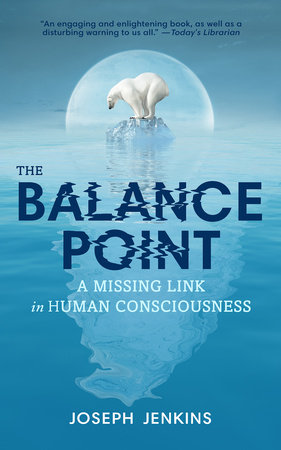
Balance Point
Searching for a Spiritual Missing Link
Excerptexcerpted from chapter 24, Eduardo's Lake I walked over to the water's edge and sat alone in the sun with my feet submerged. I couldn't help but overhear Eduardo's and Sarah's conversation. "What did you mean when you said you could hear the Earth mother." I heard Sarah ask. "I said I could feel what the Earth mother feels. I can know what the Earth mother knows." "But how can you do that?" "I can do it, you can do it, anyone can do it." ""How?" "We are all of the Earth. She is in us and we are of her. There is no separation. We are born from the Earth, we live from the Earth, and when we die, we will return to her. That is how we know." "Then why don't I know?" "You do. The Earth mother speaks to you at all times. You would hear her if you would listen. You cannot hear her because you have allowed her quiet voice to be drowned out by the loud noises of those who would destroy her." "What noises?" "There is no noise here, in this place. This is a good place to hear the Earth mother. To listen to her heartbeat. But you are not here normally. You are usually in a place that is noisy with people who can only think of taking from the Earth mother and not giving in return. They are lost. They have lost their spirit. They have lost sight of the Great Mystery. They think only of themselves." Sarah paused, still confused. "Uh, what exactly do you mean by 'the great mystery,' anyway?" "The Great Mystery cannot be explained in words, señorita. It is called Great because it is large beyond comprehension. It is called Mystery because it cannot be understood. If you would listen, you would hear the voice of the Great Mystery as well as the voice of the Earth mother. The Earth mother is part of the Great Mystery, the stars are part of the Great Mystery, you are part of the Great Mystery, I am part of the Great Mystery. We are all connected. We are all the same. When someone harms the Earth, they harm all of life. You cannot pluck a hair from a great being without sending a shudder of pain throughout the whole body. We are all the body of the Earth mother, and she is the body of the Great Mystery. We all feel the pain of the Earth. Unless our spirit is dead. Then we feel nothing." "How can our spirit be dead? What do you mean?" "Our spirit is what connects our human mind to a higher mind. When our spirits are dead, we are not aware of our connection at all. We think we are separate from the Earth, and we deaden ourselves to her pain. The more we develop spiritually, the more we are aware of our connection to the Earth mother and to the Great Mystery." "That's not what I learned about spirituality. I was taught that we develop spiritually in order to be closer to God." "What you call 'God' is the Great Mystery." "But that's not what I learned. The church I go to says God . . ." Eduardo interrupted. "Let me tell you a story, Sarah, si?" "Sure." "Look at this beach." Eduardo swept his hand in front of him, along the entire expanse of beach. "How many grains of sand do you think are here?" "I have no idea." "Billions and billions. Many, many more than anyone could count. And on a single one of those grains is a population of animals that are much too tiny to be seen." "You mean microorganisms? Microscopic organisms -- too small to be seen with the naked eye, like a microbe?" "Yes, that's what I mean. Microbes, as you say. Well, a population of these microscopic animals has lived on a grain of this sand for a hundred thousand years. If we walked down this beach, we could probably find that single grain of sand buried somewhere, if we knew where to look. But a grain of sand is so small and there are so many we would probably never find that particular one." "But why would we want to find that one?" "Because it's very special. You see, the microbes on that grain of sand have evolved over a hundred thousand years and have developed their own simple intelligence. They can communicate with each other. They have their own microbial form of language. Some of their more evolved ones wonder why they exist at all. They have become self-conscious. They question their existence in their own primitive microbial manner." "Microbial manner?" "Well, they don't talk like we do with mouths and vocal cords, but they can exchange information between each other. So they wonder why they exist." "Why would they wonder that?" "Don't ask me!" Eduardo laughed. "I'm just telling the story! Let me finish. Then one day, one of the microbes thought of an answer to that great existential Question. It suddenly figured out why they all existed. The microbe declared to the other microbes that it knew the answer; it said, 'We are the most intelligent form of life on this grain of sand. Since we know of no life more intelligent, we must be the most intelligent form of life that exists. We must exist, therefore, because a very Great Microbe, like us, created us!' This explanation seemed good enough for the microbe population -- a Great Microbe made them and their grain of sand, and everything else, too. So the microbes accepted this as the true nature of their existence, and they have believed it ever since." "So what's the point?" Sarah asked in exasperation. Eduardo laughed. "What do you think the point is?" "Microbes aren't very smart?" "Microbes are limited in understanding, limited in intelligence, and limited in what they can know. They create explanations that allow difficult concepts to become understandable to them. They create myths to help them understand the nature of their existence. As they evolve over the next hundred thousand years, their myths will evolve too. Their ability to describe what they are aware of will change with time, because their awareness will also change." "This is an analogy, right?" "Yes, of course. People look at those microbes and see how they think the world was created by a Great Microbe, and laugh. It's silly. The microbes have no idea of the true extent and nature of existence. They don't have a clue. Well, people are like microbes too, only on a larger scale. There are hundreds of billions of stars in our galaxy, just like the sand on this beach. Each star may have numerous planets and moons. We inhabit one tiny grain at one edge of our galaxy, as if we ourselves were microbes on the edge of a cosmic beach. We've evolved enough to wonder about the nature of our existence, but our awareness of the true extent of life is very limited. So we have created myths to explain it all. And, like the microbes, we want to believe that one of us, a Great Human, a human God, created us, our planet, and everything else." "But that's the basis for most religion, isn't it. That myth?" "Perhaps. And it would simply be laughable if the myth weren't considered truth by so many humans. But we have reached a time in our coevolution when we need our existential myths to evolve." "Coevolution?" Sarah asked. "Yes, there is no such thing as evolution. There is only coevolution. We evolve along with the other living things on this planet. We are not separate. As I was saying, the 'Great Human' myth was fine for a long while, but now it's doing more harm than good. It is deluding us, impeding the spiritual development of the human species," Eduardo explained. "How?" "Humanity is worshiping itself when it believes that a human created everything, when it believes in a human God. We are like the microbes believing in their microbe God. True spiritual development occurs when we realize that we are a part of something greater than us, and we strive to understand the true nature of that greater Being. As long as we cling to the myth of the Great Human, as long as we believe that the larger level of Being is just another level of human-ness, we convince ourselves that there is nothing greater than us. Then we spiritually stagnate. We cannot coevolve without cooperating with the rest of Life. The Great Human myth makes us believe we are superior to the rest of Life, that we don't have to cooperate. However, we are not superior, and we must cooperate with the Earth mother if we are to survive." "But what difference does it make if people are like microbes? How can we ever understand the true meaning and nature of existence?" "Perhaps humans will never fully understand anything. But our understanding does grow. It does develop and evolve. We know now the Earth is not flat, although we once believed it was. We understand that the Earth is not the center of the universe. But as long as we continue to blind ourselves to the connection between us, as humans, and the Earth as a greater Being, then we will remain self-centered, deaf to the voice of the Earth mother, whom we are harming. We will never come close to understanding our true position in the Great Mystery. We will suffer spiritual imbalance. Spiritual stagnation and impoverishment. That's what's happening now." "What's happening?" "I must not be a very good storyteller!" Eduardo laughed. "No, that's not it. I just don't understand, Eduardo. What is our true position, as humans, in this thing you call the Great Mystery?" "Señorita, you have asked the right question. You are learning. Bueno. Now it is up to you to find the answer. Before you can even ask that question, you must realize that there is a Great Mystery. You must understand that we humans do not have the answers. You must come to realize that we, like the microbes, are just one life form in a vast, universal, continuum of life. Our individual consciousness is one drop in an ocean of consciousness. We have our place, and it is not at the pinnacle of life, even though some humans may think it is, the way they once thought the Earth was flat. There is no pinnacle of life. There is no hierarchy -- there is only life. Where is our place? By asking that question, you have set foot on a true spiritual journey." "Can you give me some more clues?" "Ha! Alright. Let me try to sum it up for you. We humans have an awareness of ourselves, each of us. We are all self-centered, to some extent. You are Sarah, with your dyed blonde hair and your friends and everything else that defines your sense of self." "Sure," Sarah agreed. "The more spiritually evolved we become, the more we are aware that we are also a part of everything outside and beyond ourselves; we are just a tiny piece to a greater whole. We become more selfless. If we were to become completely selfless, as some mystics do, we would perhaps no longer care at all about our individual self and maybe just wander off and die. Either extreme, whether too self-centered, or not self-centered enough, makes us spiritually out of balance. It's a balance that we must maintain in order to live in a productive and fulfilling manner. That's what spiritual development does, it refines the balance between us as individuals, and the rest of life." "I think I'm following you." "There is a point in your consciousness between self-awareness, and selfless awareness. When you have reached a balance between the two, you have reached a place of spiritual fulfillment. It's that simple, señorita. The people who are harming the Earth mother are out of balance. They have developed their self-awareness with little or no selfless awareness. They, like the microbes, are not aware of the Earth mother, or the Great Mystery. These people believe they are the pinnacle of life. They spend their time counting their money and their other material possessions. Although this is an age-old problem, it has now progressed to a level that threatens the Earth mother. Your people are destroying the continuum of life, as if your people were, in fact, a disease." Although I hadn't been involved in the conversation, I had been hanging on to Eduardo's every word. It reminded me of my conversations with Cynthia, Lana, Tom, Cecilia, and Dr. Gaulton. How could I be hearing the same theme from a Peruvian shaman so far away in such a foreign world? I casually wandered over to the fire. Eduardo was poking at the huge fish which lay on the hot coals, wrapped in thick green leaves. "Nice catch," I said. "We will eat soon." "Eduardo, I couldn't help but overhear a lot of your conversation with Sarah," I admitted. "You were saying there is a point in our consciousness between our 'self' and a 'greater self,' or something like that?" "That is correct. Your consciousness is not something separate from the greater consciousness. You are a part of it. That is a fundamental lesson of shamanism. When we learn that we are part of a greater being, we can also learn how to raise our own level of awareness within that greater consciousness. We all have that capability at all times. Sometimes people have premonitions. Sometimes they see the future. Many people call it intuition. They are simply allowing their consciousness to tap into the greater consciousness, which knows all. A shaman, with many years of practice, can do so at will." "But what about this consciousness point you were talking about?" "It is your place of spiritual balance. At this place, your individual consciousness will not dwell on itself too much, nor will it dwell on the greater consciousness too much. The point is different for each person." "And when we arrive at that point, you're saying that we have achieved spiritual fulfillment?" "Si, amigo. When we arrive at a point of balance between the two. That is what I said. You will know when you have found it. We are all connected to the Great Mystery at all times. There are no exceptions. We know this in our hearts. Because of this connection, we have a natural yearning to understand that connection more fully. We yearn for spiritual awareness. It is a natural human trait. It is that yearning that fuels your religions, although your religions may not approach the issue in the right manner." "We're all connected to this thing you call the Great Mystery at all times, you say. And the Great Mystery is, in fact, the world around us? Is that what I'm supposed to be understanding here?" I asked. "The world around us is only the part of the Great Mystery that is knowable to us. The true nature and extent of the Great Mystery is quite beyond anyone's grasp. We are like microbes. Our understanding is very limited." "I still don't understand this balance thing you're talking about." "Imagine that you're walking on a tightrope," Eduardo said. "If you fall off one side, you fall into the pit of self-worship. If you fall off the other, you fall into the pit of selflessness. If you are balanced, you remain on the wire, neither worshipping yourself, nor denying your self-worth. That is spiritual balance, a balance between you and the rest of existence. My analogy may sound precarious, but, in fact, spiritual balance is normal." "Normal? Not just for religious people?" "Of course not. Spiritual balance has nothing to do with religion. Nor is it exhibited as unusual behavior. A spiritually balanced person cannot necessarily be picked out of a crowd. He or she does not need to wear any unusual costume or act in any unusual manner. Spiritual balance is the natural state of the human being, and of all beings. It is normal. It is abnormal when we are imbalanced. We are spiritually balanced when we live in harmony with the greater whole -- with each other, with all of life, and with the Earth mother. When entire societies such as yours become spiritually imbalanced, wallowing in the pit of selfishness, great harm plagues the Earth mother." "And to achieve this spiritual fulfillment you speak of, we need to find the point in our consciousness between selfishness and selflessness?" "Si. Otherwise, you will remain lost. The point is like the North Star. It constantly reminds us of the Great Mystery and our position in it. Most of your people are not consciously aware of it. Most of your people are still trying to establish a point in their consciousness between themselves and a mythological Great Human, a point that doesn't exist because the Great Human doesn't exist. That is why they are lost, wandering in a spiritual desert. They must instead look for a point in their consciousness between themselves and the Great Mystery. It is not difficult to find. It would happen on its own if you would simply allow it to do so." "Tell me Eduardo, would you call that point we're speaking of a balance point, by any chance?" "Si. That is what Lucita called it." I was elated. Finally, I was discovering the meaning of the balance point! Maybe I would solve this mystery after all and cash in on that half million dollar estate! Damn, that Lucy was a clever one. But how did she know I would ever meet or talk with Eduardo? Was this just a huge stroke of luck on my part, even though I wasn't sure I understood what the shaman was talking about? Eduardo scraped at the fire with his stick and then wandered off into the jungle to find more firewood. Still somewhat confused, I continued the conversation with Sarah. "The whole thing seems rather abstruse to me," I said to her. "I don't think I understand what Eduardo's saying." "I think it's simpler than it sounds, Dad," Sarah responded. "Eduardo's saying that spiritual growth means having an increasing awareness of the relationship between yourself and a greater being, which, to him, is 'everything else.' He's saying that 'everything else' adds up to something he calls the Great Mystery, and it's probably most evident to us humans as the natural world around us, which he calls the Earth mother." Sarah squatted beside the fire and raked some coals against the sides of the fish bundle. "Religion, on the other hand," she continued, as she poked at the fire with Eduardo's stick, "is often based on a relationship between oneself and an imaginary creator deity that people call God. Eduardo's saying that since a human creator isn't any more realistic than a microbe one, any relationship we have to such a deity is only imaginary. If I understand him correctly, a true spiritual relationship can only exist between yourself and something that actually exists. You can't have a realistic relationship with an imaginary being. He says the Earth mother is a greater being that actually exists, and by extension, so is the Great Mystery, which is the totality of the universe as we know it today." "So, you think the guy's an atheist?" "No, I wouldn't say that. He believes in a supreme being, but it's a natural one rather than a human one. A real one rather than an imaginary one. To him, 'God' is the totality of existence, not just another human male. And by maintaining a reverence for that greater Being in his life, he tries to live in harmony with the natural world around him. That's why he says we're spiritually lost. We don't have reverence for the natural world. Instead, we worship dead humans and, in the meantime, ignore our destructive effects on the planet. It does seem really silly when you think about it." "So the mysterious balance point is actually some kind of equilibrium between me and the world around me." "Yes, something like that. I think he means it's a balanced awareness. We realize we're actually a real part of a greater Being and then we adjust our consciousness to accommodate a more humble position in the web of life. More humble than the dominator mentality we currently cling to." "It's a lot to think about," I said. "It'll probably take a while for it to sink into my calcified brain." "Well, it makes sense to me." "Your brain cells are younger than mine." "I probably have more of them too, Dad." "I'll pretend I didn't hear that! Where did Eduardo go? I need to ask him some more questions. There's suddenly been an alarming increase in the number of things I know nothing about!"
excerpted from chapter 31, Symbiosis "The word 'economy' simply refers to the management and exchange of goods, services, and energy. For humans, that means manufacturing, construction, food production, and every other aspect of life requiring goods, services, or energy. Any organism has an economy, no matter how rudimentary. Even a colony of bacteria requires the flow of nutrients and energy, and thus has a simple sort of economy. A disease organism overconsumes its resource base without regard for the future, and it therefore has an economy without a future. That's why diseases kill their hosts. But diseases go on to infect other hosts. That's how they survive. Humans can't kill their host and move on to another one like a disease organism does. Unless we're going to find another planet in the galaxy and infect it, too. Lucille and I discussed this at length. She loved this analogy." "From what I gathered, though, I don't think she thought it was necessarily an analogy," I insisted. "I think she thought humans were actually exhibiting real disease potential in relation to the Earth. Anyway, if we currently have an economy that parallels that of a disease organism, do you think there's an alternative?" "Yes, yes, that's what I've been trying to say!" replied Melissa, excitedly, slapping her hand on the table. "That's what I've been trying to say all along! A disease organism has a destructive economy, an economy without a future. But a symbiotic organism, on the other hand, which is an organism that lives in harmony with its environment, also has an economy. "An economy with a future. Both types of organisms have their own economies, both require the flow of materials and energy, but the disease organism progressively undermines its economy through over-consumption and waste, and eventually destroys it. Destroys its own economy and destroys itself in the process! The other, the symbiotic organism, knows how to maintain a benign economy by managing its resources properly and avoiding over-consumption and waste. It will live on indefinitely. Humanity, if we are to survive, must develop a symbiotic economy!" "And that's not even the most important aspect," added Max. "What do you mean?" Annie asked. "It makes sense that the symbiotic economy would be much more preferable for the organism involved, especially humans. Preferable in many ways. A human symbiotic economy could last indefinitely, it could allow for goods, services, and energy to be distributed among people equitably, it could guarantee prosperity, peace, meaningful and rewarding jobs, and fulfilling lives for everyone, without a sacrifice in our standard of living." "I'm not following you," Annie eyed him skeptically. "How would it not sacrifice our standard of living?" "The people who are robbing our store, who are promoting a destructive, wasteful economy, argue that if we stop squandering our resources, our economy will take a huge nose dive and we'll all be back to washing our laundry on scrub boards in our back yards," explained Max. "So people's natural reaction is to think we can't do that, therefore we must continue to squander our natural bank account like there's no tomorrow. But this is ridiculous. Symbiotic economies, by definition, involve the exchange of goods, services, and energy in a manner that allows everyone to benefit over the long term. It's a balanced, equitable economy. There's no reason to believe that our average standard of living would drop simply because we shift to a more conscious economic system. Our standard of living would more than likely improve. We'd have cleaner air, cleaner water, better quality food, less disease, less poverty, more rewarding employment, healthier societies, and more fulfilling lives." "But wouldn't we be paying a lot more for gas and oil and coal?" argued Annie. "Wouldn't our prices go up and therefore our disposable income go down?" "Sure, if we're dumb enough to rely heavily on those non-renewable resources. A symbiotic organism would phase out or minimize the use of polluting, non-renewable resources as quickly as possible while finding ways to use the same resources efficiently, cleanly, and, perhaps most importantly, wisely."
|
|