

Catnip! Good for Cats, Good for Humans
Many know the effects of catnip on our feline friends, but few realize that catnip has medicinal effects for humans.
From stomach aches to reducing fevers, catnip is a versatile herb with many benefits. The next time you grow this plant for your cat you may end up taking a few cuttings for yourself!
The following is an excerpt from The Organic Medicinal Herb Farmer by Jeff and Melanie Carpenter. It has been adapted for the web.

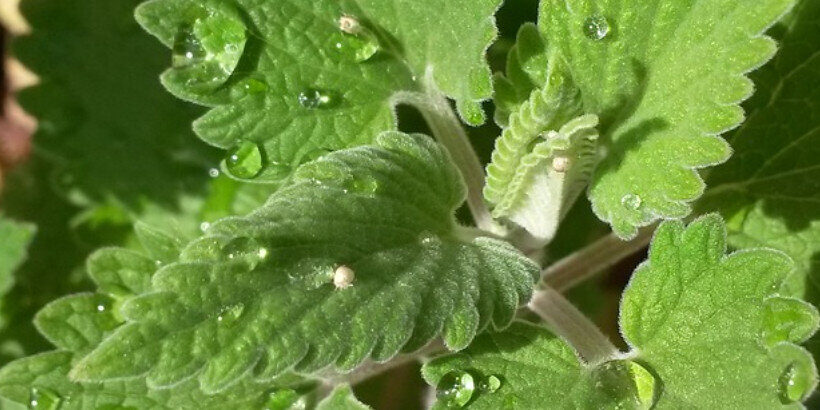
Catnip. Photograph courtesy of Kate Clearlight
Catnip – Nepeta Cataria
Life Cycle
Catnip is a short-lived herbaceous perennial that is hardy to USDA zones 3 to 9.
Plant Description
Native to Europe, this perennial was introduced to North America and is a favorite among felines and herbalists alike. A member of the Lamiaceae family, catnip is a mint with classic square stems and alternating leaves.
Catnip has toothed heart-shaped leaves that are fuzzy and greyish-green in color. It is highly aromatic and grows three to four feet tall, making a great border and companion plant.
In mid-to late summer catnip produces dense spikes composed of small individual flowers that are white with a lovely light purple undertone. On average catnip lives around five seasons but is most prolific during its second and third years of growth.
Growing Conditions
In the wild, catnip grows in dry soils and is commonly found on the edges of fields, on stream banks, and on disturbed land. It grows well in full to partial sun and likes well-drained soil with good fertility and organic matter.
Propagation
The seeds of catnip are light-dependent germinators and should be planted on the surface or covered lightly with potting mix. Seeds should be stratified for best germination results. Catnip can be direct-seeded in early spring or grown from transplants or vegetative cuttings.
On our farm we prefer growing catnip from transplants; this makes for fewer weeds and a cleaner harvest. Once established, catnip will spread vegetatively and will also self-seed.
Planting Considerations
Although this perennial can live for five years or more, catnip yields tend to be lower in older plants. Yields are consistently higher in plants in their second and third years of growth but after that begin to wane.
Being highly aromatic and attractive to pollinators, catnip can be a good companion plant to repel pesky insects and attract beneficials.
It makes a nice border for crops such as calendula and echinacea, which are susceptible to diseases carried by insects. Plant spacing is twelve inches between plants within the row, twenty-eight inches between rows.
Medicinal Uses
Catnip is a wonderful nervine that is safe to use with children and adults. It has a calming, sedative effect and can help ease fussiness in children; it promotes sleep and is good for reducing digestive upset.
Catnip has bitter properties and not only calms the stomach but acts as a carminative and helps dispel gas. In addition to its nervine and bitter actions catnip helps promote sweating, brings down fevers, and is commonly used with herbs like boneset and yarrow to treat flu symptoms.
Slightly astringent, it is also good for treating children with diarrhea and can be taken as a tea or tincture. Another way we use catnip is to make an herbally infused honey with it and add it to beverages. Catnip is a stimulant for cats and is often found in their toys and treats.
Harvest Specifications
Large commercial herb farms often produce catnip much like they would a hay crop, using machinery to cut, field dry, and bale the harvest.

Field-drying catnip produces low-quality results and is not recommended for medicinal purposes. Catnip is harvested when it goes into full bloom in mid-to late summer.
Cut the whole plant, both leaves and flowers, with a field knife or sickle bar cutter. When harvesting be sure to leave at least six to eight inches of growth for regeneration. This will help plants overwinter, and some warmer climates allow for a second harvest.
Postharvest and Drying Considerations
Dry catnip at temperatures of 95 to 100°F. Do not dry catnip at very high temperatures or the volatile essential oils can be lost.
Tops should be dried whole, in partial shade and with good airflow. Under good conditions catnip can dry in two to three days.
Leaves and flowers can be garbled after drying by rubbing them over quarter-to half-inch stainless steel mesh and picking out the stems. Once garbled, mix leaves and blossoms together.
Pests and Diseases
Catnip has minimal disease or pest pressure due, in part, to its highly aromatic nature.
Yields
Two hundred pounds of dried catnip leaf and flowers per one-eighth-acre bed (multiple harvests per season). Moisture ratio for catnip leaf flowers is 3.5:1 fresh:dried.
Pricing
Retail price for one pound organic:
- Dried catnip leaf/flower: $12 to $24
- Fresh catnip leaf/flower: $12 to $14
Recommended Reads
Read The Book

The Organic Medicinal Herb Farmer, Revised Edition
How to Produce High-Quality Herbs on a Market Scale
$39.95
You may like...
-
 $44.95
-
$34.95
-
$49.95


Recent Articles

Ever wondered what your life is missing? The answer is probably chickens. These feathery friends can help fertilize your soil, mow your lawn, and much more.
Read More
Read on for tips for potatoesand sweet potato variety selection, harvesting, processing, and storage. And extend your success beyond growing and master essential techniques for crop longevity.
Read More
The secret to the sweetest arugula ever? Overwinter your plants for a spring surprise: the sweetest, most flavorful arugula you’ve ever tasted!
Read More
Prepare for the year ahead with cover cropping! It creates nutrient-rich soil for winter gardening AND provides a boost to your seedlings come springtime.
Read More
Growing no-till arugula is a simple way to grow your own food. These greens can be used on pizzas, salads, and as a garnish on almost any dish.
Read More