

Chelsea Green Blog
Farming & Homesteading
The Miracle of Farming: Toward a Bio-Abundant Future
Farmers have a close relationship with nature, seeing life cycles happen right in front of their eyes marvel in what the earth can produce. We wouldn’t survive without their help. Appreciating farming in the natural world, giving what it needs in order to flourish and providing the essentials to survive is an important process. There’s…
Read More
The Epic Saga of the American Chestnut
The American chestnut may well be the greatest and most useful forest tree to ever grow on this Earth. Its decline is considered by many ecologists to be one of the greatest ecological disasters to strike the US since European contact. But how did it happen? And are we on track to bring back this…
Read More
African Farming Traditions: Learning the Power of Tradition
Far before the release of her book Farming While Black, Leah Penniman had been helping countless Black and Brown farmers reclaim their right to the land. For years, Leah has been educating, inspiring, and working alongside so many individuals to make sure they truly understand the customs and traditions of their African farming ancestors and help…
Read More
An Edible Urban Oasis
More than 80 percent of the US population now resides in urban areas. This number is projected to rise in the next few decades. Finding ways to maximize use of existing open space is imperative, and increasing access to food through sustainable management of edible landscaping is one important approach among many that are underway.…
Read More
Starting Farming: How to Find Success as a New Farmer
As the average age of America’s farmers continues to rise, we face serious questions about what farming will look like in the near future, and who will be growing our food. Many younger people are interested in going into agriculture, especially organic farming, but cannot find affordable land, or lack the conceptual framework and practical…
Read More
Sustain Your Land: Subsistence Strategies for the Long Haul
Peasants, indigenous agriculturalists, and old-time American farming families farmed first and foremost to feed their own families and those in need in their communities—only secondarily, if at all, for a market. They may have practiced shifting agriculture or were settled permanently in villages; they may have been members of free, “primitive” or “tribal” societies, or…
Read More
New Age Farm Partnerships: Finding and Keeping One
Anything involving farming almost always requires the help of another person, whether you’re feeding the animals or trying to decide if you want to expand the barn. Partnerships not only help with your personal life but the success of your business in the long run as well. Having someone to share the work and ease the…
Read More
Composting with Animals: Common Applications
When you think of a typical farm, you probably think of going out to feed the animals with a bucket of scraps. This has been one of the most common ways to recycle food for many years and helps reduce your waste footprint. However, composting with the help of animals is another technique used on…
Read More
Young Farmers: Back to the Land and Down to Business
If you haven’t been working on a farm since childhood or weren’t lucky enough to inherit one from your family, it can be difficult to build one from the ground up. Farming takes more planning and thinking than meets the eye, but it’s not impossible. We’ve got aspiring young farmers covered with how to proceed…
Read More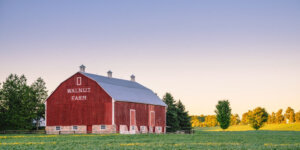
Why Farm Infrastructure is Important: A Farm is More Than Land
The basis for a good farm isn’t just about finding a piece of land with great soil. No, to truly succeed on the farm you need a well-planned and implemented infrastructure coupled with hard work, dedication, and will-power. As farming practices continue to change, it’s important for the next generation to remember that insight and…
Read More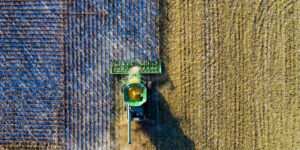
Farmers Aren’t Created Equal: The “American Farmer” Fallacy
For those who aren’t in the know, it may seem like all farmers are created equal, but that’s simply not the case. In fact, there is such a wide variety of farmers that it’s nearly impossible to put a label on them. But that doesn’t stop organizations from trying. The following is an excerpt from…
Read More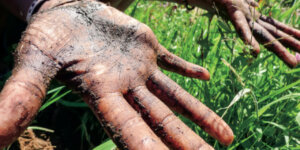
Black Rural Land: Black Land Matters
As a young black girl, Leah Penniman struggled to understand who she was and where she fit in with the world. There was one thing she did know— when she was connected to the land and earth she felt at home. But what did that mean? Was the land trying to tell her something about…
Read More
Winter in the Forest Beer: Creating Unique Drinks from Nature’s Ingredients
The art of brewing can explore far beyond the usual ingredients into a vast and luminous galaxy of wild and cultivated fruits, berries, grains, and herbs, which once provided a variety of fermented drinks as broad as the world. Now fermentation fans and home brewers can rediscover these “primitive” drinks and their unique flavors in, the…
Read More
Composting: Breaking Down the Core Principles
Composting is about more than just flinging your food scraps into a heap in your backyard. It’s about figuring out a way to give your unwanted food a new purpose while also helping the environment. And the best part is, the fundamental building blocks of composting systems are the same regardless of scale. The following…
Read More
Hydroponic Versus Soil Growing: Which Should You Choose
You probably learned when you were young that plants need soil to get the essential nutrients needed to grow. However, there is another way you can give your plants what they need to flourish. A hydroponic system uses water-based fertilizer as opposed to soil fertilizer. This practice is relatively new to farmers, though it is…
Read More
How to Use Climate Maps to Navigate the Winter Harvest
Continuing to grow your crops and harvest them well into the winter months seems like an impossible task. How can they grow when weather conditions are far from warm sunny days? It’s all about adapting to what the season gives you. With the proper techniques and studying the patterns of your area’s climate, growing and…
Read More
Four Books for Growing Food in Winter
Don’t let cold weather stop you from enjoying and growing food! For many, the coming of winter simply means cultivation moves indoors or under cover. Small farmers, homesteaders, home gardeners, and commercial growers can extend the growing season by following just a few of the techniques outlined in the books below. And, there’s no need…
Read More
In Remembrance: Matthew Stein
It is with great sadness that we announce the passing of Matthew Stein, author, environmentalist, MIT-educated engineer, green builder, and beloved member of the Chelsea Green family. Matthew died on December 19, 2018, while out in nature pursuing one of his many passions, rock climbing. In 2000 Matthew published his first book with Chelsea Green,…
Read More
Healthy Culture, Society and Mother Earth: Agri-Culture
In Call of the Reed Warbler, Charles Massy’s stunning observations of interaction between nature, culture, and society is nothing short of eye opening. “By arrogantly having placed ourselves outside the functional operating parameters of Earth’s systems, we now see nature and the Earth as separate from us and so just available for use – while all the…
Read More
An Interview With Eliot Coleman: The Original Organic Pioneer
With over fifty years’ experience in agriculture and a penchant for inventing new tools and techniques, Eliot Coleman has solidly established himself as an organic farming pioneer. He has authored several books on his practices, including The Four-Season Harvest, The Winter Harvest Handbook, and his magnum opus, The New Organic Grower, which will celebrate its…
Read More
A Call for Regenerative Agriculture: From the Group Up
Farmland covers 38 percent of the Earth’s land area and is a major contributor to climate change. But it doesn’t have to be this way. Soil and plants have the capacity to store huge amounts of carbon in the ground, thus how we grow food can be one of the key solutions to our climate…
Read More
Lessons in Resilience: How to Plan a Successful Farm Business
Humans specialize in resilience. We have the capability to create wondrous things out of seemingly nothing and continuously reinvent ourselves. However, when the world is against us, it may seem impossible to accomplish our goals. Leah Penniman, co-founder of Soul Fire Farm, wanted nothing more than to be able to provide nourishing food for her…
Read More
Agroforestry Versus Permaculture: Which Approach to Use for a Community Food Forest
Ok, so we’ve gone over some basics of community food forests: Now it’s time to figure out how to plan one. There are two schools of thought on the best approach to building a community food forest: agroforestry or permaculture. The former offers a science-based approach while the latter incorporates elements of social design. Both…
Read More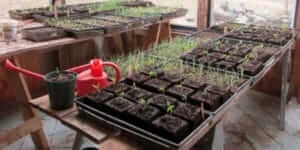
3 Steps to Start Your Plants Off Right
How you handle your seeds and your practices around seeding is your first chance to get your plants off to a good start and help them achieve their full potential. Ben and Penny Hewitt, authors of The Nourishing Homestead, have developed a three-step process which starts with inoculating the seeds, then sowing them in high-quality…
Read More
Pass the Walnut Syrup?
Everyone knows and loves maple syrup, and in some states (like Chelsea Green’s home state of Vermont), it’s big business. However, it’s a widespread myth that maples are the only trees that can be tapped to produce sap, according to Michael Farrell, sugarmaker and director of Cornell University’s Uihlein Forest. Sap can also be collected…
Read More