

The Insatiable Call of Composting
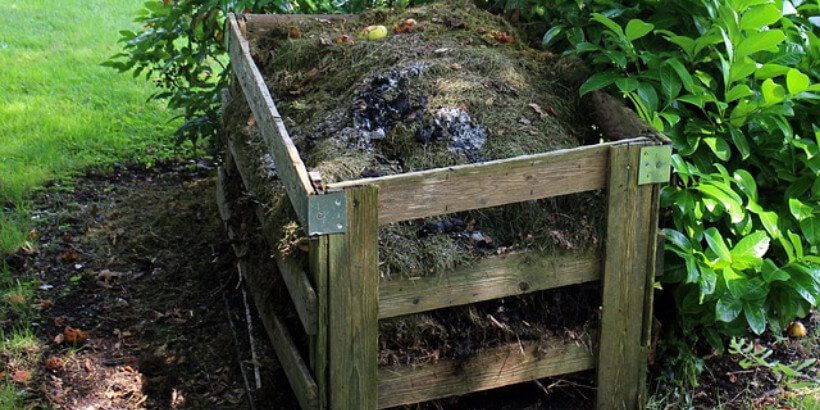
James McSweeney is a composting consultant and educator who has been an ardent proponent and collaborator in the community composting movement in the United States. Through his work at the Highfields Center for Composting and current consultancy, Compost Technical Services, James has worked with hundreds of composters, large and small, on everything from site planning, design, and management to compost heat recovery and livestock feeding systems. With a background in agroecology and permaculture, restoring ecological integrity to our local farm and food systems is at the heart of James’s work.
The following is an excerpt from Community-Scale Composting Systems by James Sweeney. It has been adapted for the web.
The definition of composting that I have been using for a number of years, which is a combination of several definitions I’ve come across, is: The return of organic materials to a rich, stable, humus-like material through a managed oxidative decomposition process that is mediated by microbe metabolism.
But compost is much trickier to define. If you’ve ever purchased compost, you may have ended up with any number of things: rotted manure rife with weed seed; mulch that someone tried to pass off as compost; leaf mold; or beautiful, mature, organic-matter-rich, earthy, crumbly, black, life-giving . . . well, what else? . . . compost.
For many people the need to compost, once awakened, is insatiable.
Composting calls, it speaks from the beyond, drawing in believers.
Seriously, farmers and others who make compost often describe the positive effects composting has on their minds and spirits almost like a meditation or yoga practice.
A large number maintain a deep belief in composting as part of a holistic way of life. I share this for a few reasons. First, if you are an inadvertent member of the Cult of Compost, know you are not alone. We are legions strong and spreading from root to sky.
Second, you should know that a species of soil bacterium (Mycobacterium vaccae) releases serotonin. And there are no doubt other microbes with similar effects.
Third, to define compost strictly as a substance that has undergone biologically mediated oxidation misses the fact that there is a huge social aspect to composting. Similar intersections between technology, social order, and microbial communities have a long and beautiful history (I’m thinking of the fermentation traditions of the Tarahumara and Lacondon peoples of Mexico). Those traditions are also a path to both community and the divine. This is all to say, composting may play a more important role than we recognize in creating greater wellness in our communities.
Recommended Reads
Food for Your Garden: Starting a Traditional Compost Pile in Your Yard
Read The Book

Community-Scale Composting Systems
A Comprehensive Practical Guide for Closing the Food System Loop and Solving Our Waste Crisis
$59.95
You may like...
-
 $19.95
 -
$29.95
-
$59.95


Recent Articles

The true pure seed is a myth. There are best practices that any seed grower should keep in mind; but once you understand seed integrity, the real fun begins.
Read More
Before yanking out the next patch of lambsquarter you find in your yard or garden, consider trying one of the many edible and medicinal uses of this “super weed.”
Read More
What’s a cheaper, easier, and surprisingly more efficient way to start your seedlings? Soil blocks! Find out how soil blocks work, how you make them, and what advantages they offer over traditional pots and trays.
Read More
America was once home to hundreds of small-scale agricultural seed producers, each of which developed seeds adapted to grow best in the surrounding region.
Read More
Thinking about adding a laying flock to your backyard, but having trouble deciding between ducks and chickens? Agonize no more.
Read More