

Foraging 101: Are All Grass Seeds Edible?
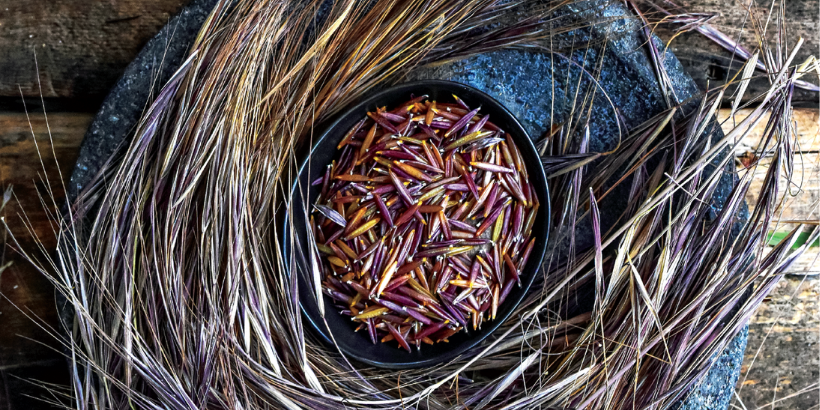
Discover the fascinating world of grass seeds! With over 11,000 species, exploring their edibility is an adventure.
Grass seeds are plentiful, but are they all safe to consume? Understanding important factors like toxicity, taste, size, and processing is key for a safe and rewarding harvest. Dig into the many varieties of edible grass seeds!
The following excerpt is from Wildcrafted Seeds and Grains by Pascal Baudar. It has been adapted for the web.
Are All Grass Seeds Edible?
I’ve been wondering about this for a while. If you dig around online, you’ll come across all kinds of opinions about whether grass seeds—or even grass itself—are edible. Some survivalist sites confidently claim that all grass seeds are safe to eat, while others flat-out say they’re not without really explaining why.
The truth is, it’s tricky to get a clear answer.
There are over 11,000 recognized species in the grass family (Poaceae), and not all of them are worth foraging. Many grass seeds are so tiny that they aren’t worth the effort to collect.
There are many factors to consider when it comes to grass seed edibility, including:
- Palatability: Many grass seeds are unpalatable due to their flavor or texture. Furthermore, even if some grass seeds are technically edible, they might not provide significant nutritional value.
- Small size and hard hulls: Many grass seeds are too small to be practically harvested and processed for food. Take Bermuda grass (Cynodon dactylon)—those seeds are so tiny, it’s just not worth the effort. I’d rather look for more exciting and abundant forage nearby. And red brome? Honestly, I’m not even sure that stuff has seeds. I’m half-joking, but I’ve never managed to find any! When it comes to foraging, size really does matter. Additionally, some grass seeds have hard, inedible hulls that are difficult to remove. Heck—some seeds are so hard, I’m pretty sure they would simply go through your digestive system fully intact. Sprouting grass seeds could be a solution.
- Processing requirements: Some seeds require extensive processing, including husk removal, lengthy soaking, fermentation, sprouting, cooking, and so on to improve digestibility and taste and eliminate potential toxins.
- Potential toxicity: Some grass seeds may contain substances that are toxic to humans and can cause health issues if consumed.
Let’s talk more about the big one: toxicity.
Are some grasses toxic? And are some of their seeds unsafe to eat? Honestly, that’s a tough question to answer.

There are organizations in North America and Europe that research the edibility of grains and seeds, both for people and animals. Some of the key players include the United States Department of Agriculture (USDA), European Food Safety Authority (EFSA), Agriculture and Agri-Food Canada (AAFC), and the French National Institute for Agricultural Research (INRAE).
The catch? The main focus of these organizations is crops with high economic value—such as wheat, corn, and rice—that already have well-developed markets, production systems, and distribution networks.
Wild grains just don’t offer the same economic incentives. Low yields, niche demand, and the challenges of domestication make them less appealing for large-scale research. As usual, it all comes down to money. It feels like these organizations aren’t really concerned with helping people forage food for free.
To be blunt, there isn’t much research into whether wild seeds and grains are safe for human consumption. Even when a wild grain is edible—like great brome—you won’t find USDA recommendations about eating it. Instead, you’ll see advice on how to get rid of it because it’s invasive in some areas.
Maybe if someone invents a machine that makes processing wild grains super easy and profitable, that perspective will shift. But for now, you’re pretty much on your own.
Now, back to the main question: are some grasses actually toxic? Surprisingly, the answer is yes.
I really hoped all grass seeds would be edible, but that dream got squashed. But here’s the silver lining: toxic grass seeds are extremely rare. I also haven’t found any reports of people dying from munching on wild grass seeds specifically.
In short: some grass seeds are perfectly safe. A few aren’t. But with a little care, there’s still a lot to explore.
The main guilty party I found is darnel (Lolium temulentum). Also known as poison ryegrass, this grass produces seeds that contain temuline, a narcotic alkaloid. Consumption can lead to symptoms similar to drunkenness, and severe cases can be dangerous.
You might say, “Wait a minute, drunkenness sounds interesting.” Well, historically, darnel is famous for causing trouble in the grain world. It often sneaked into wheat fields, pretending to be a cultivated grain—kind of like the wild cousin who shows up without an invite—mixing its slightly poisonous seeds into the wheat. People in the past might have accidentally baked darnel into their bread and ended up feeling dizzy and wobbly, almost as if they were drunk, but without any of the fun of drinking actual ale.
Seriously, though, this is about edible grains and seeds and I’m not going to get into the psychotropic properties of some of them. From what I’ve read, it looks like darnel could be really bad news if eaten in large enough quantities. Let’s skip that one: we’re not eating it.
Certain grasses, like sorghum varieties—think Sudan or Johnson grass—contain cyanogenic glycosides, which release hydrogen cyanide when the plant gets damaged. This makes them a concern when used as animal fodder. The good news? Based on my research, these compounds are mostly in the leaves and stems, not the seeds.
When sorghum plants are grown and harvested for their seeds, the cyanide risk drops significantly since the seeds don’t contain much of these compounds. That’s why eating sorghum seeds or grains is considered safe and doesn’t carry the same risks as munching on the other parts of the plant. And here’s a bonus: cooking or processing parts of plants that do contain cyanide can reduce their toxicity.
Boiling works well because hydrogen cyanide evaporates at high temperatures. It’s the same process people use to make cassava roots safe to eat—they boil them to remove the toxic compounds. Personally, I always cook Johnson grass or sorghum seeds before eating them or mixing them into dishes.
So, yes, many grass seeds are edible and full of good stuff like carbs, protein, and fats. But not every grass seed is easy to eat straight off the plant. Some need processing to make them safe or tasty, some are too hard and tough, and a few, like darnel, can even be toxic.
The bottom line: it’s important to know which grasses you’re dealing with and how to prepare them properly.
A little knowledge goes a long way toward staying safe and enjoying what you forage, and, as usual, doing your own research and properly identifying plants is key to avoiding harmful or toxic plants.
And finally, don’t forget to check grass seeds for signs of contamination like mold or fungal infections.
Ergot, for example, can grow on certain wild grasses, especially rye, and can be harmful if consumed. Make sure seeds are stored properly to prevent molds like those that produce aflatoxins. Keeping seeds dry and well ventilated helps maintain their quality and safety.
What are the most common edible grass seeds found on most continents?

- Canary grass (Phalaris canariensis): Originally native to the Mediterranean region, it has spread to North America, Europe, and other regions as both a cultivated plant and a wild grass often found in wet environments. The seeds are used in bird feed but are also edible for humans.
- Cheatgrass (Bromus tectorum): Originally from Eurasia, it is now found extensively across North America, particularly in the Western United States, and has also spread to parts of South America and Australia. As explained earlier in this book, I use the grains.
- Crabgrass (Digitaria sanguinalis): This grass is found worldwide, particularly in temperate zones, including North America, Europe, Asia, and Australia. Often considered a weed, the seeds of crabgrass are edible and have been used traditionally as a grain in some cultures.
- Foxtail millet (Setaria italica): Although cultivated in many areas, wild forms of this grass are found across Asia, Europe, North America, and Australia. It has been used for thousands of years for its nutritious seeds, which are still a staple in many regions.
- Quackgrass (Elytrigia repens): Native to Europe and Asia, this grass has become widespread in North America and can also be found in parts of Australia. It is a persistent weed with edible seeds that have been used historically in times of scarcity.
- Wild oats (Avena fatua): Found across many regions, including North America, Europe, parts of Asia, and Australia, typically in agricultural lands and disturbed soils. A relative of common oats, these seeds can be harvested and eaten.
- Wild rye (Elymus spp.): Various species of Elymus are native to temperate regions of North America, Europe, and Asia and have adapted to a variety of climates and conditions. The seeds are used by Indigenous peoples in various parts of the world. Many species of wild rye have seeds that are not easy to extract using traditional methods.
- Witchgrass (Panicum capillare): Native to North America but found in parts of Europe, Asia, and Australia as well, often in disturbed soils. It is sometimes used as a grain substitute, though it is commonly considered a weed.

Less common edible grass seeds…
- June grass (Koeleria macrantha): Native to North America, it grows across the United States and Canada in prairies and open woodlands. It is known for its small but edible seeds.
- Brome grass (Bromus spp.): These species are widely distributed across Europe, North America, and Asia, with some species also found in Australia. Many of them have edible seeds.
- Little barley (Hordeum pusillum): Predominantly found in North America, especially in the United States, where it was historically an important food grain for Indigenous peoples.
- Wild sorghum (Sorghum spp.): These species are mainly found in Africa, with some species also in Asia and the Mediterranean region. The seeds of wild sorghum varieties are edible.
- Hair grass (Deschampsia spp.): Found in cool climates across Europe, North America, and Asia. The seeds of various Deschampsia species are used in traditional diets in cooler regions.
- Common reed (Phragmites australis): This grass is ubiquitous along water bodies across Europe, Asia, North America, and Australia. The seeds are edible, and in some cultures, other parts of the plant are used for their nutritional and medicinal properties.
- Ryegrass (Lolium perenne): Widely distributed across temperate climates, including Europe, Asia, and North America. It is primarily used for pasture and fodder, but in historical contexts, its seeds were also used for making flour.
- Buffalo grass (Bouteloua dactyloides): Native to the Great Plains of North America, it has small seeds that were traditionally used as food by Indigenous peoples. It is adapted to arid environments and is drought-resistant.
- Manna grass (Glyceria spp.): Found in temperate regions of North America, Europe, and Asia, typically in wet, marshy areas. The seeds are sweet and were historically gathered and used by various Indigenous peoples.
- Sweet vernal grass (Anthoxanthum odoratum): This grass is found in Europe, Asia, and North America, primarily in pastures. While known for its sweet scent when cut, the seeds are also edible and have been used traditionally. Some caution is advised due to the presence of coumarin.
- Wood millet (Milium effusum): Found in the forests of Europe and Asia, with sporadic populations in North America. The seeds of this grass are edible and have been used in traditional European diets, especially in porridges.
- Spike trisetum (Trisetum spicatum): Common in the mountainous regions of Europe, Asia, and North America, this grass thrives in alpine and subalpine zones. Its seeds are edible and were used by mountain-dwelling peoples.
Recommended Reads
Read The Book

Wildcrafted Seeds and Grains
An Introduction to Extracting, Preparing, Storing, and Cooking with Common Wild Varieties
$34.95
You may like...
-
$40.00
-
$34.95
-
$34.95


Recent Articles

This bright, yet delicate flavor profile is both sweet and sour – a unique taste that you’ll keep coming back to. This recipe is intended for long, slow fermentation starting at persimmon harvest time in the autumn and continuing into winter.
Read More
This triple apple snack cake uses applesauce, cider, and apples for a one-two-three apple punch. Don’t take our word for it though, give it a go yourself!
Read More
These small fruits are a delicious source of nutrients that you can find almost anywhere. Get started on acorn harvesting with help from these simple tips!
Read More
Want an on-the-go snack without having to go to the grocery store? Whip up this homemade applesauce for a fresh fall snack whenever you get the craving!
Read More
The possibilities are pretty much endless with wild ingredients — use almost any fresh fruit or juice and a sweetener to create your own custom jam or syrup!
Read More