

Drying Prune Plums (Plus Figs, Apricots, Peaches and Nectarines)
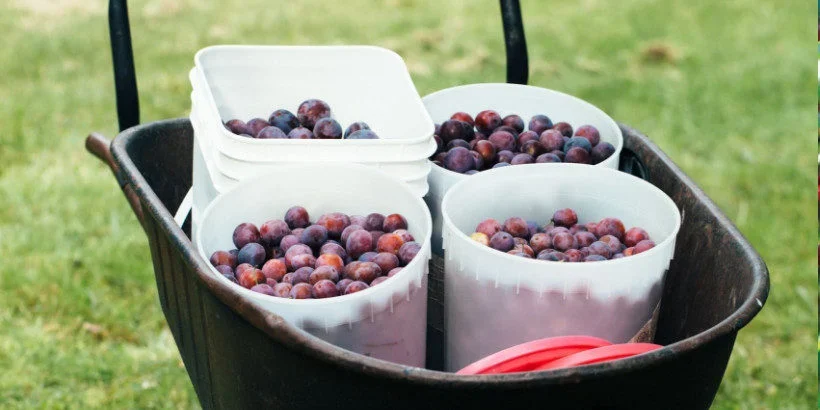
Learn the ropes on drying prune plums and other fruits! Whether you’re a pro at preserving or you’ve never tried it out before, anyone can make these simple and delicious snacks.
The following excerpt is from The Resilient Gardener by Carol Deppe. It has been adapted for the web.
Prune Plums: Perfect for Preservation

I dry prune plums by picking or shaking them off the trees, then collecting them in monolayers in flat cardboard trays (such as are discarded by grocery stores after they remove the six-packs of soda).
The plums will shake off the tree when they are ready to ripen, but will still be hard enough at the shake-off stage to be quite resistant to bruising. I’ve harvested immense amounts by shaking the trees every two or three days and collecting until the harvest is over. I let the plums ripen to perfection indoors, examining them daily. It’s easiest to tell prime ripeness by squeezing each plum very gently.
The Process of Drying Prune Plums
To process for drying, I rinse the plums (if necessary), cut them in half, and flip the seed out with my finger. Then I pop the backs as I place each half in the dehydrator (cut side up). “Pop the backs” simply means pressing against the skin side of each half to turn the half inside out. No pretreatments are necessary. The optimum temperature for drying is 135°F.The drying takes place from the cut surface, not through the skin. So it isn’t necessary to turn the plum halves over, and they don’t stick to the drying surface.
The same process is used to dry halved figs and freestone varieties of apricots, peaches, and nectarines. All other fruits require additional work to remove cores or seeds and/or to slice for drying. Sliced fruit takes much more space in the dehydrator than fruit that can be dried in halves. And sliced fruit must be turned over piece by piece part way through the drying; plus it sticks to the drying surface.
So if you love dried fruit but are as resistant to processing labor as I am, look first to prune plums, figs, and freestone varieties of apricots, peaches, and nectarines.
Recommended Reads
Read The Book

The Resilient Gardener
Food Production and Self-Reliance in Uncertain Times
$35
You may like...
-
 $25.00
 -
$34.95


Recent Articles

Wild seeds & grains are packed with nutrients and versatility. Perfect for off-grid or wildcrafted cooking! New to foraging? Keep reading to get started!
Read More
Get your daily dose of health! Ancient mushroom medicine for modern times. Mushrooms help us understand medicine is more than just chemicals!
Discover nature’s medicine cabinet with the power of mushrooms!
– Medicinal Mushroom Crackers
– Medicinal Mushroom and Vegetable Broth
– Chaga-Reishi Chai

Miso lovers, rejoice! There are reasons that miso paste has become popular around the world: it’s versatile, relatively inexpensive & can be made in a range of flavors you’d be hard-pressed to find anywhere else. Make your own miso at home!
Read More
Wondering where to forage for fresh wild greens? Think beyond your garden… Look no further than hedges. Hedges are secret havens for delicious herbs & wild greens. Get ready to start foraging. Hedges are a hidden treasure trove of natural goodness!
Read More
Homemade cheese doesn’t have to be complicated, all you really need is a handful of ingredients, time and a love of cheese. Make homemade cheese in no time! Say goodbye to complicated cheese-making and get ready to create your own delicious homemade cheese.
Read More