

Wild Edibles: 5 Tips for Beginner Foragers
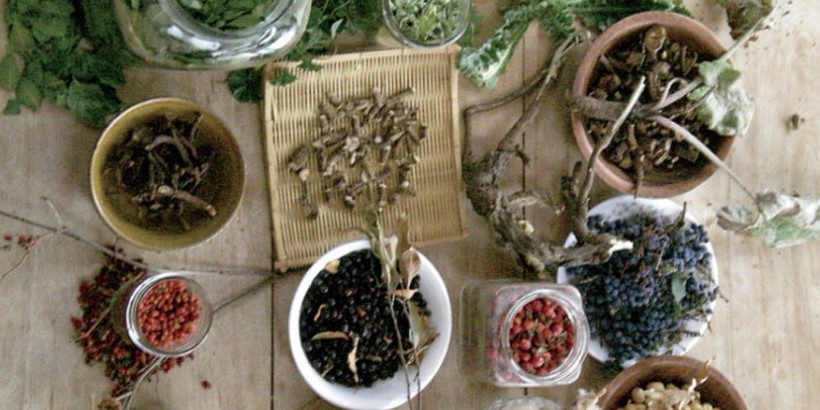
New to foraging? Here are a few beginner tips to get you started on your hunt for wild edibles!
And next time you are taking a walk around the neighborhood, keep your eyes peeled for these thirteen plants: dandelion, mallow, purslane, plantain, thistle, amaranth, dock, mustard, grass, chickweed, clover, lambsquarter, and knotweed.
The following is an excerpt from The Wild Wisdom of Weeds by Katrina Blair. It has been adapted for the web,
5 Tips for Beginner Foragers

-
Ask for help. Seek the guidance of a local plant expert who can help you identify the subtle differences between various plant species.
-
Stay close to home. The wild plants that grow closest to where you live are the ones best adapted to support your ability to thrive in your current environment. Wild plants are extremely resilient and they help us embody those same qualities of excellence.
-
Be mindful. of where you harvest wild weeds. Use your observation skills to determine if an area may have been sprayed with herbicides or heavily fertilized with chemicals. If a plant is discolored or curls downward in an unnatural way it may best to harvest elsewhere.
-
Start off simple. Look for the common simple plants first that are easy to recognize like dandelions. Dice them up finely and add to your dinner salad along with something sweet like apple slices.
-
A little goes a long way. Wild plants are very potent so it is best to start by ingesting small amounts. Begin by nibbling a taste of a common wild edible plant and slowly introduce it to your body and taste buds.
Recommended Reads
Read The Book

The Wild Wisdom of Weeds
13 Essential Plants for Human Survival
$34.95
You may like...
-
 $40.00
 -
$29.95


Recent Articles

Wild seeds and grains are not only nutritious and versatile but also perfect for adding variety to off-grid or wildcrafted meals.
Read More
Ancient mushroom medicine for modern times! Mushrooms help us understand medicine is not only through chemical compounds. Get your daily dose of health with recipes for:
– Medicinal Mushroom Crackers
– Medicinal Mushroom and Vegetable Broth
– Chaga-Reishi Chai

There are reasons that miso paste has become popular around the world: it’s versatile, relatively inexpensive, and can be made in a range of flavors you’d be hard-pressed to find anywhere else. And better yet, you can even make miso at home!
Read More
Wondering where to forage for greens this spring? Look no further than hedges, which serve as natural havens for wild greens and herbs!
Read More
Homemade cheese doesn’t have to be complicated, all you really need is a handful of ingredients, time and a love of cheese.
Read More