
Long-Lasting Classic Storage Crops: Potatoes & Sweet Potatoes
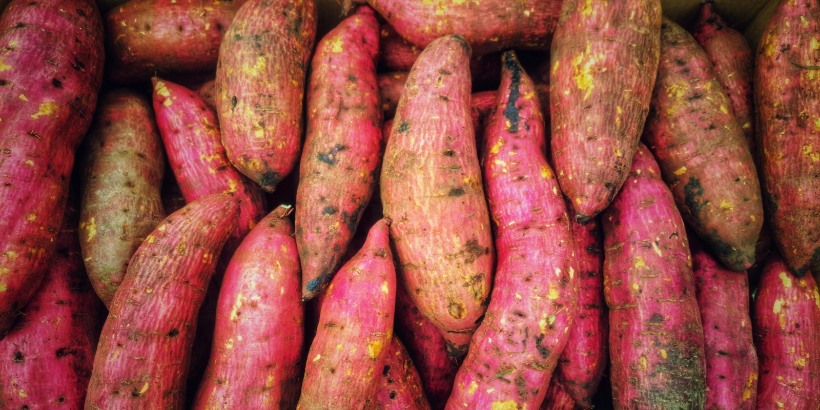
Potatoes and sweet potatoes are incredibly reliable crops for storing. Did you know potatoes are the fourth most widely grown crop in the world? Their adaptability and storability have made them a staple in so many cultures!
Read on for tips on variety selection, harvesting, processing, and storage. Extend your success beyond growing and master essential techniques for crop longevity.
The following excerpt is from Beyond the Root Cellar by Sam Knapp. It has been adapted for the web.
Long-Lasting Classic Storage Crops
The Storage-Crop Compendium
Successful storage farming requires an additional level of know-how beyond growing the crops, and I so often yearned for not only the “what” but also the “how” and the “why” while learning the ropes. And let’s face it: There’s a lot of bad information out there. For subjects as popular and complicated as gardening, there are a lot of people writing a lot of things—some good, some bad, some inspiring, and some dismally misinformed.

While researching this topic, I waded through books, scientific journals, and the deep marshes of the internet to find what works and why. Problem is, that’s not always clear when there’s conflicting information. When presented with conflicts, I usually give more weight to scientific trials and studies because they attempt to remove subjectivity and isolate variables. Scientific works also tend to describe the full set of circumstances leading to the specific results.
That said, I also trust the experiences of farmers, even when they differ from scientific results. (Farmers are scientists-of-a-sort, after all.) As such, this compendium draws heavily upon my own experiences and those of other farmers in addition to published science. The more I’ve learned, the more I’ve realized that the world is complicated and that different methods work in different contexts.
Each vegetable has information on choosing varieties, harvesting, trimming and processing, curing (if necessary), optimal storage conditions, responses to ethylene (if any), and common problems. It’s important to note that fast postharvest cooling will benefit all the crops stored in cold and damp conditions; apart from providing the right storage conditions, this is one of the best things you can do to reduce storage losses.
I encourage you to seek out references for more detailed information. The USDA’s Commercial Storage of Fruits, Vegetables, and Florist and Nursery Stocks is a particularly excellent resource, but it doesn’t always include the full story or practical details relevant to small-scale farmers.
Potatoes
Considering that potatoes (Solanum tuberosum) are the fourth most widely grown crop in the world (behind wheat, rice, and corn), it’s surprising that they entered the world stage just a few hundred years ago. South American peoples have been cultivating potatoes for more than 12,000 years, but potatoes didn’t enter Europe until the 1560s and East Asia until the early 1600s.
Their ease of cultivation, versatility, high starch content, and (importantly) storability quickly made them important food sources. They’ve also proven adaptable. Depending on how you group them, there are between 188 and 219 species of wild potatoes in the genus Solanum growing across parts of southern North America, Central America, and South America, and breeders regularly introduce traits from wild species into new potato varieties.

Potatoes are now ingrained in our food cultures, and I think most customers expect diversified storage farms to grow them. I do not currently grow potatoes on my farm. Instead, I buy them from another local farm that specializes in potatoes to supply my CSA. One reason is that growing potatoes takes a lot of soil disturbance, and I fear erosion in my steeply sloped fields. More importantly, I don’t have the equipment to harvest them efficiently. The great thing about potatoes, though, is their ubiquity. If you can’t grow them profitably at your scale, look around for other nearby farms that can.
Variety Selection
There may be hundreds of potato varieties to choose from depending on the sources available to you! The sheer number of options for shapes, colors, and textures, not to mention yields and disease resistance, can be daunting. While storage life is potentially another factor to consider, most potatoes store remarkably well when harvested healthy at full maturity and properly cured.
There are some minor differences to be aware of, but these follow familiar patterns. Generally speaking, early-crop (early maturing) potato varieties don’t store as long as late-maturing varieties. There are exceptions, and the storage lives partly depend on how long the potatoes remain dormant before sprouting. Disease resistance and resistance to injuries like skinning and bruising during processing also help prevent rots that shorten storage life.
Cold Hardiness

The potato harvest at Open Door Farm in Cedar Grove,
North Carolina, assisted by a single-row potato digger.
Photo courtesy of Jillian Mickens.
The aboveground foliage of potato plants is extremely frost sensitive. Any exposure to frost will kill surface tissue on leaves and stems and accelerate the dieback process. Potato tubers are also very sensitive to freezing, but they have the benefit of being underground.
That said, it’s wise to harvest your potatoes well before the ground starts freezing. Temperatures near 32°F may injure certain potato varieties within a few weeks, but exposure to frozen soil or below-freezing air temperatures (during harvest and processing) often damages potatoes both internally and externally. Previously frozen tissue often appears water-soaked and sunken before turning brown, but freeze damage sometimes manifests as internal lesions that are impossible to see without cutting into the tubers.
Harvest Indicators
One danger of harvesting potatoes too early is higher respiration rates, which lead to shortened storage lives. Another is immature skins, which promotes bruising and skinning injuries that can fester in storage. Farmers usually sell new potatoes—those harvested before full maturity—soon after harvesting, but it’s possible to store them for about four months with careful handling and curing. Mature potato tubers have reached their full size and stopped growing, have converted most of their stored carbohydrates to starch, have begun the process of skin setting, and have entered a state of physiological dormancy.
All of these factors combine to make mature potatoes last longer in storage than new potatoes, but how can you tell if your potatoes are fully mature? Many farmers use the foliage and skins as indicators, as well as past experience. As potato foliage begins to die back naturally, tuber growth slows to a stop, and the potatoes enter a state of hormonal dormancy.
The skins also begin setting as the aboveground plant dies. If the vines have died back naturally and without the onset of frost, the tubers are ready for harvest. If sudden frosts kill green, healthy vines, you should wait two to three weeks before harvesting. The skins should feel firmly attached and resist flaking off when you rub the tubers.
The modern potato industry often uses artificial vine killing as a strategy to make the tubers mature early, and you can use this strategy too. Killing potato vines causes the same physiological changes in the tubers as natural dieback. Mowing, chopping, pulling, and flaming all work. Depending on the weather conditions, you should wait two to three weeks before harvesting after killing vines.
Trimming and Processing

Potatoes typically don’t require any trimming. If washing potatoes before storage, it’s important that they dry before or during storage to prevent fungal or bacterial problems (especially the anaerobic ones). Curing During curing, potatoes go through a process of setting their skins and healing wounds. The latter is commonly called suberization, wherein the tubers create waxy barriers over cell walls and a protective compound called suberin that impedes pathogens. Overall, curing makes potatoes less susceptible to skinning injury, water loss, and disease from pathogens. Most farmers cure potatoes where they’re stored.
Although potatoes can cure at temperatures anywhere between about 55 and 75°F (13 and 24°C), most sources agree on 59°F (15°C) as the optimal curing temperature because it minimizes decay while keeping the curing period relatively short—around one to two weeks. Humidity should be very high during curing, and anything below 80 percent RH will delay the process.
Potatoes need excellent airflow during the curing process. With small containers, farmers can pull air through the bins with fans, but in large bulk piles, perforated vent pipes might be needed to deliver fresh air to the center of the piles.
Storage Conditions
After curing, the temperature should be slowly ramped downward by about 0.5° F (0.3°C) per day to the target temperature. This slow ramping achieves two things:
- It prevents condensation from forming on the potatoes.
- It reduces the incidence of pressure bruising in large piles or containers.
For most of us small-to-medium-scale farmers selling potatoes for regular consumption and occasionally seed, the optimal storage conditions are between 38 and 45°F (3 and 7°C) with over 95 percent RH.66 Storing potatoes closer to 45°F will limit the development of sugars that lead to browning during frying, while storing potatoes closer to 38°F will improve storage life by minimizing respiration rate. I’ll let you decide.

You may read about industrial potato storage above 45°F. Potato processors making potato chips and french fries prefer these storage temperatures to minimize sugars that cause browning during frying, but they often treat potatoes with sprout inhibitors to make storage at these warmer temperatures possible.
You can store potatoes in any containers that allow excellent airflow, such as bulb crates or plastic macrobins. It’s also common to store potatoes in bulk piles, but you’ll need a means of ventilating through the piles, such as perforated pipes or slatted floors.
Ethylene
Intact stored potatoes produce very little ethylene, but injuries increase the amount produced. Potatoes in storage have complicated responses to ethylene exposure. Upon initial exposure, potato tubers tend to ramp up their respiration and may lose moisture, but respiration declines with duration of exposure and at lower temperatures. Ethylene also appears to break tuber dormancy and induce sprouting, but continued ethylene exposure slows the growth of sprouts from eyes, leading to short and thick, slow-growing sprouts.
Common Problems
While potatoes often perform great in storage, there are a lot of potential diseases that cause storage rots, including pink rot, late blight, dry rot, soft rot, silver scurf, black dot, and early blight. Chilling or freeze damage can cause similar symptoms, with softened discolored flesh that deteriorates quickly. The problem of secondary rots—when the decay of one piece leads to the decay of those around it—is not unique to potatoes; I’ve seen it happen many times in stored carrots, beets, and cabbages, to name a few.
With potatoes, however, primary and secondary rots are particularly gross. I can only describe the odor of rotting potatoes as the smell of death. The smell, however disgusting, can be helpful in notifying you of a problem you can’t yet see. In large containers or deep piles, bruising or flattening caused by the pressure of the potatoes above can lead to losses. Properly curing your potatoes, maintaining high humidity in storage, and ramping to storage temperatures slowly can all reduce the severity of pressure bruising.
Sweet Potatoes
Sweet potatoes (Ipomoea batatas) are members of the morning glory family (Convolvulaceae) that were first cultivated in northern South America nearly 5,000 years ago. Today they’re one of the most widely grown crops in the world and are generally adored by customers. If you can successfully grow sweet potatoes, especially in the north, there will be a market for them. Sweet potatoes are well-known warm-weather crops. Before interviewing other farmers for this book, I didn’t think of sweet potatoes as something northern farmers could grow. Now they’re something I’m even thinking of trialing in interior Alaska, although I’ll likely need some forms of season extension to succeed.

Photo courtesy of Jillian Mickens.
Today in the United States it’s common to see sweet potatoes sold as yams. Botanically, sweet potatoes and yams are very different. Yams belong to an entirely different family (Dioscoreaceae) and are more closely related to onions and palm trees than they are to sweet potatoes. Nowadays, the word yam is synonymous with sugary orange sweet potatoes. If you look at a can of yams from a US supermarket, the first ingredient will be sweet potatoes.
Variety Selection
Most sweet potato varieties do well in storage. North Carolina State University describes Averre, a variety the university was involved in developing, as not well suited for long-term storage. The North Carolina Crop Improvement Association writes that Averre “should only be considered a 6–8 month storage cultivar.” That might seem like a long storage life, but some sweet potato cultivars will store up to one year when properly cured and kept in the right conditions.
In particular, trials have shown that white varieties are the slowest to lose moisture in storage, whereas orange varieties are uniformly sweeter than white varieties. For northern growers, producing a crop is more important than the storage potential of a given variety. A trial by Pennsylvania State University found that marketable yields nearly doubled when they let sweet potatoes grow for 120 days rather than 90 days before harvest, and the fastest-growing varieties— Beauregard, Averre, and Orleans in their trial—gave the best yields regardless of the harvest date.
Cold Hardiness

Sweet potatoes are very intolerant of cold both in the field and in storage. Sweet potato vines are completely intolerant of frost, but since we’re after the roots, a light frost is usually okay. Sweet potato roots sustain chilling injury at temperatures lower than 54°F (12°C). Chilling injury is cumulative, and sweet potatoes are more susceptible before they’re cured. One trial found that after two weeks at 45°F (7°C), about 10 percent of noncured sweet potatoes were injured, and after four weeks nearly all the roots showed signs of injury.92 Injured roots usually show surface pitting, shriveling, and fungal decay.
Harvest Indicators
Sweet potato roots will keep growing indefinitely—or until they’re so large that they rot from the inside—so long as there’s no frost and growing conditions are good. For short-season growers, oversized roots are rarely a problem, and either frost or low soil temperatures will force you to harvest instead. Frost kills the aboveground vines, and decay may spread from the vines into the roots if left unharvested for too long. In the absence of frost, you should harvest the roots before soil temperature drops below 54°F to avoid any chilling injuries.
Trimming and Processing
Sweet potatoes themselves do not need trimming, but it’s common to cut back, mow, or remove the vines prior to harvest to make digging easier. The roots are sensitive and easy to damage between harvest and storage. Many farmers forgo barrel washers and use spray tables or rinse conveyors instead.
Curing
Like potatoes, sweet potatoes go through a process of skin setting and wound healing (suberization) during curing.94 While curing, sweet potatoes also rapidly turn their starches into sugars like sucrose, glucose, and fructose that persist throughout storage. (They wouldn’t taste very sweet without the curing step.) Unlike regular potatoes, sweet potatoes cure at higher temperatures and for less time. Curing has been most successful at temperatures between 82 and 90°F (28 and 32°C) and at or above 90 percent RH for four to ten days. Airflow is very important during the curing process to ensure roots have enough oxygen for respiration.
Storage Conditions
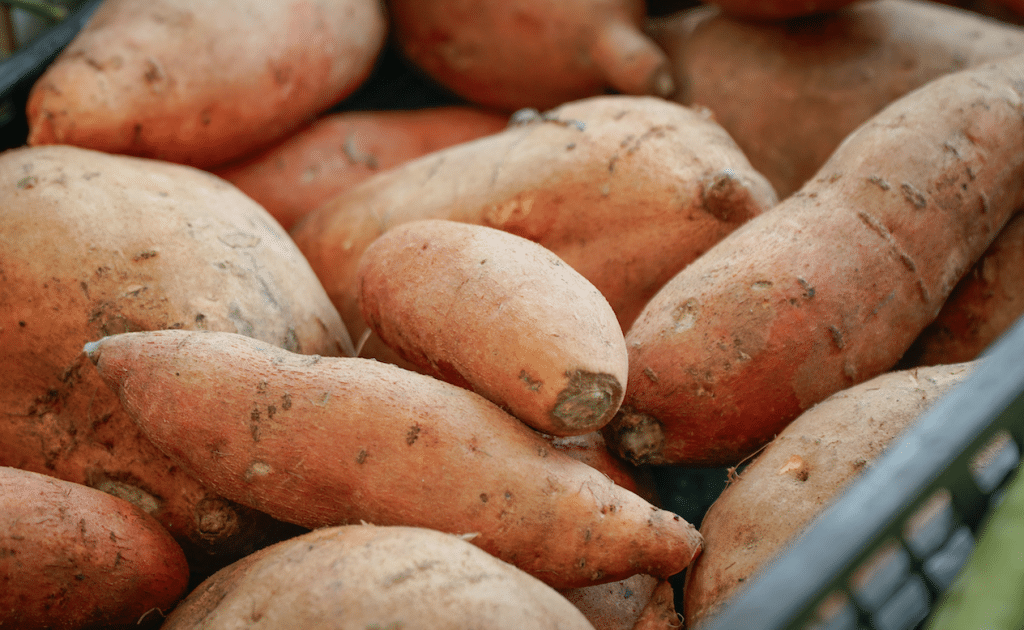

The best conditions for storing sweet potatoes are temperatures between 57 and 60°F (14 and 16°C) with humidity between 85 and 90 percent. Despite the danger of chilling injury below 54°F (12°C), don’t be tempted to keep them at warmer temperatures, because temps above 66°F (19°C) will induce sprouting within a couple months. Sweet potatoes need containers with good ventilation because of the risk of mold at humidities near saturation. Despite their sensitivity, it’s okay to store sweet potatoes in bulk containers such as macrobins, so long as you load them carefully.
Ethylene
Sweet potatoes generally don’t produce enough ethylene during storage to damage themselves. (And they’re usually stored alone.) If, for whatever reason, sweet potatoes are exposed to high levels of ethylene, they typically lose some sweetness and become discolored.
Common Problems
The majority of decays and rots in stored sweet potatoes result from infected injuries incurred during harvest, washing, and processing. It’s important to treat the roots gently, remove damaged roots, and cure them properly. Some growers sanitize their sweet potatoes prior to storage to limit the number of surface pathogens brought inside.
Recommended Reads
Read The Book

Beyond the Root Cellar
The Market Gardeners Guide to Growing and Storing Vegetables for Off-Season Sales and Food Security
$45
You may like...
-
 $34.95
-
$34.95
-
$35.00


Recent Articles

Read on for tips for potatoesand sweet potato variety selection, harvesting, processing, and storage. And extend your success beyond growing and master essential techniques for crop longevity.
Read More
The secret to the sweetest arugula ever? Overwinter your plants for a spring surprise: the sweetest, most flavorful arugula you’ve ever tasted!
Read More
Edimentals are plants that are both edible and ornamental. Discover the best edible plants—for beauty and for flavor—for your growing space.
Read More
Prepare for the year ahead with cover cropping! It creates nutrient-rich soil for winter gardening AND provides a boost to your seedlings come springtime.
Read More
Having an indoor sprout garden is easier than you might think and yields a bountiful harvest. Here’s how to get started — right from your windowsill!
Read More