

Eating Your Garden: The Broad Range of Edimentals
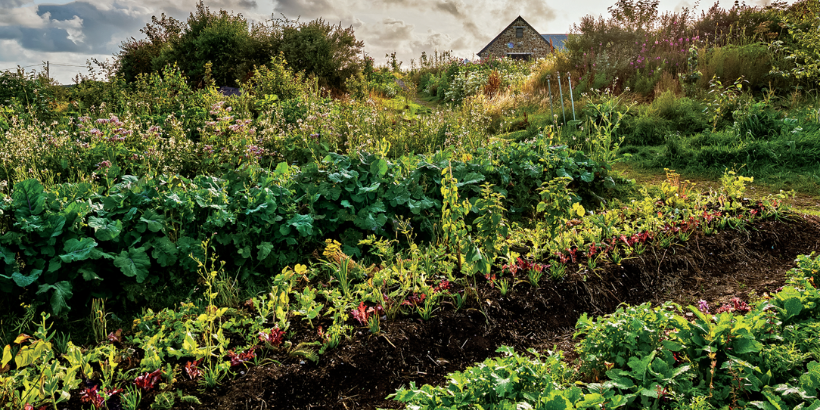
Edimentals are plants that are both edible and ornamental. Some offer bountiful harvests and great flavours, others are more unusual, and then there are plants that earn their place in the garden because they are so joyful.
Try edimentals for a beautiful and low-effort way to grow food!
The following excerpt is from Eat Your Garden by Harry Holding. It has been adapted for the web.
The Broad Range of Edimentals
Edimentals encompass an extraordinary diversity of plants, spanning climates, functions and ecological niches. They can be native or non-native, adapted to a wide range of environmental conditions, and grown in layers to mimic natural plant communities. Their multipurpose nature means they offer much more than food or beauty alone, playing vital roles in pollination, soil health, climate resilience and more.
Native vs Non-Native Edimentals
Depending on where you live in the world, the terms native and non-native (or exotic) carry a wide range of connotations. There is a long-standing debate – often between ecologists and horticulturalists – about the merits and limitations of each, and how they interact with surrounding wildlife. Edimental planting typically takes a blended approach. I believe there are significant benefits to both native and non-native species. The key is to embrace a sensible, holistic perspective that considers your location, local ecology and personal needs.

An array of edimentals brings diversity into the kitchen.
Native plants are important as they have co-evolved with local wildlife and offer crucial ecological benefits, as well as providing food and habitat. Some species have evolved to have a dependency on specific native plants. For example, the small copper butterfly depends almost entirely on the edimental sorrel (Rumex spp.) as a larval food plant. Females lay their eggs exclusively on sorrel to ensure that newly hatched caterpillars have immediate access to food.
Native species typically require less maintenance, as they are well suited to local soils and climate. However, with a rapidly changing climate, they are often being pushed to the extremes of their tolerances and, in some circumstances, it could be argued that carefully chosen nonnative species may be more resilient and appropriate for the long-term future of a place.

Sorrel is an essential species for the small copper butterfly.
Beyond ecological benefits, native plants carry a rich cultural significance. They help define a sense of place and mark the changing seasons in meaningful ways. I treasure those key calendar moments tied to local flora – like the wild garlic (Allium ursinum) that carpets woodland floors in spring and quickly becomes jars of vibrant pesto stored for weeks to come. Or the sight of hawthorn (Crataegus monogyna) branches heavy with haws in autumn, decorated red and perfect for a rich, hedgerow-style ketchup. Preserving and celebrating these seasonal rituals is one of the most beautiful and nurturing aspects of using native edimentals.
On the other hand, non-native (or exotic) plants can help extend the season of interest and productivity. They may flower, fruit or remain evergreen outside the peak windows of native species, providing valuable resources for us and wildlife. For example, most of the UK’s native plants flower in spring or early summer, with relatively few continuing into autumn.
By incorporating North American native edimentals, such as prairie plants like anise hyssop (Agastache foeniculum) or Jerusalem artichoke (Helianthus tuberosus), you can stretch the flowering season through the latter part of the year. The reverse is true as well: in North America, integrating hardy UK-native edimentals like sea kale (Crambe maritima) can offer early-season interest and valuable forage for pollinators before many North American natives have begun to bloom.
Not all wildlife are specialists – many are generalists who can thrive on a variety of food sources and habitats. While this doesn’t mean we should overlook the needs of specialist species (which are often the most endangered), it does suggest that a mixed edimental approach is likely to bring wide-ranging benefits for local biodiversity, and for us. My harvests would not be the same without the integration of non-native species.
A moment’s rest at the allotment on a summer’s day is often accompanied by juicy, aromatic berries from the Japanese wineberry (Rubus phoenicolasius). Autumn lunches in the garden are followed by foraging for bright orange sea buckthorn (Hippophae rhamnoides – native only to the UK coastline) berries, a zingy hit of vitamin C to round off the meal. And when the season’s been warm and kind, harvesting sun-ripened figs (Ficus carica) straight from the tree instantly transports me back to idyllic holidays in Mediterranean landscapes.

Hawthorns are resilient, diverse and widespread across the temperate zones.
Of course, we can’t ignore the very real risks associated with non-native species. There are countless examples of exotic plants becoming invasive and disrupting local ecosystems. It’s vital to do your research, and to understand what’s appropriate for your specific environment. Just because a plant thrives in one region of the country doesn’t mean it won’t cause problems somewhere else.
At the heart of an edimental approach is the understanding that native and non-native plants aren’t opposing forces. It’s about taking a pragmatic, place-based view drawing from both to create edible landscapes that are resilient, generous and ecologically attuned.
Matching Plant to Place
Edimentals can thrive in a wide range of conditions – from damp meadows to dry gravel gardens. Just as many wildlife species are generalists, some edimentals are, too – they don’t need overly specific conditions and can adapt to a broad range of settings. This includes several classic garden plants. Some edimentals might be able to tolerate extreme conditions in the wild, and, in many cases, they actually perform best when planted in environments that echo those origins. Take rosemary (Salvia rosmarinus) and lavender (Lavandula spp.), for example.
These Mediterranean sub-shrubs (small, semi-woody plants that sit between perennials and shrubs) are tough – adapted to drought, poor rocky soils and full sun. Plant rosemary and lavender in rich, moist UK soils and they grow rapidly, seemingly thriving, only to burn out early, becoming woody and short-lived. Just because a plant can survive outside its preferred conditions doesn’t mean it will flourish there. It’s still essential to match plant to place thoughtfully.

Sea buckthorn has one of the highest vitamin C contents of all fruits.
Layers & Companion Planting
In a typical edimental scheme, you might find canopy layers rich with fruits and nuts emerging from a matrix of herbaceous perennials – plants of all sizes offering an abundance of vegetables, leaves and flowers. The soil is knit together by delicious creeping groundcovers and bulbs, while climbers twine their way up woody plants, reaching for light and showering down their bounty. From ginkgo trees (Ginkgo biloba) producing edible seeds in the canopy, down to wild strawberries (Fragaria vesca) offering tiny gems along the ground – the possibilities for layering edimentals are endless.

Yarrow is a magnet for pollinators and can be brewed into a fragrant herbal tea when used in moderation. Historically, it was also used in beer brewing before hops became common.
Multipurpose Plants
Many edimentals often serve several functions beyond simply being edible and beautiful. A short walk around my allotment reveals just how diverse those benefits can be. Chives (Allium schoenoprasum) – and alliums more broadly – are prolific in the edible meadow edges and polytunnel. They’re pollinator magnets, and I use them constantly, not just for their flavour, but as excellent companion plants for more traditional annual vegetables.
Yarrow (Achillea millefolium) dances through the meadow, offering soft texture and powerful medicinal qualities. In moderation, it’s known to support the immune system, aid digestion and act as an anti-inflammatory. I use it to make tea, and a brewer friend has even swapped it in for hops when making beer, although I can’t vouch for the health claims of that recipe!
Hazel shrubs (Corylus spp.), carefully placed as natural windbreaks, are essential on my open, exposed plot. Beyond shelter, they produce nuts, and their coppiced wood is a resource for firewood and craftwork. And in and around nutrient-hungry plants, a living green manure of leguminous species – such as clovers (Trifolium spp.) – improves soil fertility by fixing nitrogen and boosting long-term productivity.
These are dynamic, responsive plants with far-reaching impacts – often triggering unexpected interactions and positive outcomes. You may plant an edimental for one standout trait, only to discover a whole raft of additional qualities over time.
That’s part of the magic.
Recommended Reads
Read The Book

Eat Your Garden
Edimentals as a Beautiful, Low-Effort Way to Grow Food
$34.95
You may like...
-
 $29.95
-
$34.95
-
$34.95


Recent Articles

Edimentals are plants that are both edible and ornamental. Discover the best edible plants—for beauty and for flavor—for your growing space.
Read More
Prepare for the year ahead with cover cropping! It creates nutrient-rich soil for winter gardening AND provides a boost to your seedlings come springtime.
Read More
Having an indoor sprout garden is easier than you might think and yields a bountiful harvest. Here’s how to get started — right from your windowsill!
Read More
Growing no-till arugula is a simple way to grow your own food. These greens can be used on pizzas, salads, and as a garnish on almost any dish.
Read More
The leaves are falling, which means it’s time start figuring out what to do with them. This year, try turning your fallen leaves into mulch for your garden!
Read More