

Einkorn Bread: A Simple, No-Knead Recipe
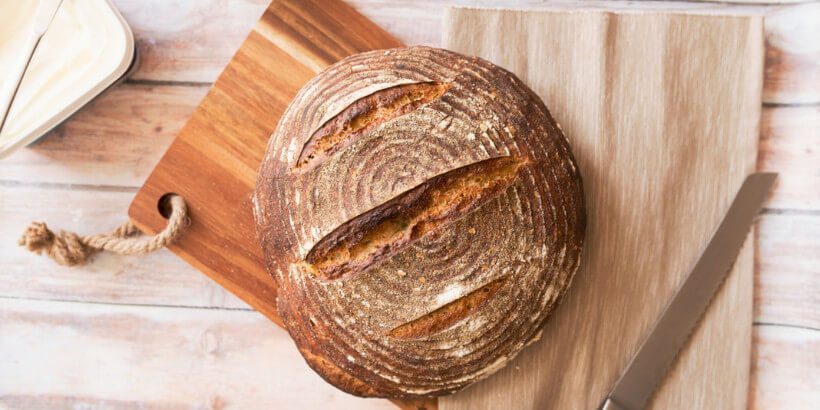
Want to enjoy bread without worrying about gluten? With Einkorn bread, a light bread with the lowest glycemic index, you can still enjoy all of the delights of bread. without any of the allergic reactions!
The following is an excerpt from Restoring Heritage Grains by Eli Rogosa. It has been adapted for the web.
Einkorn Sourdough Starter
About a week before you plan to bake, mix equal amounts of flour and pure water; that is, well water, spring water or distilled water. (Do not use chlorinated water. It will destroy the beneficial microbes.)
Repeat the feeding each day for about seven days. After a week of feeding, the starter should be mature, active, and ready to use. You will observe that the freshly fed starter will rise and bubble through the day, then later collapse when the sugars are fully metabolized.
To create an active starter uniquely adapted to your local water, flour, and temperature, observe the timing of this cycle in your starter. The best time to feed the starter is when your starter has risen up and just slightly begins to pull down. This is the ripe moment when the microbes are active and hungry.
Day 1
Mix together equal amounts of water and einkorn flour. For example, 2 Tbsp (30 g) warm water and 2 Tbsp (30 g) einkorn flour. Mix well, and place in a glass container with a loose top to allow airflow. Stir a few times a day if possible. Store in a cool dark place or in your refrigerator in the summer.
Day 2 thru Day 5
Each day stir in 2 Tbsp (30 g) warm water and 2 Tbsp (30 g) einkorn flour. Your starter is mature when there is a lovely aromatic sweet tangy fragrance and small fermentation bubbles arising throughout the mixture.
It may take several experimental batches before you develop the best sourdough adaptation for your unique conditions. Be patient, persevere, and keep at it!
Pre-ferment
Pre-fermentation is a process to feed the microbes in the sourdough starter by adding more water and flour each day before mixing the bread dough, so that the starter is highly active and ready to use.
It is especially important to feed your mother starter the day before you plan to make sourdough bread to get a good rise.
This is an age-old practice throughout Europe and the Middle East. Each country has unique pre-ferment traditions. In France, a pre-ferment is called levain. It is a biga in Italy; in Germany, sauerteig. Originally from Poland, a poolish pre-ferment is known as a sponge in the United States.
The subtle variables in each sourdough process such as temperature, water quality, and the air itself will give your sourdough a unique terroir all its own.
No-Knead Artisan Einkorn Bread Baked in a Dutch Oven
This is a basic traditional sourdough recipe that can be a foundation for creativity. It is incredibly easy to make even if you’ve never baked bread before. It looks so beautiful, no one will believe you’re not an experienced baker.
Ingredients
- Mother Dough (Preferment)
- 2 Tbsp (30 g) activated sourdough starter or 3/4 tsp (2 g) yeast
- 1/2 cup (120 g) warm pure (unchlorinated) water
- 1 cup (120 g) einkorn flour
For the dough
- 5 cups (600 g) unsifted whole einkorn flour
- 1 tsp salt (6 g)
- 1 1/4 cup (300 g) warm pure water
- 1 Tbsp (15 g) olive oil
- 1 Tbsp honey (21 g) or maple syrup (20 g)
- All of the Mother Dough (268 g)
- 1/2 tsp (1.4 g) dry yeast or 1/4 cup (60 g) sourdough starter, if not using the Mother Dough as a starter
Procedure
- Mix the flour and salt together.
- Mix the warm water, oil, and sweetener together. If you are not using the Mother Dough as a starter, add yeast to the dry ingredients or sourdough to wet ingredients.
- Mix all the ingredients together. Let the dough rest for 15 minutes so that the liquids are well absorbed. This is a wet dough, so do not be tempted to add more flour.
- On a well-floured work surface, use a dough scraper or your oiled hands to fold dough to the center several times to create a ball-like shape.
- Place on parchment paper in a large bowl.
- Cover with a plastic bag or wrap.
- Let it rise slowly in the cool darkness of a refrigerator overnight.
- The next day, preheat an oven-safe heavy pot for 30 minutes at 450°F (232°C). Carefully remove the hot pot from the oven with mitts. Use parchment paper to lift the dough into the hot pot.
- With the dough and parchment paper in the pot, cover and bake for about 45 minutes. For a crustier loaf, bake for 5 more minutes in uncovered pot.
- Cool and enjoy.
Variations: Crack an egg into the measuring cup before adding the warm water (still measure up to 1¼ cups). Grate ½ cup (118 g) cheese into flour. Substitute a tablespoon of cream for oil and/or warm milk for water at a 1:1 ratio. Add a cup of blended einkorn sprouts. (Blending avoids hard sprouts on the crust.) For enhanced moistness, substitute strained drained potato cooking water for plain water.
Recommended Reads
Read The Book

Restoring Heritage Grains
The Culture, Biodiversity, Resilience, and Cuisine of Ancient Wheats
$29.95
You may like...
-
 $44.95
 -
$35.00
-
$19.95


Recent Articles

This bright, yet delicate flavor profile is both sweet and sour – a unique taste that you’ll keep coming back to. This recipe is intended for long, slow fermentation starting at persimmon harvest time in the autumn and continuing into winter.
Read More
This triple apple snack cake uses applesauce, cider, and apples for a one-two-three apple punch. Don’t take our word for it though, give it a go yourself!
Read More
These small fruits are a delicious source of nutrients that you can find almost anywhere. Get started on acorn harvesting with help from these simple tips!
Read More
Want an on-the-go snack without having to go to the grocery store? Whip up this homemade applesauce for a fresh fall snack whenever you get the craving!
Read More
The possibilities are pretty much endless with wild ingredients — use almost any fresh fruit or juice and a sweetener to create your own custom jam or syrup!
Read More